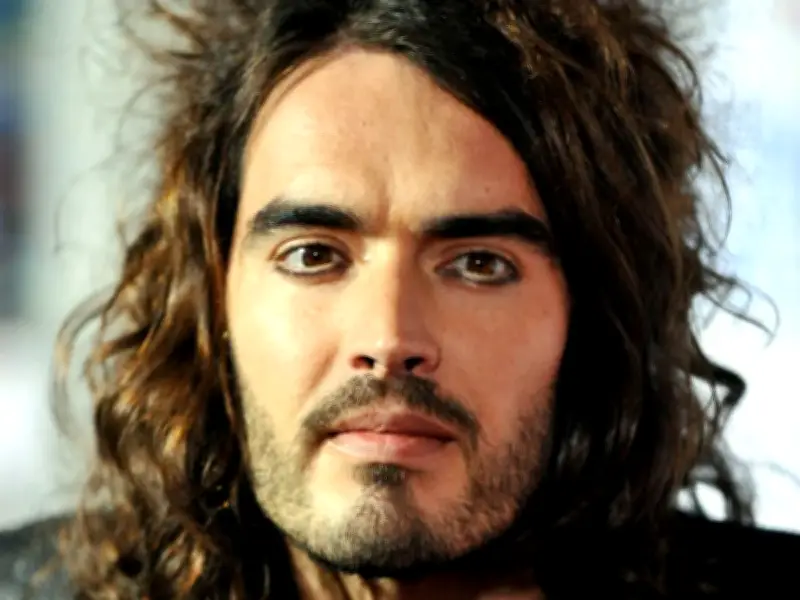
Russell Brand has been found guilty of one count of rape and three counts of sexual assault, prompting Mirror Showbiz editor Tom Bryant to recall the sinister side of the comedian and the whispers that followed him at the peak of his powers.
A Gift to Showbiz Reporters
In the mid-noughties, when skinny black jeans were all the rage, Brand was often found holding court at various parties across London. As a cub showbiz reporter for the Mirror, Bryant's paths crossed with him several times, whether in the sleazy, dimly-lit bars of Camden or at rather more formal showbiz events.
With lad culture on the wane and a new generation of indie kids like Pete Doherty taking centre stage, Brand was almost the unofficial spokesman for an era. He was difficult to miss, with his backcombed hair, eyeliner and beads hanging from his neck, often in the company of various women draped over him. Some of them were famous, most weren't.
For those charged with filling the showbiz pages, he was a gift. Hilarious quotes were scattered around like confetti as he turned on the charm. Unlike many privacy-loving celebs, he was an open book and appeared to revel in being linked to just about every eligible female celebrity going.
Whispers and High Maintenance Demands
But there were always whispers, mutterings in hushed tones about his behaviour, especially a darkness to his character when it sometimes came to women. Bryant remembers hearing about one high-profile female presenter who had felt very uneasy around him during one encounter.
Still, the media courted him, aided in part by a very slick PR operation that craved newspaper inches. He once came into the Mirror offices to edit the 3am column, and as the most junior member of staff, Bryant was tasked with helping to settle him in. He was charming, albeit slightly odd, and extraordinarily high-maintenance.
Bryant recalls him making his way through the Mirror corridors with a make-up artist in tow, armed with an enormous can of hairspray, seemingly obsessed with ensuring every strand of his hair was in place. The men's toilets were apparently not suitable for his elaborate grooming routine, so he commandeered the disabled loo instead. Even breakfast proved something of an ordeal. Ordinary toast wouldn't do, and Bryant was promptly dispatched to Waitrose to hunt down gluten-free bread.
An Open Secret in Television Circles
For years, Brand's behaviour was said to have been an open secret in television circles. At best, he was regarded as difficult and unpredictable. At worst, there were far more troubling concerns about his behaviour towards women. Yet broadcasters continued to employ him, apparently happy to overlook the whispers while his particular brand of edgy, innuendo-laden humour attracted audiences. As recently as 2019, he was appearing on Channel 4's celebrity edition of The Great British Bake Off.
Concerns about his conduct around women had reportedly been raised with Channel 4 five years earlier, when Brand was being considered as a potential host. "The solution that was offered was that we would take the female staff off the crew," one female worker at the broadcaster told the Sunday Times. "I was in disbelief."
A Culture of Turning a Blind Eye
There are perhaps two explanations. The first is that, in their desperation to attract younger viewers, television executives were prepared to turn a blind eye to the rumours surrounding one of their biggest draws. Brand brought with him a ready-made audience, and with it the promise of ratings.
The second is a more uncomfortable truth about the entertainment industry. When someone is considered valuable enough, the people around them can become more concerned with keeping them happy than asking difficult questions. Agents, managers and publicists all have a financial interest in keeping the work coming. It creates a culture in which troublesome behaviour can be excused as eccentricity and legitimate concerns dismissed as the price of working with a difficult star.
In Brand's case, the warning signs were there for years. The real question is not simply how he was allowed to get away with so much, but how many people knew enough to be concerned and chose to look the other way.