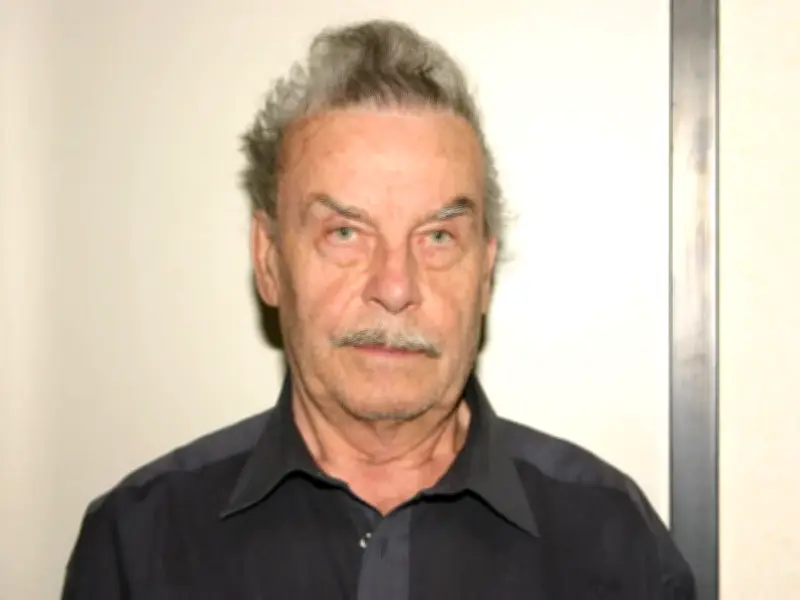
Josef Fritzl, the 91-year-old Austrian who imprisoned his daughter in a cellar for 24 years and fathered seven children with her, was denied early release for a third time on 3 November 2026. Austrian judges rejected his latest bid for freedom despite medical evidence that he is suffering from advanced dementia and is no longer considered dangerous. The ruling means Fritzl now faces spending the rest of his life behind bars.
Lawyer vows to continue fight
His lawyer, Astrid Wagner, who has faced death threats for defending him, said she will continue fighting for his release. She told the Mirror: “This is about justice. This is Austria. And here we must apply the rule of law - Austrian law.”
“No one is challenging what my client did in the past. But he has served his sentence. And he has both apologised for these crimes and also undergone therapy and complied with all conditions placed upon him. One doesn’t just have the right to suspend the provisions of Austrian law just because of what one might feel about a person because of their crimes. And this makes clear that Josef Fritzl also deserves and is entitled by law to a second chance.”
Wagner says she is preparing another attempt to secure his release in 2027.
Crimes that horrified the world
Fritzl was jailed for life in 2009 after it emerged he had turned the cellar beneath his family home in Amstetten, Austria, into a secret underground dungeon. His daughter Elisabeth was 18 when he lured her into the cellar in August 1984, drugged her and locked her behind a series of locks and reinforced doors. He held her captive for 24 years, repeatedly raping her while the rest of the family lived upstairs, unaware of the horror beneath their feet.
During her captivity, Elisabeth gave birth to seven children fathered by Fritzl. Three were kept imprisoned underground with their mother. Three others were taken upstairs and raised by Fritzl and his wife Rosemarie, who had been told that Elisabeth had run away to join a religious sect. One of the babies, a newborn boy named Michael, died in 1996 after developing serious breathing difficulties. Rather than obtain urgent medical treatment, Fritzl allowed the infant to die and disposed of the body in a furnace.
Conviction and current condition
This death led to Fritzl’s conviction for murder by neglect, alongside rape, enslavement, false imprisonment and other offences. His crimes were exposed in April 2008 when his eldest daughter by Elisabeth, Kerstin, became seriously ill. Fritzl eventually allowed the 19-year-old to be taken to hospital, triggering questions from doctors and police that brought his abuse to light. Elisabeth and her children were rescued after 24 years of captivity. Fritzl was sentenced to life imprisonment and initially placed in a secure psychiatric institution.
The court rejected his third application for conditional release, ruling that the elderly prisoner has no suitable home, no family willing to support him and nobody capable of providing the extensive care he now requires. His relatives have severed contact with him. The court concluded that releasing him would be impractical because he has no secure social network or realistic prospect of living independently. He remains in the medical wing of Stein Prison in Krems, Lower Austria, where officials say he continues to receive medical treatment and nursing care.
Dr Wagner says the ruling comes despite psychiatric evidence suggesting that the once-dangerous sexual predator has deteriorated so severely that his former personality has “effectively disappeared.” Forensic psychiatrist Heidi Kastner concluded that Fritzl is suffering from progressive dementia which has profoundly damaged his mental faculties. According to the assessment cited by his defence, “his ability to plan crimes and his sexual drive have disappeared, and he is not dangerous.” Dr Wagner has repeatedly claimed that keeping the elderly offender imprisoned serves little purpose given his present condition and is also a breach of his rights, and could push him towards suicide. This has provoked public outrage and exposed her to fierce criticism, including death threats.