America does not have a single standard way of executing prisoners. Lethal injection is the most common method, but states that still carry out death sentences have other options, including nitrogen gas and firing squads.
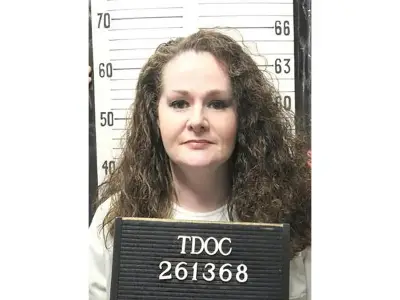
Execution methods and their effectiveness came under renewed scrutiny after Christa Pike survived Tennessee's attempt to execute her by lethal injection on September 30. Officials administered two doses of the execution drug, and she was taken to hospital. She survived and has since woken up with no memory of the failed attempt, which was described as 'torturous'.
Which method a prisoner faces can depend on where they were convicted, when their crime took place and whether officials can obtain the drugs they need. In some states, prisoners can choose between methods.
Executions in 2025
Across 11 states, 47 people were executed in 2025, according to the Death Penalty Information Center. Of those, 39 received lethal injections, five died after breathing nitrogen gas and three were killed by firing squad. More than 1,600 people have been executed in America since 1977.
All three firing squad executions in 2025 took place in South Carolina. Brad Sigmon, Mikal Mahdi and Stephen Bryant were killed using rifles, bringing the total for this method since 1977 to six. Sigmon, 67, was executed on March 7, 2025, for murdering his former girlfriend's parents. It was America's first firing squad execution for some 15 years. His lawyer said he had chosen it because he feared that lethal injection or the electric chair could cause a slower, more painful death.
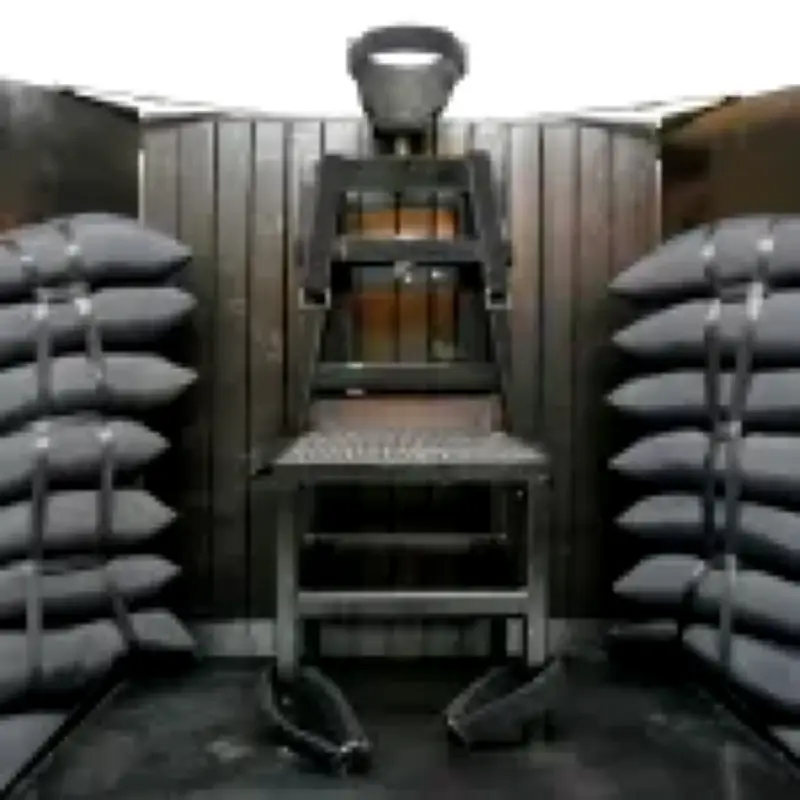
South Carolina's procedure involves strapping the prisoner into a chair, placing a hood over their head and positioning a target over their heart. Three executioners fire from around 15 feet away, while witnesses watch through bulletproof glass. Idaho made firing squads its primary execution method on July 1, 2026.
Nitrogen gas and lethal injection
All five gas executions carried out in 2025 used nitrogen delivered through a mask: four in Alabama and one in Louisiana. Nitrogen makes up roughly 78% of the air we breathe, but breathing pure nitrogen deprives the brain and body of oxygen, causing death through nitrogen hypoxia. Alabama used the method to execute Kenneth Smith on January 25, 2024. Officials had argued that he would lose consciousness within seconds, but witnesses reported that he appeared conscious for several minutes and shook and writhed. Louisiana followed in March 2025, using nitrogen to execute Jessie Hoffman after a 15-year pause in executions. Five states specifically authorise nitrogen gas, although only Alabama and Louisiana have used it.
Lethal injection remains the most common method by a considerable distance. It was used in more than four out of five cases last year, although the drugs and procedures differ between states. The prisoner is strapped to a gurney and drugs are administered through an intravenous line. Some states use a large dose of a single anaesthetic, such as pentobarbital. Others use three drugs in sequence: an anaesthetic or sedative, a substance that paralyses the prisoner and another that stops their heart. Finding a usable vein can prove difficult, while drug manufacturers' unwillingness to supply execution drugs has pushed states towards alternatives.
Electric chair and hanging
The electric chair is still authorised for use in nine US states, despite none of the 47 executions in 2025 using it. Its availability often depends on the prisoner choosing it or another method being unavailable. The prisoner is strapped into the chair, with electrodes attached to their head and leg. A sponge moistened with saline helps conduct electricity at the head. Current is applied to the body and further shocks can be administered if the prisoner survives. The method accounts for 163 executions in America's modern death penalty era, according to the Death Penalty Information Center. In South Carolina, electrocution remains the default unless the prisoner chooses an available alternative.
Hanging has almost entirely disappeared from American executions. Only three prisoners have been hanged since executions resumed: two in Washington state and one in Delaware, where the last hanging took place on January 25, 1996. Both states have since abolished the death penalty. New Hampshire abolished the death penalty in 2019 without removing Michael Addison's existing death sentence. The law governing his sentence allows hanging if lethal injection is impractical. The length of the drop is calculated individually with the aim of breaking the prisoner's neck.