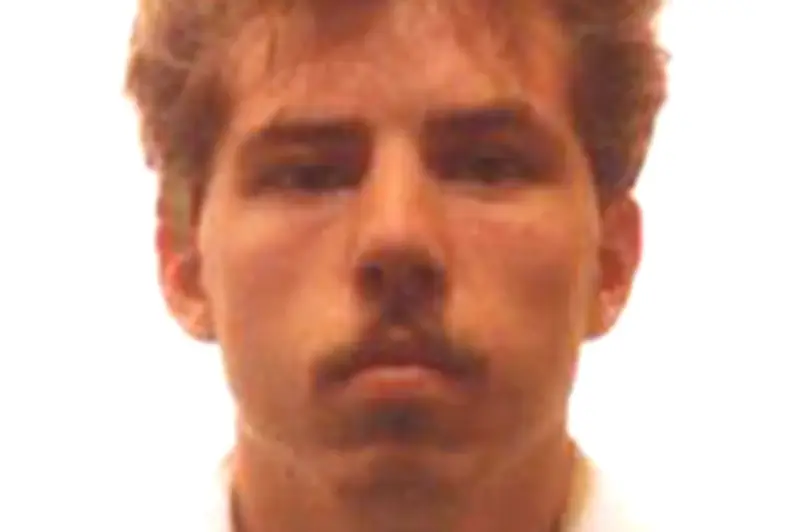
William Dunlop, now 63, who strangled Julie Hogg in Billingham, County Durham, in 1989 and hid her mutilated body behind a bath panel, has been recommended for release by the Parole Board. He became the first person to be retried after a change to the 800-year-old double jeopardy law.
Julie Hogg, 22, was discovered by her mother, Ann Ming, more than two months after her murder. The Old Bailey judge in 2006 sentenced Dunlop to life imprisonment with a minimum term of 17 years, noting the murder was “accompanied by the brutal sexual degradation of (her) body”.
Parole Board Decision
On Thursday, the Parole Board found Dunlop had been rehabilitated and recommended his release after his fourth application to review his case. A panel has recommended his transfer to open prison multiple times, but three justice secretaries have intervened, a public parole hearing on October 21 was told.
In response, Julie Hogg’s son Kevin, who was three when his mother was killed, told the Press Association: “To be honest I was expecting it, so it doesn’t come as a surprise.” The 40-year-old called the Parole Board “not fit for purpose” and said: “You know them victim personal statements? They mean absolutely nothing – nothing whatsoever and that’s been proven time and time again.”
Victim Impact
In his victim impact statement, Mr Hogg recounted his childhood trauma of “hearing screaming and shouting in the home with the pungent smell of my mother’s decomposing body” as his grandmother found it. He said: “I can say categorically that time isn’t the great healer it’s purported to be. As the years pass, the pain of losing my mother to this murder remains acute.”
Mr Hogg described the devastation wrought on himself and family members, including health and relationship issues, and “joy or even just cheeriness” falling in “short supply”.
Panel's Reasoning
In its decision, the panel said it is “mindful” of the victims’ feelings – particularly Mrs Ming’s. They “take the view that (Dunlop) should never be released”, it added. “The Panel fully understands their feelings and has great sympathy with their views. Mrs Ming, Ms Hogg’s sister and her son Kevin will have enormous difficulty being persuaded that (Dunlop) has, in the judgement of the panel, served his punishment and been rehabilitated. However, if a prisoner presents as a person who, on the totality of the evidence available to the panel, meets the statutory test for release, then the panel is obliged by law to conclude that his release must be directed.”
The panel considered a previous assessment that found Dunlop had “high levels of psychopathic traits” and raised concerns about his “capacity to cause serious and fatal harm to others through his use of extreme general and sexual violence”. It also noted his “capacity for deception, manipulation, and dishonesty” and a “failure to take responsibility for his actions”. However, not a single professional witness to the latest review “suggested any risk factor was active”, it said.
Dunlop's Response
After Mr Hogg spoke of the fallout of his mother’s murder, Dunlop told the panel that he now empathises with the family after his son died last year. “I get it now. I totally get it now,” he said. “I was struggling when (Mr Hogg) was talking about it, from what it was bringing back for me.”
Dunlop said “if I think about my significant other, I think about Julie” and “this is going to be the most difficult parole hearing I have been in”. He added: “I can’t understand (Mrs Ming) finding her daughter, that I struggle with, but I relate to the loss now, the not knowing – I get that, I really do.”
The following day, Miss Hogg’s mother, Ann Ming, 80, told the Press Association that she “wanted to scream” when hearing of his newfound empathy, adding: “I don’t know how we kept it together.” Mr Hogg criticised Dunlop’s emphasis on his bereavement, claiming it was “scripted” and his grief “incomparable” to his grandmother’s. He told PA: “He wasn’t empathetic last year, 18 months ago, two years ago, but now he is.”
Dunlop, known as Billy, was tried twice for the murder but both juries failed to reach a verdict. Three years later, while in jail for another crime, he confessed and admitted lying in court, boasting there was nothing anyone could do about it because of the double jeopardy rule in place at the time. Miss Hogg’s family campaigned for 15 years to get the law changed, and he became the first person to be tried under the new rules. He admitted murder and was jailed for life with a minimum term of 17 years.
Asked if he believes he would have gone on to commit another murder or serious violence, Dunlop told that panel: “I would say yes because that’s what my life was.” He said he had intended to take Miss Hogg’s life because “you cannot strangle somebody and think you’re not going to do that”.
Dunlop has served five years more than his minimum term for murder. He was already imprisoned at the time of that sentence and has now been detained for around 28 years. A spokesperson for the Parole Board said the panel read hundreds of pages of evidence before the oral hearing. They added: “Parole reviews are always undertaken thoroughly and with extreme care. Protecting the public is our number one priority.”