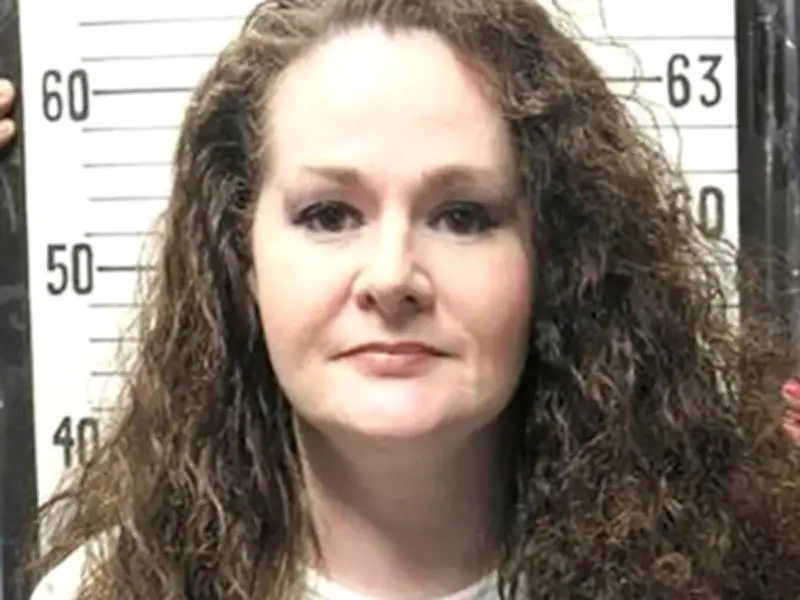
Convicted murderer Christa Pike survived an attempt to execute her by lethal injection on Wednesday evening, prompting renewed scrutiny of capital punishment in the United States. Pike, who spent decades on death row for the 1995 murder of 19-year-old Colleen Slemmer, was due to become the first woman executed in Tennessee in more than 200 years.
Her legal team had fought to stop the execution, arguing she had been diagnosed with bipolar disorder and post-traumatic stress disorder. The murder saw Colleen's body found with a pentagram carved into her chest, while her skull had been fractured with a piece of asphalt.
Botched execution at Nashville prison
Pike's legal team secured a legal order that temporarily paused the death sentence, but that was later overturned and the execution was permitted to proceed. She was given two doses of pentobarbital at Riverbend Maximum Security Institution in Nashville but survived the 'botched' attempt and began "snoring loudly".
Across the US, 23 states have abolished the death penalty while 27 retain it. However, executions are far less common across much of the country, with 10 of the 23 states going at least a decade without executing anyone. So far this year, just six states have carried out executions, with 29 prisoners put to death as of September 29.
Previous failed executions
In May, Tennessee saw another failed execution involving Tony Von Carruthers, 57, who was convicted of kidnapping and murdering three people in 1994. Officials were unable to establish the required backup IV line, forcing the execution to be abandoned. Governor Bill Lee granted Carruthers a one-year reprieve, meaning the state cannot attempt to execute him again during that period.
In 2024, another convicted killer survived a 'botched' execution attempt. Thomas Creech had been imprisoned for more than 50 years for committing five murders across three states. He was also scheduled to die by lethal injection. However, the execution team repeatedly failed to find a usable vein. They started attempting to insert an IV in his arms, then his hands, but after almost an hour of failed needle insertions they attempted his legs.
Speaking of the ordeal, Creech said: "The worst ones was when they got down to my ankles, I was thinking the whole time that this is really it. I’m dead. This is my day to die." The execution was eventually called off and in October that year, a new death warrant was issued with a scheduled execution date of November 13, 2024. But he was later granted a stay of execution while he pursued legal challenges against the protocol. He remains locked up.
Global context and criticism
Pike's lawyers said in a statement: "Tonight, the State of Tennessee once again failed to carry out a lawful execution. We take no pleasure in being right, but the concerns raised by Ms Pike proved to be true: difficult vein access, blown veins, degraded pentobarbital, no emergency medical care available when things inevitably go wrong, all under a protocol that remains veiled in secrecy."
Speaking about Pike's failed execution, Robin Maher, the executive director of the Death Penalty Information Center said: "This event is the worst we've seen and unlike any other botched execution in the modern era." Globally, 113 countries have completely abolished the death penalty, while nine retain it only for exceptional crimes. A further 23 still have the punishment in law but have not carried out an execution for at least a decade, while 54 countries retain the death penalty, according to Amnesty International.