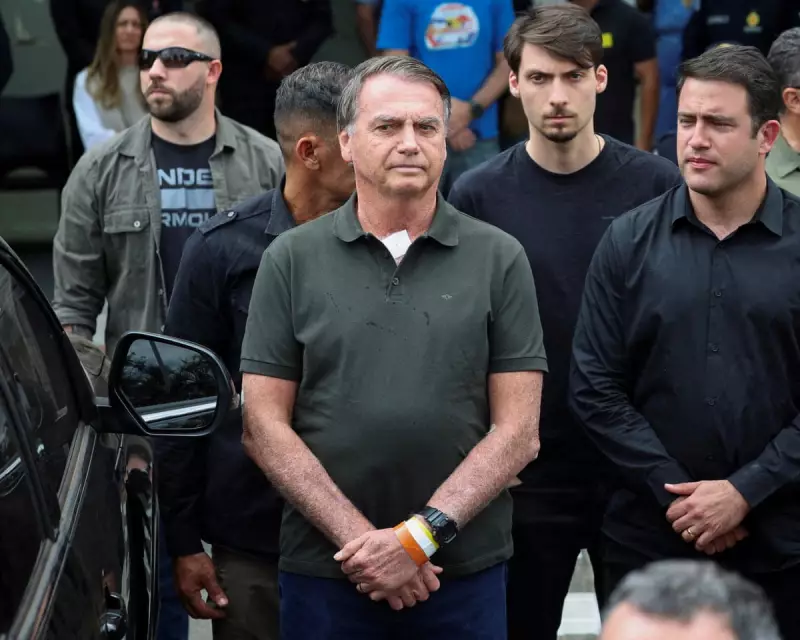
In an ironic twist, Brazil's former far-right president Jair Bolsonaro is attempting to reduce his lengthy prison sentence by embracing an activity he once publicly dismissed: reading books.
A Literary Route to Freedom
Bolsonaro, who was convicted last year for his role in plotting a coup, faces a 27-year prison sentence. His legal team, however, has identified a unique provision in the Brazilian penal code that could shorten his time behind bars. The law allows inmates to knock four days off their sentence for each book they read and successfully report on.
This week, a Supreme Court judge authorised the disgraced former leader to participate in the scheme following a formal request from his lawyers. The ruling presents a stark contrast to Bolsonaro's own past statements on literature. "Sorry, I don't have time to read," he once declared, adding, "It's been three years since I read a book."

The Prescribed Reading List: A Dose of Reality
The justice system's approved reading list is likely to be a bitter pill for the former paratrooper, known for his hostility towards democracy, minority rights, and environmental protections. The selection deliberately includes works that challenge his long-held political views.
The list features Brazilian titles focusing on Indigenous rights, racism, environmental issues, and the violence of the country's 1964-85 military dictatorship—a regime Bolsonaro openly admired. One key text is Ana Maria Gonçalves's 950-page novel Um Defeito de Cor (A Colour Defect), which recounts Brazilian history from a Black woman's perspective.
Also included is Democracy!, a non-fiction picture book by Philip Bunting, alongside literary giants like Tolstoy's War and Peace and Cervantes's Don Quixote, both exceeding 1,000 pages. Notably, the list contains Marcelo Rubens Paiva's I'm Still Here, detailing the plight of prisoners who disappeared into torture centres during the dictatorship.
A History of Controversial Taste
Bolsonaro's own literary preferences have previously drawn criticism. During the 2018 presidential campaign, when asked to name his favourite book, he chose a work by Carlos Alberto Brilhante Ustra, an army colonel notorious for torturing hundreds during the dictatorship. Bolsonaro praised it as "a real story about Brazil … with facts, with data." Ustra's book is not on the approved judicial list.
While Bolsonaro was once photographed with a similarly hefty tome—Winston Churchill's Memoirs of the Second World War—it remains unclear if he ever read it. To benefit from the sentence reduction, he must now prove his engagement by submitting written reports on each book to prison authorities.
The former president was recently transferred to a maximum-security prison in the capital, Brasília, after spending the Christmas period detained at a federal police base. His journey through the pages of books he once scorned has now become a tangible path towards an earlier release.