The Vatican has excommunicated the breakaway Society of Saint Pius X (SSPX) after it defied Pope Leo XIV by ordaining four new bishops without papal approval, triggering sweeping bans and warnings for followers, including those in the UK.
Vatican Declares Schism
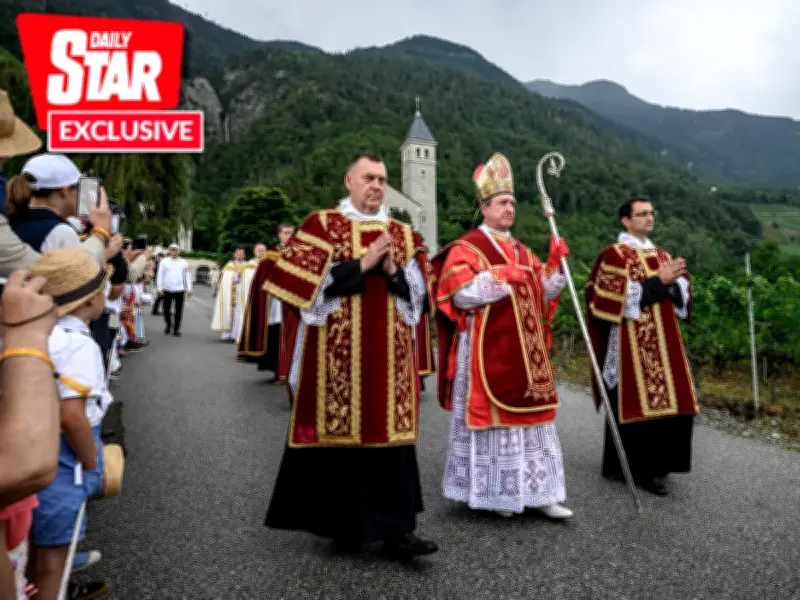
On Thursday, the Vatican's Dicastery for the Doctrine of the Faith (DDF) declared the SSPX to be in a formal state of schism. The group, founded in 1970 by French Archbishop Marcel Lefebvre, has long rejected key reforms of the Second Vatican Council (Vatican II) from the 1960s, including the modern Mass. The Vatican's move followed the SSPX's consecration of four bishops—Marc Hanappier, Michel Poinsinet de Sivry, Michael Goldade, and Pascal Schreiber—at its seminary in Écône, Switzerland, on July 1, 2026, without papal mandate.
Automatic Excommunication
Under Catholic Canon Law, ordaining a bishop without papal approval carries automatic excommunication (latae sententiae). The Vatican responded with an unusually sweeping decree: all six SSPX bishops are excommunicated, all 751 SSPX priests worldwide are declared schismatic and excommunicated, and followers who habitually participate and formally adhere to SSPX doctrinal positions may also face excommunication, according to the Associated Press. The Vatican also revoked previous concessions and declared all sacraments offered by SSPX priests—including confessions and marriages—religiously invalid.
SSPX Rejects Sanctions
SSPX leader Fr Davide Pagliarani rejected the decree, calling the sanctions “objectively unjust and invalid,” and insisting the ordinations were necessary to preserve the “true Mass,” as reported by EWTN News. Brandon Taylor, Research Fellow in the School of Psychology and Humanities at the University of Lancashire, told the Daily Star: “Excommunication is one of the Catholic Church’s most serious canonical penalties, as it places someone outside full communion with the Church. However, the Vatican has made clear that simply attending an SSPX Mass does not automatically result in excommunication.”
Impact on UK Followers
Taylor explained that the key distinction is between occasional attendance and formally identifying with the movement's rejection of Church authority. For lay Catholics attending SSPX chapels in places like London and Preston, the immediate impact is likely symbolic rather than practical. “Those closely identified with the SSPX now face a clearer choice between remaining with the movement or remaining fully in communion with Rome. However, many committed members already believe the institutional Church has departed from authentic Catholic tradition, so the decree is unlikely to change many minds,” he said.
Deeper Conflict Over Authority
The SSPX is best known for insisting on the Tridentine Latin Mass (dating back to 1570) rather than the modern Novus Ordo Mass. But Taylor said the row goes far deeper than language at the altar: “The Latin Mass is the most visible symbol of the dispute, but the disagreement runs much deeper. At its heart, this is a conflict over authority, tradition and the interpretation of the Second Vatican Council. Many traditionalists object not only to the liturgical reforms but also to aspects of Vatican II concerning ecumenism, religious freedom and the Church's relationship with the modern world.”
Resilient UK Network
Taylor believes the SSPX's British network is unlikely to vanish overnight. “The SSPX has a long-established presence in the UK, with chapels and congregations across England, Scotland and Wales. My research has shown that these communities have historically been sustained by strong lay networks, which suggests they are likely to remain resilient despite this latest decree. While it may discourage some people on the margins, it is unlikely to cause the movement to disappear,” he said.
Controversial History
The SSPX is controversial because it rejects Vatican II reforms and tries to preserve a pre-1960s worldview that many see as extreme. Critics say this includes tolerating or repeating antisemitic rhetoric and conspiracy theories, such as older SSPX material invoking the “deicide” charge, warnings about “International Judaism,” and keeping the traditional Good Friday prayer phrase “perfidious Jews” that Rome removed decades ago. The group has also been linked to high-profile Holocaust denial through former SSPX bishop Richard Williamson, who in 2009 claimed there were no Nazi gas chambers (the SSPX later distanced itself and expelled him in 2012). The movement is also accused of promoting strict social isolation from the modern world, with hardline lifestyle expectations around modest dress, traditional gender roles and avoidance of mainstream entertainment. Theologically, it is known for rigid beliefs such as a strict reading of “no salvation outside the Church.”