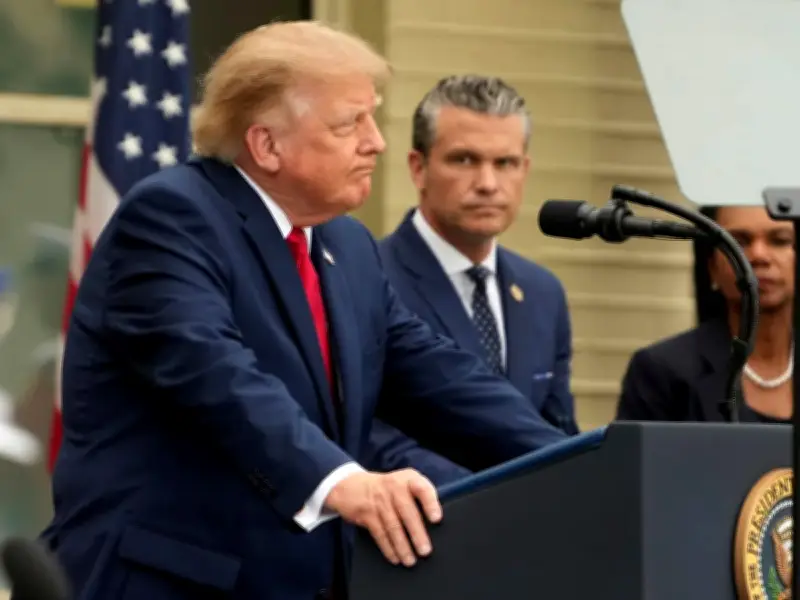
America's first public execution in about 90 years has been scheduled for December 3, announced by Pete Hegseth, Donald Trump's Secretary of War. The condemned man is Nidal Hasan, a former US Army psychologist convicted of killing 13 people at the Fort Hood military base in 2009.
Execution details and historical context
Hasan, who said the attack was an attempt to spark a jihad in retaliation for US wars in the Middle East, is on the US Military's death row. The Pentagon announced yesterday that his execution is scheduled for December 3. Hegseth confirmed in an interview last night that the execution will be by firing squad—the first time the military has used that method since 1945. It will take place at Fort Hood, the base where Hasan committed his crime, with soldiers presumably stationed there performing the execution.
The last public execution in the United States was in 1936, marking 90 years since the practice was abandoned. Hegseth justified the decision, saying: "People need to understand that there's serious consequences for these types of things."
Deterrence evidence and public opinion
Evidence for capital punishment as a deterrent is sketchy at best. The most recent study, published this year, found that it didn't reduce homicides by any more than long prison sentences do. Leading criminologists agree—with 88% responding to a 2009 survey saying it was not effective as a deterrent.
Capital punishment remains popular in the US, with 66% of Americans supporting death as a punishment for murder. However, public executions could reduce that approval as more people witness the reality. The UN has suggested that holding a public execution "would breach the absolute prohibition of torture."
Legal avenues and likely outcome
Options to prevent the execution are limited. Only the President can commute a military capital sentence, which is unlikely. Congress could theoretically pass a law banning public executions, but that's not expected in a Republican-controlled congress. Even after the Midterms, new members don't take their seats until January, and a Democrat majority would face a likely presidential veto.
The judiciary remains an extremely long shot. Hasan's lawyers could theoretically apply to civilian courts with a writ of habeas corpus, arguing that the execution plans are unconstitutional and that public spectacle constitutes cruel and unusual punishment. This legal challenge has never been tried, given the long absence of public executions in America. However, there's no indication Hasan's defence team plans to do so. In all likelihood, the execution will go ahead as planned.