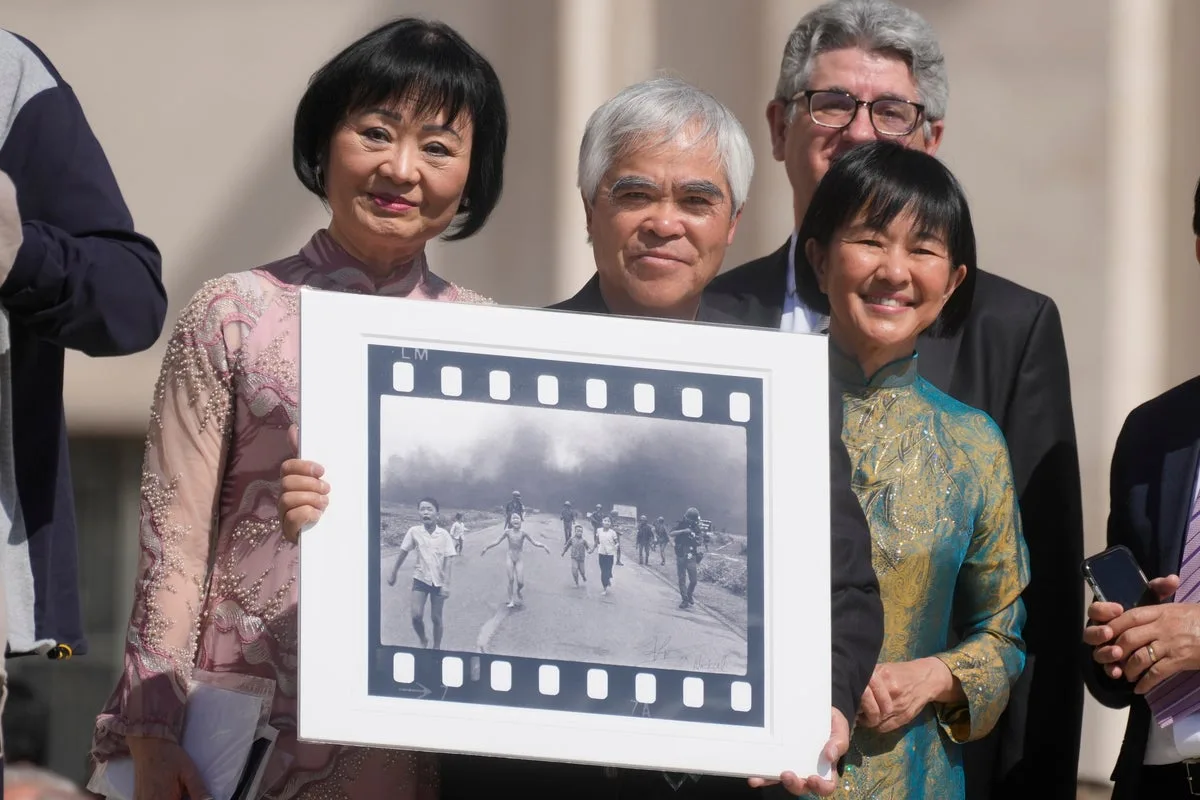
Photojournalist Nick Ut, the Pulitzer Prize-winning photographer behind the iconic 'Napalm girl' image from the Vietnam War, has filed a lawsuit against Netflix and the makers of a documentary that questions his authorship of the photograph.
The lawsuit, filed in France last week, claims that the documentary 'The Stringer' has damaged Ut's reputation by alleging that freelance photographer Nguyen Thanh Nghe actually took the photograph. Ut, who was 21 and working for the Associated Press at the time, said in a statement: 'These accusations strike at the very core of who I am. My entire career has been built on telling the truth, often at great personal risk.'
The iconic image, taken on 8 June 1972, shows nine-year-old Kim Phuc fleeing a napalm attack in Trang Bang, South Vietnam. The documentary, which premiered at the Sundance Film Festival in January 2025, suggests that Nghe, a Vietnamese freelance photographer, took the photo and sold it to AP for $20. Ut is seeking $116,000 in damages and $23,000 in legal costs.
Ut's lawyers had previously asked Netflix not to distribute the film, arguing that its accusations suggest 'fraudulent and disloyal behaviour' by Ut. James Hornstein, Ut's lawyer, said the action was brought 'to defend his reputation, and not for financial gain', with Ut planning to donate any damages to charity.
The World Press Photo Foundation conducted its own investigation and said in May that two other photojournalists 'may have been better positioned' to take the photograph, suspending Ut's credit. However, the Associated Press, after its own investigation, said it would continue to credit Ut. Derl McCrudden, an AP vice president, stated: 'There is no definitive evidence proving that Nick Ut did not take this picture.'
The documentary notes that Kim Phuc has no memory of the moment, but still believes Ut took the photo based on what eyewitnesses, including her uncle, told her.