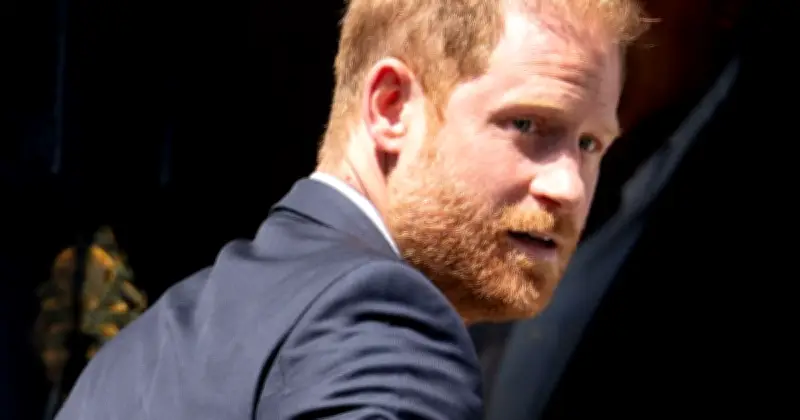
Prince Harry's privacy battle against the Daily Mail failed for one clear reason, according to a legal expert. The Duke of Sussex's claims against the newspaper's publisher over alleged unlawful information gathering were dismissed by a High Court judge this afternoon.
Why the Case Failed
Michael Forrester, partner and head of litigation at Brandsmiths, said the claims failed because the articles complained about 'could realistically have come from a lawful source' and could not be proven to have been obtained illicitly. He told the Daily Express: 'The findings made by the court focus on the specific allegations pleaded by the claimants and the evidence available to prove those allegations on the balance of probabilities.'
Forrester continued: 'The court refused to find wrongdoing based on inference alone and referred to the well-known legal maxim that the more serious an allegation is, the more evidence is likely to be needed to prove it.'
Details of the Case
Harry and a group of other household names, including Sir Elton John, alleged that Associated Newspapers obtained information by deception, intercepted voicemails, and tapped landlines in the high-profile case. The first article that formed part of the Duke of Sussex's case against Associated Newspapers was published in the Mail on Sunday in 2001, which reported that he had been asked to become the godfather of the son of his former nanny, Tiggy Legge-Bourke.
Harry's lawyers claimed that the information used in the article had been obtained unlawfully and that only three people were aware of the decision before it was written. In his ruling, Mr Justice Nicklin said Harry's evidence that few people knew of the decision 'does not, without more, establish that the information was obtained through voicemail interception, still less that it was obtained by, or as the product of, an unlawful act carried out or commissioned on Associated's behalf'.
Another Article in Question
Another article that formed part of the claim was a 2004 story claiming that Harry had shared details of his relationship with Chelsy Davy around a campfire in Botswana, which lawyers for the duke said had been obtained through voicemail interception. Daily Mail chief reporter Sam Greenhill rejected the allegation and said he had received a tip about the story from a man who did not know Harry but 'just happened to be in the same place' and recognised him.
Mr Justice Nicklin said the allegation of voicemail interception was 'not merely unsupported by documentary or other evidence; no coherent mechanism for it was ever articulated'.
Impact of the Judgment
Forrester said the decision to dismiss every claim lodged in the legal battle made it an 'important and substantial judgement in the landscape of private and/or confidential information cases'. He added: 'We are seeing more and more people in the public eye needing to take legal action as anyone with a smartphone is now a potential publisher of highly private information or defamatory content. Artificial intelligence is also adding further complications such as deep fakes, and it will be particularly interesting to see how this case affects the approach online, and social media platforms take to these issues.'