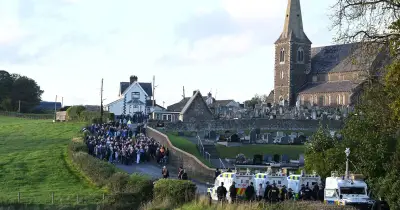
Twenty years ago, the community of Soham, Cambridgeshire, was devastated when school caretaker Ian Huntley murdered 10-year-olds Holly Wells and Jessica Chapman. The case led to significant changes in policing, including the creation of a national police database. Huntley, now 48, is serving a life sentence with a minimum term of 40 years, while his girlfriend Maxine Carr was jailed for conspiring to pervert the course of justice.
Huntley's suspicious behaviour during press interviews while the girls were missing drew attention. PA news agency reporter Brian Farmer, who interviewed Huntley and Carr at their home, noted that Huntley 'jumped in' to answer a question about how the girls would react to a stranger. Huntley claimed Holly would 'probably get in the car and quietly go, but Jessica wouldn't.' Farmer recalled Huntley was agitated and emotional, and later said, 'He knew how they'd react because that's how they reacted when he killed them.'
Farmer raised his concerns with police, and Huntley's alibi was discredited. Carr initially claimed they were together in Soham but later admitted she was in North Lincolnshire. People from Grimsby who knew Huntley came forward with information about his history of misbehaviour with children. Police also noticed new tyres on Huntley's car; the old tyres provided forensic evidence linking the vehicle to the area where the girls' bodies were found.
Forensic ecologist Professor Patricia Wiltshire played a key role by matching pollen on Huntley's shoes and car to the site in Lakenheath, Suffolk. She found 'the approach path' by examining trampled nettles and discovered vegetation from the scene on the girls' clothing, which Huntley had tried to burn. 'There were many markers in terms of pollen grains and spores on Huntley's shoes and his vehicle that firmly put him in that place – not just once, but twice – because he'd been back to check on things,' she said.
Debbie Davies, then deputy editor of the Ely Standard, recalled feeling 'sick' when she saw Carr display a poster of the missing girls in her window after the murders. 'It's only obviously since then that I've thought about the horrors of what went on in that house,' she said.