Antonio Tejero, the former Spanish lieutenant colonel who infamously led a failed military coup in 1981, has died at the age of 93. His passing marks the end of a controversial life that left an indelible mark on Spain's modern history.
Death in Alzira and Historical Timing
Tejero died peacefully on Wednesday evening in the eastern Spanish town of Alzira, according to a statement from the Madrid-based law firm A. Cañizares Abogados, which represented his family. The firm noted he was surrounded by his entire family and had received the holy sacraments before his death.
Remarkably, his death occurred on the very same day that Spain's government published a significant collection of declassified documents related to the 1981 coup attempt. This coincidence has drawn renewed attention to one of the most turbulent episodes in Spain's transition to democracy.

The Dramatic Events of February 23, 1981
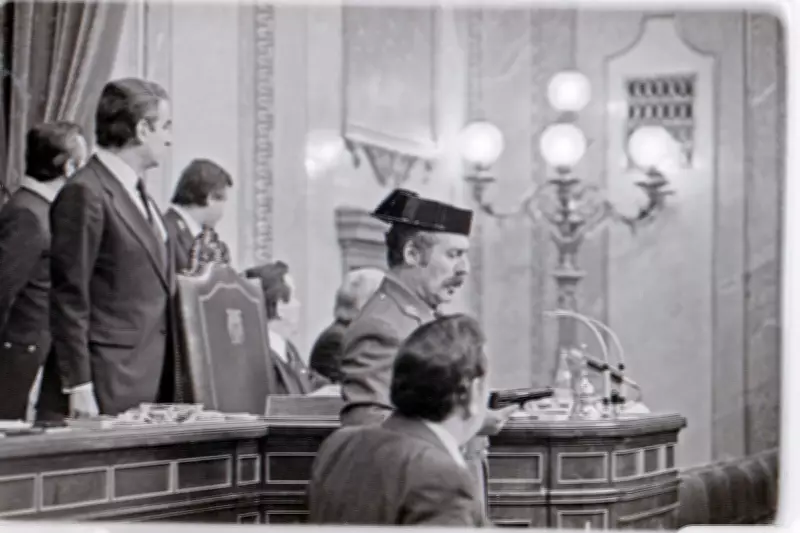
On February 23, 1981, Tejero stormed Spain's parliament building alongside approximately 200 armed civil guards in what historians consider the last and most serious attempt to reverse Spain's democratic transition following the death of dictator General Francisco Franco in 1975.
The attackers dramatically interrupted the chamber's vote to swear in Leopoldo Calvo-Sotelo as Spain's prime minister. Tejero, wearing the distinctive patent leather tricorn hat of Spain's civil guard gendarmerie police force, waved a pistol while shouting "Everyone, freeze!" as he seized control of Parliament.
Live Television Broadcast and National Trauma
For 18 tense hours, Tejero and his fellow guardsmen held members of Parliament and government ministers hostage. The dramatic events were seared into Spain's collective memory largely because television cameras continued to roll, broadcasting the crisis live to a horrified nation.
Spaniards watched in real time as officers fired guns within the parliamentary chamber and lawmakers took cover under their desks. These images became iconic representations of the fragility of Spain's young democracy during its critical transition period.
Royal Intervention and Constitutional Defense
The coup attempt was ultimately foiled after former Spanish King Juan Carlos I made a decisive television address denouncing the rebellion. The monarch called on the armed forces not to support the coup and to respect Spain's fledgling constitution, a move that proved crucial in preserving democratic institutions.
Legal Consequences and Later Life
Tejero was convicted of military rebellion and sentenced to 30 years in prison. He served 15 years and nine months before his release. Following his imprisonment, Tejero divided his time between his native Málaga in southern Spain and Madrid, according to a 2011 report by Spain's El País newspaper.
The failed coup attempt remains a defining moment in contemporary Spanish history, representing both the threats to democratic consolidation and the resilience of Spain's constitutional monarchy. Tejero's death closes a chapter on one of the most dramatic challenges to Spain's post-Franco democratic order.