Families of patients who died in the infection scandal at Scotland's largest hospital have warned the SNP Government "we won't go away" if the health board in charge is abolished.
John Swinney announced last week he intends to reduce the number of NHS boards across the mainland to just two as part of a wider reform of the public sector in order to save cash. It means NHS Greater Glasgow and Clyde (NHS GGC), which manages the Queen Elizabeth University Hospital (QEUH) in Glasgow, will likely be merged with other boards in the west of the country.
Swinney's announcement comes just months before a long-running public inquiry into the scandal-hit hospital is due to report. The health board was also separately named as a suspect in a corporate homicide investigation connected to the scandal, with several deaths at QEUH under investigation by prosecutors.

Families demand action after meeting with Health Secretary
Nine campaigning families who lost loved ones at the hospital met this week with Angela Constance, the new Health Secretary, after they previously warned the health board merger plan would make their quest for justice "so much harder".
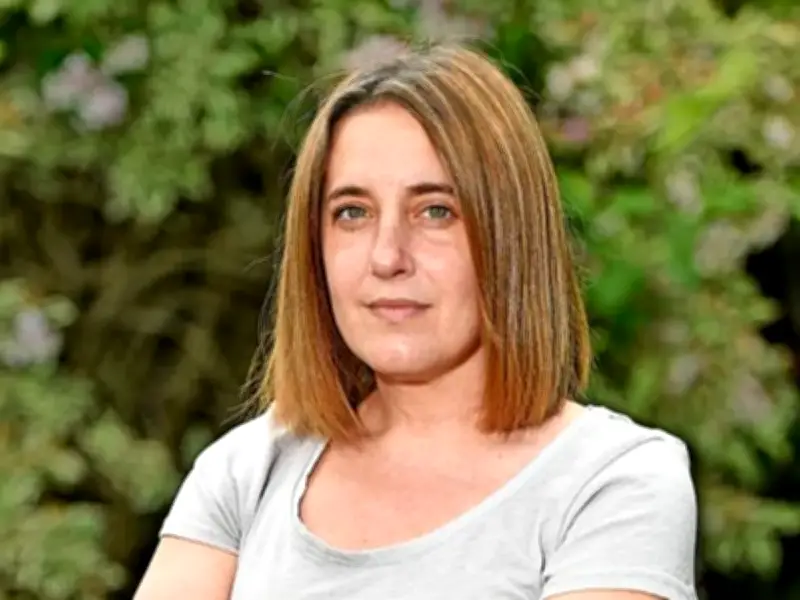
Louise Slorance, the widow of a senior Scottish Government official who died at the hospital in 2020, has been one of the most prominent campaigners demanding justice. Speaking on behalf of the families who attended the meeting, she told the Record: "The Cabinet Secretary said I have listened and you have been heard.
"We have been retelling our stories for nine years - six health ministers have listened and heard. Despite this, we are still fighting for truth and justice today. We don’t need more listening, we need action now."
She added: "We won’t go away."
Husband's death and the fight for truth
Andrew Slorance, a dad-of-five who died aged 49, had gone into hospital in October 2020 for a stem cell transplant and chemotherapy after being diagnosed with mantle cell lymphoma. He died six weeks after being admitted - with the official cause of death listed as "Covid pneumonia".
When Louise requested his medical notes after his death, she found he had also been treated for a fungus called aspergillus, which had not previously been disclosed to her. She later claimed her husband's fatal infections were acquired in the QEUH as a result of a substandard ventilation system.
In a statement to the Record, Constance said: "I am grateful for the opportunity to have met with some of the families to listen to their concerns on issues at the QEUH.
"I made clear I recognise the deep hurt and trauma families continue to feel and the Scottish Government established the Scottish Hospitals Inquiry to help families get the answers they deserve.
"We stand ready to implement the Inquiry’s recommendations when the final report publishes. I am also personally committed to ensuring the outcome of the Inquiry has whole-system impact that NHS Scotland can learn from."
Concerns over corporate homicide investigation
In a statement released through lawyers last week, the families of the patients who died at the QEUH accused Swinney of making the fight for justice "so much harder".
"We believe that this proposed health board reform is an attempt by the Scottish Government to muddy the water over the QEUH scandal and we are now deeply concerned about the future prospects of the corporate homicide investigation," the statement said.
NHSGGC offered a "sincere and unreserved" apology earlier this year to the patients and families affected by the infection scandal, and insisted the hospital was now safe.
In its closing submissions to the Scottish Hospitals Inquiry, which will report by the end of the year, the board said it was likely there was a "causal connection" between infections suffered by patients and "the hospital environment, in particular the water system". But the board stressed that there was no definite link between the hospital environment and specific individual cases of infection.
Jackie Baillie, Scottish Labour acting leader, previously urged SNP ministers to protect the investigation by placing a legally binding guarantee to pass on any potential criminal liability to the health board that replaces NHS GGC.

She said: "For years, families who lost loved ones at the hospital have been kept in the dark, lied to, and gaslit, all while simply seeking answers about what happened at the QEUH.
"The merging of health boards is a huge change – the most significant in decades for our NHS.
"While we are supportive of the efforts to cut bureaucracy and make our health service more efficient, there are understandably concerns about how these reforms will impact on the ongoing corporate homicide investigation.
"It is absolutely vital that any and all evidence pertinent to this investigation is preserved so that those responsible can be held to account and families can get the answers they deserve.
"We cannot afford to run the risk that this widescale merging of health boards leads to the loss of potentially valuable evidence.
"That is why SNP ministers must give a legal guarantee that any criminal liabilities are carried over to any GGC successor organisation."