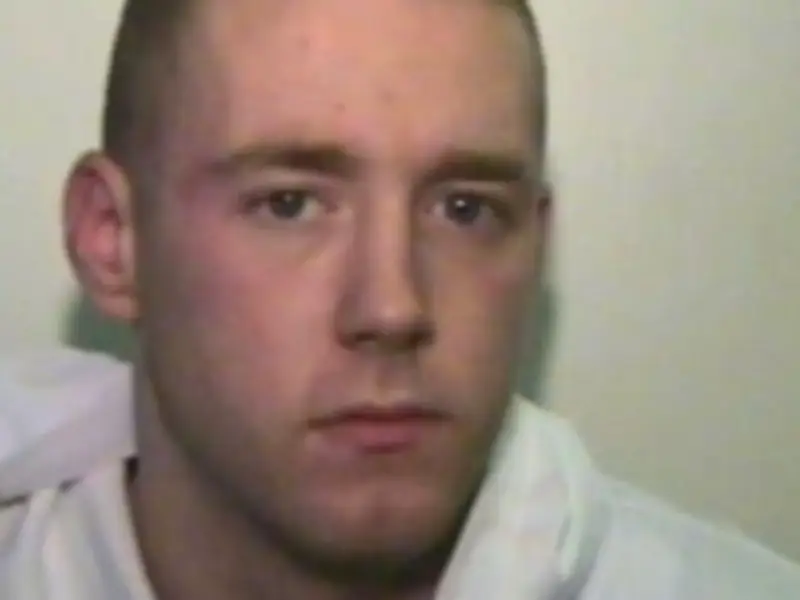
Prison officers 'panicked' and did not cut a hanged inmate's ligature or perform CPR for nearly three minutes, a coroner has said. Arron Hamer died in hospital three days after being found hanged in his cell at HMP Buckley Hall in Rochdale.
He was serving a controversial indeterminate public protection (IPP) sentence, having been jailed aged 17 for two-and-a-half years for attempted robbery. The 32-year-old was released in 2022, having spent 13 years in prison, but was recalled the following year after failing a drugs test. On June 18 last year he was found hanged in his cell and died in Royal Oldham Hospital three days later.
Coroner raises urgent concerns
Now Manchester North senior coroner Joanne Kearsley has raised urgent concerns about his death. In a prevention of future deaths report sent to the prison and the chief coroner, Ms Kearsley wrote: "Upon finding Mr Hamer the prison officers did not cut the ligature for nearly three minutes or commence CPR."

"It was heard that they panicked and were visibly distressed on finding Mr Hamer. They had undertaken their basic life support training years ago on their initial prison officer training."
Ms Kearsley, who recorded a conclusion of suicide following Mr Hamer's inquest in June, wrote that he had experienced 'significant childhood trauma' having witnessed an attempted murder aged seven, which resulted in his family having to be relocated. He suffered 'significant' bullying at his new school and self-harmed between the ages of seven and 10. He was then taken into care aged 11 and began using drugs.
Training concerns and response
Warning there is a 'risk that future deaths could occur unless action is taken', Ms Kearsley raised concerns that prison officers do not take a mandatory refresher on basic life support after they have done their initial training. Ms Kearsley also said the 'majority' of prison officers do not undergo refresher training after completing a basic first aid at work course.
In response to Ms Kearsley, the HM Prison and Probation Service said: "All new prison officers receive emergency first aid training as part of their initial foundation programme, which includes instruction in CPR. This training is mandatory, remains valid for three years, and is subject to local requalification to ensure staff maintain the necessary level of competence."
Ombudsman investigation findings
Meanwhile, an investigation into Mr Hamer's death by the Prisons and Probation Ombudsman (PPO) found that in the weeks leading up to his death he had been attacked in his cell over a £50 drug debt and had either sold or given away many of his possessions.
Mr Hamer, who moved to Buckley Hall in April 2025 having also spent time in HMP Hindley in Wigan, HMP Preston and HMP Wymott in Chorley, was said to have attempted suicide as a child and had a 'history of anxiety and illicit substance use'. He had never self-harmed in prison and was not under suicide watch.
The PPO said that another inmate reported that two to three days before Mr Hamer's death he was assaulted by four other prisoners over the drug debt. Over the next two days Mr Hamer, who was later seen with a black eye and bruising and scratching to his face, didn't go to work saying he had flu. Following his death police found a blood-stained sweatshirt and pillowcase in his cell.
Around 2pm on June 18 Mr Hamer was found hanged during a routine check. The PPO report said an officer immediately cut the ligature, but the binding around his neck wasn't removed for another two and a half minutes. CPR wasn't started until healthcare staff arrived around three and a half minutes after an emergency call was made.
"We cannot say whether these delays made a difference to the outcome for Mr Hamer but in cases of hanging the swiftest possible response is necessary," ombudsman Adrian Usher wrote.
IPP sentence background
Introduced in 2005, IPP sentences were designed for the indefinite imprisonment of criminals found to be a risk to the public, but were used much more widely than intended and issued to offenders convicted of low-level crimes. They were scrapped in 2012 but its abolition was not retrospective.

As of June 30 this year there were 856 unreleased IPP prisoners, according to the Ministry of Justice. Eight out of 10 of those have been jailed for at least a decade beyond the minimum term at which they could apply for parole.
It's estimated another 1,500 IPP prisoners have been recalled to prison since their original sentencing. Last month Andy Burnham pledged to 'end the injustice' of indefinite jail terms. In March this year Parliament heard that between 2005 and 2025, 92 people took their own lives while serving an IPP.