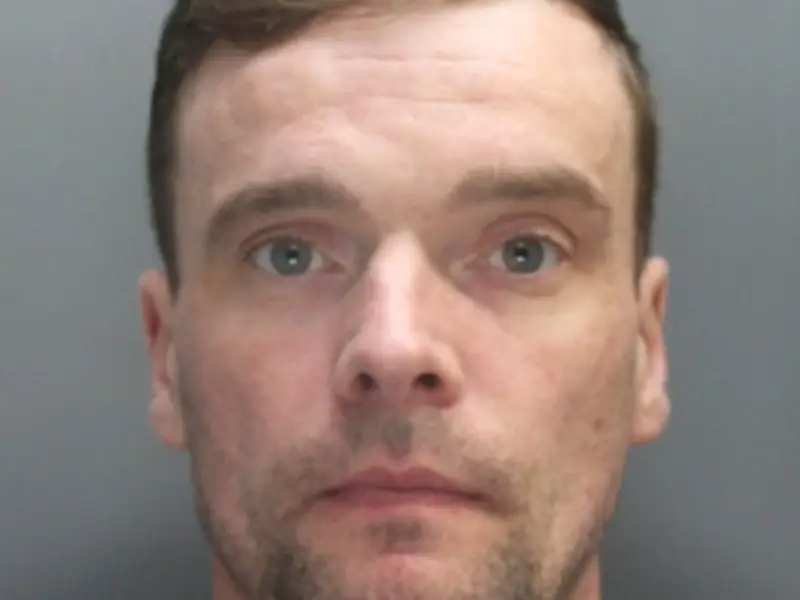
Mark Fellows, a convicted gangland hitman nicknamed the Iceman, is believed to be one of 60 prisoners who will live a segregated and isolated life behind bars after murdering a Welsh child killer at a top-security jail dubbed "Monster Mansion." Fellows, 45, was convicted last week alongside David Taylor, 64, and Lee Newell, 57, of the murder of Kyle Bevan, 33, who was serving a life sentence at HMP Wakefield in Yorkshire for the murder of two-year-old Lola James in Haverfordwest, Pembrokeshire, in 2020.
Details of the murder
Bevan was handed a minimum jail term of 28 years after carrying out a "sustained, deliberate, and very violent" attack on Lola, his partner's daughter. She suffered around 101 injuries, including a severe brain injury, and died days later in hospital without regaining consciousness. The trial of Fellows, Taylor, and Newell heard the three defendants were seen on CCTV entering Bevan's cell at HMP Wakefield and emerging less than five minutes later. Bevan was put in his bed after the attack and was not discovered until the following morning, having bled to death after suffering 25 stab wounds inflicted by an improvised weapon.
Prosecution statement
Speaking at Leeds Crown Court, prosecutor Jason Pitter KC said the killing was a "carefully coordinated venture carried out with real efficiency by people who … knew what they were doing" who then left Bevan "tidily tucked up in bed … as he bled out on his mattress looking like, for all intents and purposes, as if he was asleep." He told jurors the attack took place in "four minutes and 39 seconds when all three of them were in that tiny cell together."
Fellows' criminal history
Fellows was already serving a whole-life order for the brutal executions of Paul 'Mr Big' Massey and Liverpool gangland enforcer John Kinsella. Massey was shot with an Uzi sub-machine gun outside his own home in July 2015. In May 2018, Fellows killed Kinsella, who had carried Massey's coffin at his funeral, as he walked his dog with his pregnant partner in Rainford. Fellows was handed his second whole-life order at Leeds Crown Court earlier this month, ensuring he will never have a chance of freedom again.
Prison security measures
One prison source told the Liverpool Echo that prison officers are on "high alert" as Fellows has "nothing to lose" living in prison, but noted that Fellows poses a higher risk to inmates than to prison officials. Fellows will likely be kept away from other prisoners, being closely monitored within a close supervision centre. These small, specialist units are found in six high-security prisons across the country and hold around 60 of the most dangerous criminals, most of whom have been jailed for serious violent crimes. This means Fellows will have limited human contact and spend most of his days alone.
Comparison with other high-risk prisoners
The maximum-security prisoner is likely to receive the legal minimum of prison privileges, similar to Southport killer Axel Rudakubana. The Cardiff-born teenager, currently serving a 52-year term, killed three children in Southport on July 29 last year. The legal minimum means Fellows can still purchase items from the canteen using money earned in prison or sent by family, but he spends limited time outside his cell and is brought items to his location. The decision on privileges may be influenced by the fact he killed a child murderer rather than a prison official.
Official responses
Mark Fairhurst, national chair of the Prison Officers' Association, said: "Prison officers continue to operate in one of the most violent and hostile working environments in the world, managing some of the most dangerous individuals in society. This case underlines the risks they face from prisoners who have nothing to lose having been sentenced to die in custody. Mr Fellows will spend the rest of his life in the high-security estate, largely within a close supervision centre due to his sustained violent behaviour. Staff will continue to face serious risks as they protect the public by securely holding offenders determined to act on violent impulses. Their professionalism and commitment in doing so deserve recognition."
A Ministry of Justice spokesman said: "Prisons must be places of control and punishment to protect the public. While we cannot comment on individual prisoners we’re introducing a taskforce to reduce violence across the high-security estate and investing an extra £35m this year to bolster physical security. That’s on top of over £40m already invested in prison security."