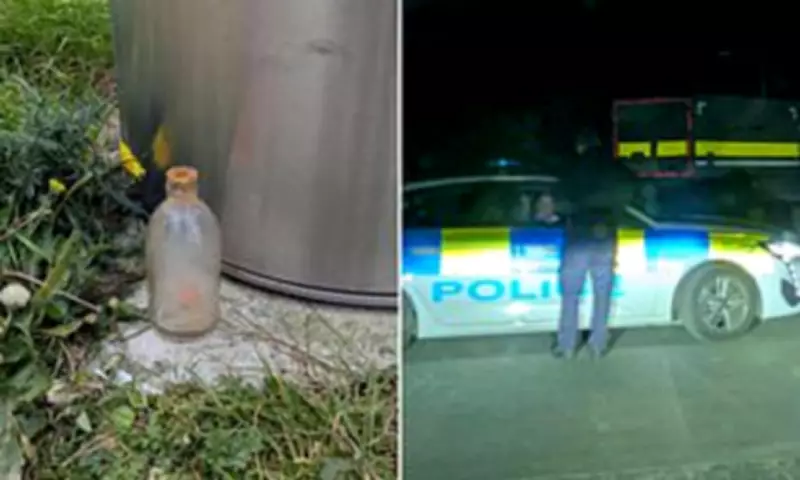
A dog walker in Hartlepool, County Durham, inadvertently picked up a World War Two bomb on Crimdon Beach after mistaking it for a bottle. The device subsequently exploded in his hands, prompting an emergency response.
Incident Details
Tony Lovell was searching for trinkets along the shoreline when he came across what appeared to be an unremarkable item. However, he soon noticed a bright orange liquid swirling inside and an unpleasant odour emanating from it. Moments later, the object began emitting black smoke, with flames licking the dog lead hanging over his shoulders.
Mr Lovell rushed to hospital and left the bottle near a bin. The army's bomb disposal unit later collected the item and destroyed it in a controlled explosion. He was attended to by the North East Ambulance Service and found to be uninjured.

Discovery and Reaction
Mr Lovell explained that he was attracted to the item because he thought it was a nice-looking bottle. He said: 'I always like searching the beach for interesting things - bits of old boats, funny stones, pieces of Victorian boots, weird vapes. I thought it was some posh modern gin bottle. But the liquid inside was bright orange and smelled awful.'
Despite his son warning him that the item was too dangerous, Mr Lovell kept holding on to it. His son's concern proved justified when the object started smoking in his hands. He later realised the reaction had been triggered when the substance inside came into contact with air.
After returning to his caravan, he told his wife Marie, whose father was a former fire chief. She insisted he call the emergency services. 'The lady on the phone told me to take all my clothes off straight away, put them outside and get in the shower,' he said. 'Then they told me to go to the hospital.'
Emergency Response
Emergency crews, including police, paramedics, and fire services, attended the scene. The army's bomb disposal unit was also called in. Mr Lovell noted: 'They asked what I'd done with the lid, and I said I'd just thrown it on the grass somewhere. Then suddenly there was a patch of grass going up in flames, that was the lid.'
The discovery comes just weeks after around 150 phosphorus-based grenades from World War Two were found on the same stretch of coastline. It is not yet confirmed whether his find was linked to these previous discoveries, but experts believe it likely consisted of a similar material, which can ignite spontaneously when exposed to oxygen.
Public Warning
'It's quite scary that something from a conflict long ago is still having after effects,' Mr Lovell added. 'People need to be careful, it might just look like a bottle, but it could be something much more dangerous.'