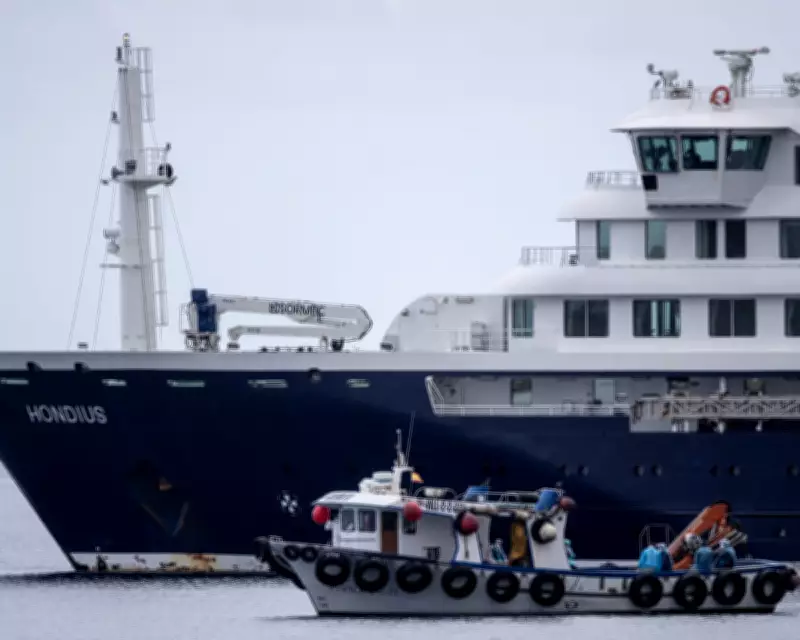
Seventeen American passengers from the hantavirus-affected cruise ship M/V Hondius have disembarked in Tenerife, Spain, and are being repatriated to the United States. Among them, one individual has tested positive for the Andes strain of hantavirus, while another exhibits mild symptoms.
Disembarkation and Medical Assessment
The vessel docked at the Granadilla port in Tenerife on Sunday, where medical teams from the US Centers for Disease Control and Prevention (CDC) awaited the passengers. The individuals, whose identities remain undisclosed and who have not tested positive for the virus, were interviewed about their potential exposure during the cruise.
A specially chartered flight will transport the passengers to Nebraska, home to the national quarantine unit and the Nebraska Biocontainment Unit. The US Department of Health and Human Services (HHS) confirmed on Sunday evening that two passengers—one with mild symptoms and another with a mildly positive PCR test for the Andes strain—were traveling in the plane's biocontainment units.

Arrival in Omaha
The US State Department's airlift will convey passengers to the ASPR Regional Emerging Special Pathogen Treatment Center (RESPTC) at the University of Nebraska Medical Center in Omaha. The passenger with mild symptoms will be taken to a second RESPTC.
Acting CDC Director Dr. Jay Bhattacharya described the post-arrival process to CNN: "We're going to interview them and assess them for risk. If they weren't in close contact with someone who was symptomatic, then we're going to deem them low risk. If they were in close contact, we're going to deem them medium or high risk. At that point, we will offer them alternatives." These alternatives include staying in Nebraska or returning home under the supervision of state and local public health agencies, with CDC support.
Comparison to COVID-19
Dr. Bhattacharya emphasized that hantavirus is not comparable to COVID-19 and urged against public panic. "This is not Covid... and we don't want to cause a public panic over this. We want to treat it with the hantavirus protocols that were successful in containing outbreaks in the past," he stated.
On Friday, the CDC issued a health alert for clinicians and health departments, providing guidance and outlining hantavirus symptoms. On Saturday, a CDC official clarified that no mandatory quarantine is being implemented and that testing is not recommended for asymptomatic individuals.
WHO Recommendations
World Health Organization (WHO) Director-General Tedros Ghebreyesus responded to the US decision against mandatory quarantine, stating: "Our advice is clear. Starting from May 10, we recommend 42 days with active follow-up, 42 days of quarantine, but it could be in a facility or at home. We advise them, we don't impose laws."