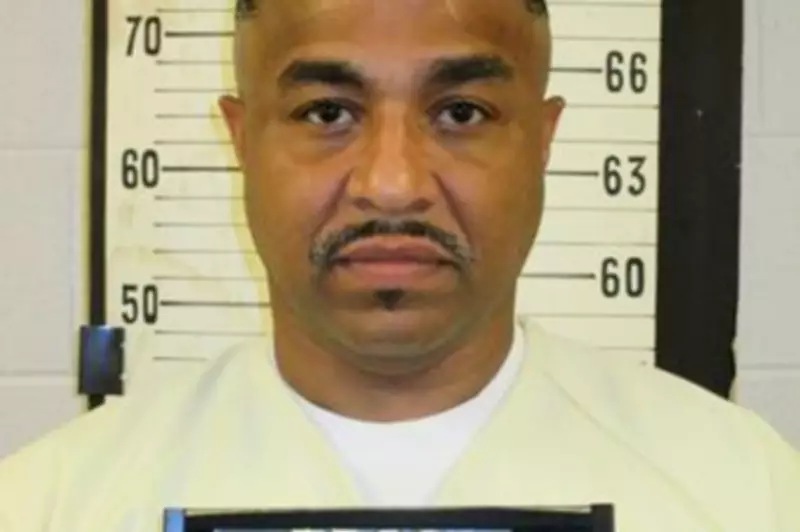
The scheduled execution of Tennessee death row inmate Tony Carruthers on Thursday was abruptly halted after state officials were unable to locate a suitable vein for administering the lethal injection. Tennessee Governor Bill Lee subsequently granted Carruthers a one-year reprieve following the botched procedure.
Maria DeLiberato, an attorney representing Carruthers, was visibly emotional when the stay was announced. Breaking down in tears while addressing reporters, she exclaimed, "That's amazing! I'm so grateful!"
Background of the Case
Carruthers, aged 57, was sentenced to death for the 1994 kidnappings and murders of Marcellos Anderson, his mother Delois Anderson, and Frederick Tucker. The execution had been clouded by significant controversies, including unresolved questions about the state's lethal injection drugs, denied requests to test DNA and fingerprint evidence, and claims that Carruthers was mentally incompetent.

Throughout his trial, Carruthers was compelled to represent himself, frequently expressing dissatisfaction with court-appointed attorneys and even threatening several of them.
Lack of Physical Evidence
A central point of contention in the case is the absence of physical evidence directly linking Carruthers to the killings. His conviction relied heavily on testimony from individuals who claimed to have heard him confess to or discuss the crimes. Among these witnesses was a man later identified as a police informant, who publicly stated he was paid for his testimony. Additionally, co-defendant James Montgomery, initially sentenced to death alongside Carruthers, was later resentenced and released from prison in 2015, according to court documents.
Authorities alleged that Marcellos Anderson was a drug dealer and that Carruthers sought to take over the illegal drug trade in their Memphis neighborhood. Carruthers' legal team has argued that his "paranoia and delusions" rendered him unable to cooperate with legal counsel, a claim the judge dismissed as willful behavior. The Tennessee Supreme Court, in its appeal ruling, acknowledged that Carruthers' actions before the trial jury were "offensive and self-destructive" but concluded the situation was "one of his own making."
Historical Significance
If the execution had proceeded, Carruthers would have been the first person executed after being forced to represent himself in over a century, according to a clemency petition submitted to Governor Lee. The petition also highlights a critical aspect of his sentencing: a medical examiner's testimony that the victims were buried alive, presented with graphic detail to the jury. This claim was later withdrawn by the examiner, and subsequent experts have since refuted its accuracy.
Carruthers' Mental State
Carruthers' legal team has also attempted to demonstrate his incompetence for execution. Court filings indicate that Carruthers believes the government is bluffing about his execution, aiming to coerce him into an imaginary plea deal. He is convinced this would allow the government to avoid paying him millions of dollars, which he believes he is owed. His delusions extend to his own attorneys, whom he suspects are part of a conspiracy against him, leading him to refuse communication with them.
National Context on Executions
The number of executions across the United States saw a significant increase, rising from 25 in 2024 to 47 last year, largely driven by Florida, which carried out 19 executions in 2025, up from just one the previous year, according to the Death Penalty Information Center. So far this year, 13 individuals have been executed in four states, with 11 more executions currently scheduled. Multiple executions within short timeframes are not uncommon; last year, four people were executed over three days in March across Oklahoma, Florida, Louisiana, and Arizona, while another five were executed over a week in October in Arizona, Mississippi, Missouri, Florida, and Indiana.

Tennessee resumed executions last year after a three-year hiatus, which followed the discovery that the state was not adequately testing lethal injection drugs for purity and potency. An independent review subsequently revealed that none of the drugs prepared for the seven inmates executed in Tennessee since 2018 had undergone full testing. The state attorney general's office also admitted in court that two key officials responsible for overseeing Tennessee's lethal injection drugs "incorrectly testified" under oath that the chemicals were being tested as required.