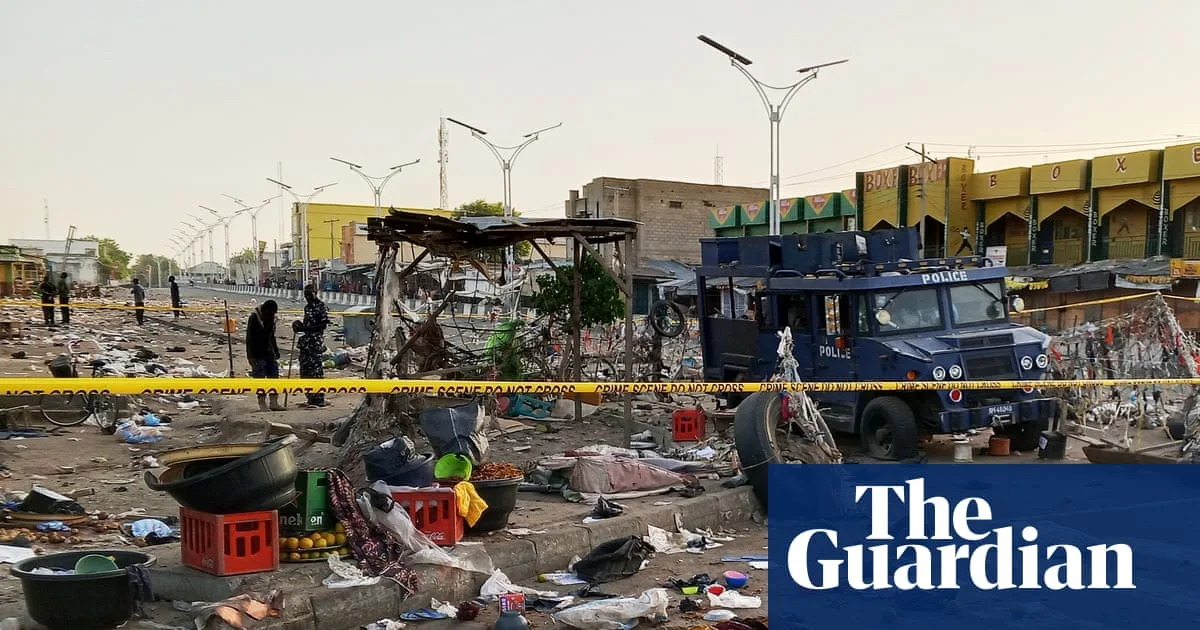
At least 23 people have been killed and more than 100 injured in a series of suspected suicide bombings in the north-eastern Nigerian city of Maiduguri. The explosions, which occurred on Monday evening during iftar, the breaking of the Ramadan fast, targeted a post office, market areas and the entrance to the University of Maiduguri teaching hospital.
Military authorities said the attacks were carried out by "suspected Boko Haram terrorist suicide bombers" using improvised explosive devices. A statement from military spokesperson Sani Uba described them as cowardly assaults on crowded public areas aimed at inflicting mass casualties and spreading panic. No group has yet claimed responsibility.
The bombings revive painful memories for Maiduguri, which was a regular target for Boko Haram at the height of the insurgency. Exactly a decade ago, 58 people were killed and more than 140 injured in four separate blasts at the same post office and Monday market locations in one of the deadliest days in the city's history. In recent years, the city had become a relative oasis of calm, with most violence pushed into rural hinterlands.

The latest attack came just hours after an assault on a military post on the outskirts of the city on Sunday night into Monday morning. Boko Haram and its offshoot, the Islamic State West Africa Province (ISWAP), have been fighting to establish an Islamic caliphate, displacing over two million people and killing hundreds of thousands. The group was founded in 2002 and intensified after the extrajudicial killing of its then leader Mohammed Yusuf in 2009. Last April, Borno Governor Babagana Zulum warned that jihadists were staging a comeback, a concern many feel was not adequately heeded.
President Bola Tinubu, currently on a state visit to the United Kingdom, has ordered security chiefs to relocate to Maiduguri to "take charge of the situation" and to "locate them, confront them and completely defeat them". The directive underscores the seriousness of the renewed threat in a region that had hoped to move beyond its violent past.