Spain's Constitutional Court has delivered a landmark ruling, unanimously rejecting a father's appeal against his paraplegic daughter's bid for euthanasia. This decision sets the stage for an unprecedented legal saga to advance to the European level, marking a critical juncture in Spain's application of its 2021 euthanasia law.
Legal Framework and the Daughter's Request
Spain stands among a select group of nations that have legalised euthanasia, following legislation enacted in 2021. The law imposes strict criteria, permitting individuals of sound mind who endure a 'serious and incurable illness' or a 'chronic and disabling' condition to seek assistance in dying. In this case, the woman, who is in her twenties, had her request supported by the euthanasia board in the northeastern Catalonia region, scheduling the procedure for August 2024.
Last-Minute Suspension and Father's Objections
However, the process was abruptly suspended at the eleventh hour after the father filed a legal objection, backed by the conservative campaign group Abogados Cristianos (Christian Lawyers). A court applied precautionary measures to halt the euthanasia, leading to a series of appeals. The father argued that his daughter suffered from mental disorders that 'could affect her ability to make a free and conscious decision' as mandated by law. He also contended there were indications she had reconsidered her decision and that her condition did not involve 'unbearable physical or psychological suffering'.

Constitutional Court's Unanimous Decision
The Constitutional Court announced its unanimous rejection of the father's appeal against prior rulings by the Supreme Court and lower legal bodies that had halted the euthanasia. The father had cited 'the violation of the right to effective legal oversight' and the right to life, but the court found a 'clear absence of any violation of a fundamental right'. This ruling underscores the judiciary's interpretation of the 2021 law's safeguards and the woman's autonomy under it.
Political and Public Reactions
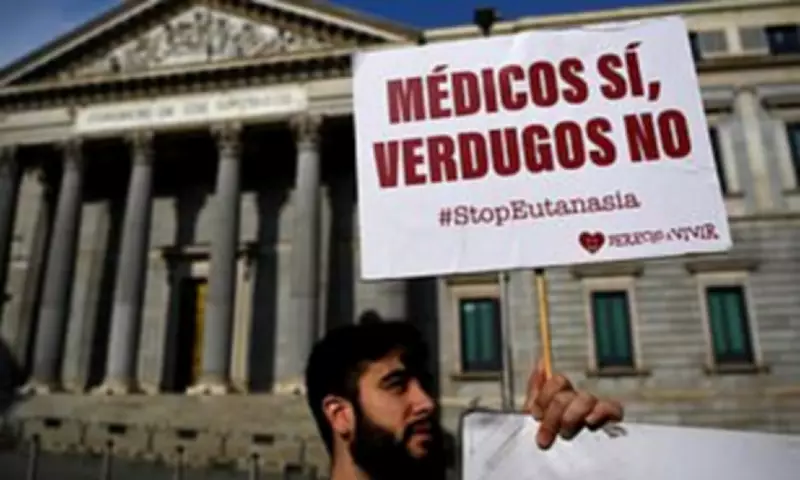
The case has sparked significant political and public debate. Espinosa de los Monteros, a deputy of the conservative VOX party, expressed support for demonstrations against the euthanasia law, including one in front of the Congress of Deputies in Madrid. Protesters held signs with messages such as 'Doctors Yes, Executioners No', highlighting the divisive nature of the issue in Spanish society.
Background of the Case and European Implications
The woman became paraplegic after throwing herself from the fifth floor of a building in a 2022 suicide attempt. In April 2024, she petitioned a court to exercise her right to die under the 2021 law, making her case the first to reach a Spanish court for judicial consideration since the legislation was passed. Following the Constitutional Court's decision, Abogados Cristianos has declared its intention to take the case to the Strasbourg-based European Court of Human Rights. The group insists that 'fundamental rights are being violated, especially the right to life and effective legal oversight', setting up a potential landmark ruling at the European level.
This legal battle highlights the complex interplay between personal autonomy, medical ethics, and legal oversight in end-of-life decisions. As the case progresses to Europe, it will likely influence debates on euthanasia laws across the continent, testing the boundaries of human rights and individual choice in profound ways.