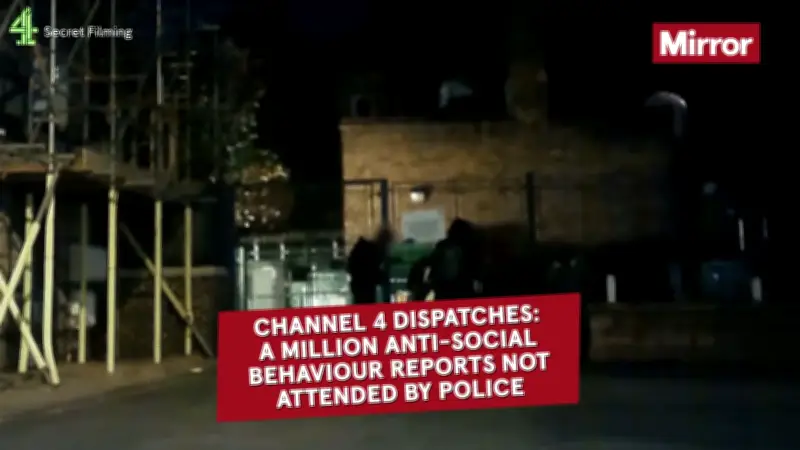
More than a million reports of anti-social behaviour were not attended by police last year, according to new figures. No officers were dispatched to investigate over three quarters of all nuisance incidents recorded during the period.
In total, UK police did not attend 1,057,012 reports of anti-social behaviour out of 1.34 million recorded in 2025, the Freedom of Information figures show. Across the country, local councils closed seven in ten cases without any formal resolution during the same period.
Undercover investigation in Brixton
The statistics were uncovered by Channel 4's Dispatches for their latest programme, "Lawless Britain? Undercover on the Streets," which visited nuisance behaviour hotspots around the country. Presenter Ellie Flynn spent the night in a flat in Brixton, south London, in an area known for open drug use, prostitution and violence.
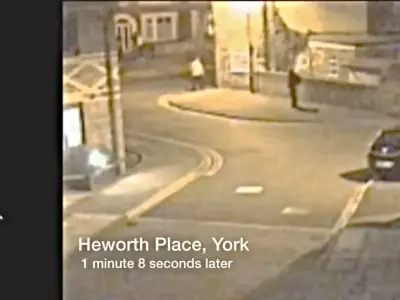
Ms Flynn was targeted by one crack cocaine addict who was then caught on camera being arrested after appearing to hit a female police officer. The journalist tells the film: "There was a guy that was really, properly intimidating and he got so aggressive. We had literally just walked into the flat for the first time."
Ms Flynn spoke to residents who said they are desperate to leave the place they grew up in. One local, who has lived in Brixton all his life, said: "How do you expect me to raise a family when I have to jump over someone injecting themselves, or smoking something on my doorstep?" He added: "Sometimes you have to turn the TV up loud just so you pretend that you don't live where you live."
Regional police attendance figures
An astonishing 99.8 per cent of nearly 10,000 reported cases of anti-social behaviour reported in the borough last year were closed without any enforcement action. Ms Flynn told the Mirror: "Your home should be the place where you feel safe but that's not the reality for the residents we spoke to and their pleas for help are falling on deaf ears."
A young woman living in South Shields, Tyne and Wear, told the programme that she is too scared to leave her flat due to violent and intimidating behaviour by her neighbours. The council has refused to move the 19-year-old. The woman said: "There's no peace. You constantly feel like you're not safe. I don't feel comfortable staying here by myself."
Further figures obtained by the programme reveal the Met Police recorded 255,656 anti-social behaviour incidents last year of which they attended less than 20% (47,960). West Midlands Police had 22,667 reports of which they attended 14% (3,246). And Northumbria Police recorded 29,040 cases of which they sent officers to 22% (6,489).
Police and council responses
Catherine Akehurst, National Police Chiefs' Council lead for ASB, said: "Policing is determined to play its part in reducing anti-social behaviour (ASB) suffered by individuals and communities which can cause profound and lasting impacts on people's lives.
"ASB covers a broad spectrum of issues, which can range from incidents that require immediate police attendance due to the level of risk or harm involved, through to longer-term community concerns where the most effective response may be led and delivered by another agency.
"Partnership working is therefore fundamental to tackling ASB to resolve issues at the earliest opportunity and address the underlying drivers of behaviour through collective problem-solving approaches. Policing will continue to work with partners and communities to protect victims, support those who are vulnerable and use enforcement appropriately to hold perpetrators to account."
A Metropolitan Police spokesperson said: "Following concerns from residents in Brixton, officers carried out targeted patrols and activity in specific areas. This has resulted in a 33.7 per cent reduction in anti-social behaviour reports over the past year in the area."
Jonathan Bartley, Lambeth's Cabinet Member for Safer, Thriving Neighbourhoods, said: "I recognise the serious problems residents are experiencing in parts of Brixton, including open drug use, intimidation and behaviour that is making people feel unsafe in their own neighbourhoods. People deserve to be listened to, to receive a response and, above all, to see improvements on their streets.
"We recognise that the response to these problems has not always been good enough. That is why this new administration is putting greater emphasis on listening to residents, responding to their concerns and ensuring that action follows."