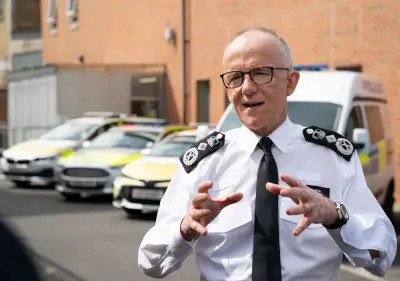
An independent review led by Gillian Fairfield has found that institutional racism, misogyny and homophobia persist within the Metropolitan police, three years after Louise Casey's landmark 2023 report reached the same conclusion. The review also found that the force's senior leadership appears uncomfortable with even using the word "racism".
Senior leaders avoid the word 'racism'
During a series of strategic briefings in which senior officers outlined progress made since Casey, the review noted that by the end of their third meeting, not a single senior leader had used the word racism. When pressed, officers and staff spoke instead of "disproportionality".
Dal Babu, a former Met chief superintendent who sits on the London Policing Board, said this went to the heart of the problem: "Unless you acknowledge that you've got institutional racism, misogyny and homophobia, then your progress is always going to be extremely difficult."
Progress described as 'glacial'
Babu said there had been progress on race but that it had been "glacial". He pointed to the force's firearms command as an example. "In 2007, they started an initiative to increase the number of women joining the firearms command," he explained. "It was only when I raised it in 2025 that there was even an acknowledgment that there should be a similar scheme for Black officers."
Beyond race, the review found that despite improvements in vetting and misconduct procedures, staff still feared retaliation for speaking up. As well as racism, the force treated misogyny and homophobia as a "reputational threat" rather than an opportunity for learning.
Reports and recommendations 'wasted'
For Habib Kadiri, the executive director of the police monitoring organisation StopWatch, the proliferation of reports and recommendations has done little to inspire confidence that the force is prepared to confront the scale of the problem.
A Guardian investigation in May 2025 examined about 600 recommendations across 12 government-commissioned race reviews dating back to 1981. It found less than a third had been implemented in full. Politicians and commissioners warned at the time that the UK was stuck in a "doom loop" of reports followed by inaction.
"We're frustrated that the good efforts of so many reports are wasted over generations, and that we are in a situation that's really not very much better than it ever was," Kadiri said. "And the solutions would require the police to have a lot more humility in the way that they police neighbourhoods that they would otherwise racialise."
Retreat from anti-racism stance
The review comes amid an increasingly polarised political debate about policing, in which attempts to address racial inequalities have been characterised by some on the right as evidence of preferential treatment or "two-tier policing".
"They appear to be scared of using terms like 'anti-racism', and that's emboldened far-right-leaning organisations and supporters to critique the police from that angle," Kadiri said.
He argued that the Met had retreated from an explicitly anti-racist stance in favour of the notion that treating everyone equally was sufficient to address racial inequality. In doing so, Kadiri said, the force continued to justify persistent racial disparities in stop and search by relying on what he regarded as flawed assumptions about Black people's involvement in crime.
While there was notable criticism, the Fairfield review did recognise the considerable energy and investment that has gone into reform since 2023. The review also found that despite generations of strained relations between the Met and London's Black communities, community groups continued to engage with the force.
"If I had my time over again, in the blink of an eye I'd join the police. And lots of people I know from the global majority, Black and Asian people, want to join the police," Babu said. "When I joined, I could count on one hand the number of people I worked with who didn't use the P- and N-word. That would not happen now. I think the only way you are going to change things is that we get people to join from our communities and those people are valued."