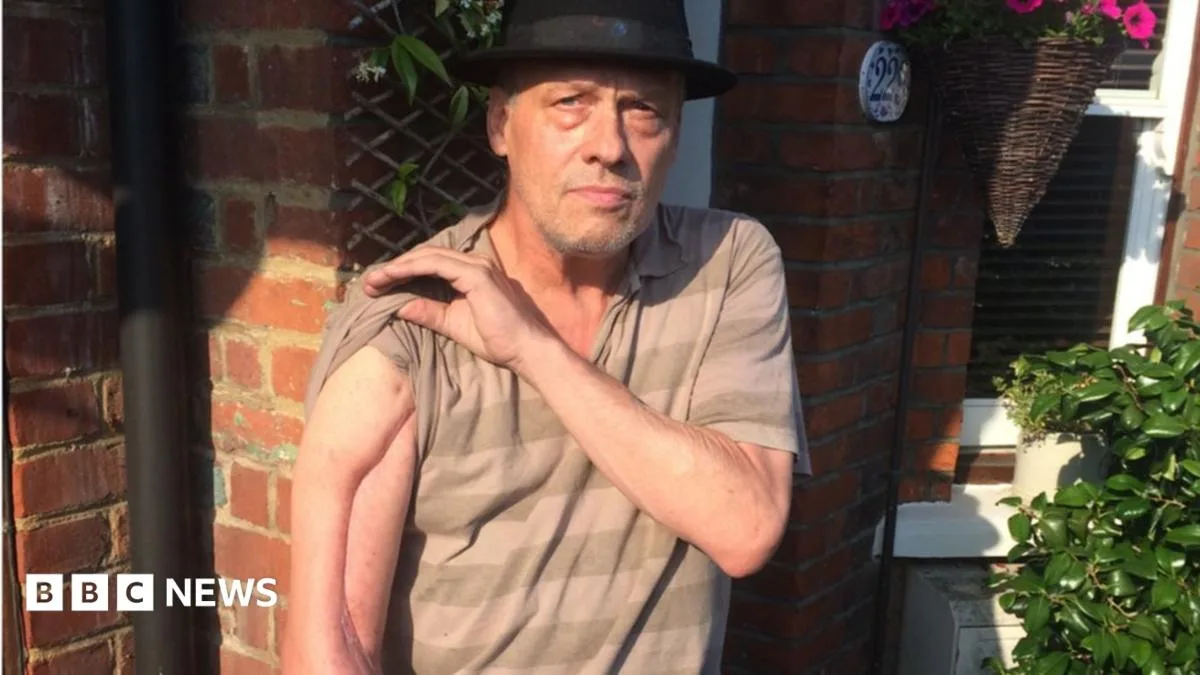
A man was left with a gaping hole in his chest after being bitten by a 'false widow spider' that had sneaked inside his car. Adrian Martel began feeling an itchy sensation on the left side of his chest on 7 April that developed into a bump the following day.
Misdiagnosis and Worsening Condition
The 49-year-old decided to visit urgent care when his symptoms worsened, but said he was sent home when doctors mistook the lump for an ingrown hair. However, three days later Mr Martel's bump had turned black and developed into a 'massive crater', prompting him to visit A&E where he was taken into surgery. Doctors removed the 50p-sized chunk of infected skin from his chest.
Suspected Cause and Location
Mr Martel, who lives in Rotherhithe, London, believes it was caused by the UK's most dangerous spider – the false widow – as he had seen a spider inside his vehicle prior to the incident but thought nothing of it. NHS figures reveal that there were 100 hospital admissions in 2025 linked to spider bites – up from 47 in 2015. This sharp rise is being attributed to the growing numbers of the noble false widow spider in the country.
Mr Martel, a yoga teacher and circus performer, believes the spider was lurking on the seatbelt of his MINI convertible due to the location of the bite mark on his chest. The ordeal has left him determined on ridding his house of any cobwebs to prevent a similar event from occurring.
Mr Martel said: 'I have a MINI Convertible and sometimes I see a spider inside the car. I never saw the spider bite me or anything. Because of where the bite is, when I put the seatbelt on I must've squished the spider and that's where it bit me because it's exactly where the seatbelt sits under my chest. I think it's likely it happened there.'
'I just started noticing it was itchy at first then a bump under the skin [appeared] the next day. I thought it was a rash, I wasn't sure. Then the next Monday I was teaching yoga and the friction pain was unbearable.'
Urgent Care and Surgery
Mr Martel decided to visit urgent care where he was given a course of antibiotics before the wound turned into a 'massive crater' just days later. He said: 'At that point they told me it was an ingrown hair, but I've had ingrown hairs before and I know how they feel. The next day it was worse. It had gone black and an open wound. I was just told to wait until the antibiotics had taken effect. Then when I came back two days later, it was a massive crater with a lot of pus coming out. It had gotten a lot worse.'
Mr Martel was told he needed to undergo an operation to remove the infected area from his chest, which he suspects was the result of a false widow spider bite. There are actually four types of false widow spider in the UK – noble false widows, cupboard spiders, rabbit hutch spiders, and Mediterranean false widow spiders. 'Although they resemble black widow spiders, they are not as harmful,' the Natural History Museum explains. 'All these spiders are likely to do is give you a small and relatively harmless bite.'
Patient's Conviction and Aftermath
While experts are yet to confirm what could be responsible for the bite, Mr Martel is convinced it was a spider. He said: 'The way it looked, it just looked like a spider bite. I just knew it had come from outside my body. The doctors couldn't say what it was from. They said it might be a spider, but also might not be. I don't think it would be any other spider apart from a false widow. It was a good chunk of skin they took off – it was bigger than a 50p coin. The wound would've just carried on growing [without surgery]. It's the sort of thing you think will never happen to you. Before I used to leave all the spider webs in my house, now I hoover them all.'
Arachnophobia is in Our DNA
Recent research has claimed that a fear of spiders is a survival trait written into our DNA. Dating back hundreds of thousands of years, the instinct to avoid arachnids developed as an evolutionary response to a dangerous threat, the academics suggest. It could mean that arachnophobia, one of the most crippling of phobias, represents a finely tuned survival instinct. And it could date back to early human evolution in Africa, where spiders with very strong venom have existed millions of years ago. Study leader Joshua New, of Columbia University in New York, said: 'A number of spider species with potent, vertebrate specific venoms populated Africa long before hominoids and have co-existed there for tens of millions of years. Humans were at perennial, unpredictable and significant risk of encountering highly venomous spiders in their ancestral environments.'