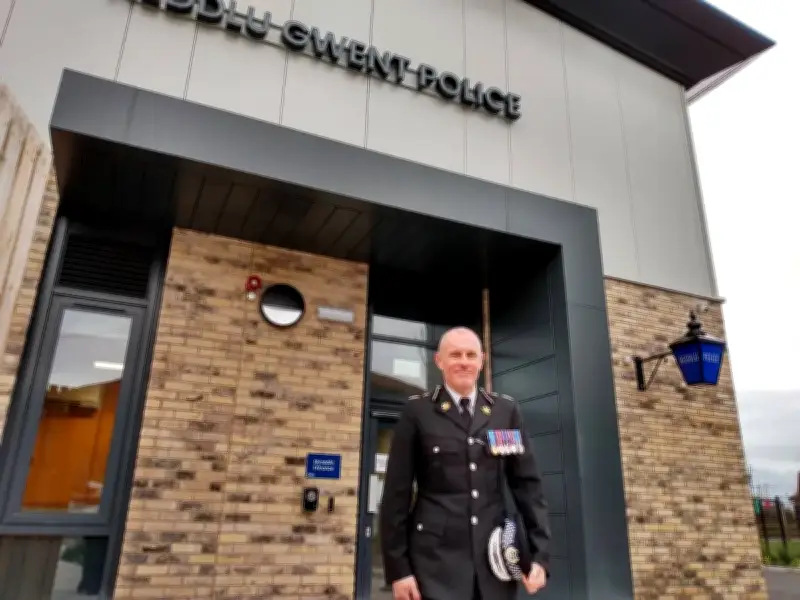
Gwent Police is considering hiring detectives on zero-hours style contracts to cope with an unprecedented rise in murder investigations, after launching 11 murder probes in less than a year.
Chief constable Mark Hobrough said the force would normally see between two or three murders a year, but has faced a huge increase in demand. The 1,535-officer force has had to fund record amounts of overtime and, at times, has taken neighbourhood officers away from community policing duties to support major investigations.
Chief constable outlines unprecedented demand
Addressing Monmouthshire councillors, Mr Hobrough said the other Welsh chief constables have contacted him in light of the "unprecedented" demand. He said: "We've had to spend a lot on overtime. It's an unprecedented amount and unplanned and we've got to look after the wellbeing of 1,535 police officers, we're not a big force."
In anticipation of similar demand next year, the chief constable said he is considering cheaper alternatives to support investigations. "We're looking at alternatives and I've got an assistant chief constable looking at an almost zero hours type situation to conduct interviews or specialist investigations outside of Gwent Police's natural boundaries as a cheaper option," he said.
"But that has to be of the same quality. We haven't got a finished product but do not want risk burnout and looking at the same individuals."
Murder investigations and their impact
He laid bare the scale of demand when he attended Monmouthshire County Council's public services scrutiny committee meeting. "In the last 10 months Gwent Police has had 11 murders, for a force that would normally have two to three year, that is a huge extraction for officers," said Mr Hobrough.
He said there was no link between the incidents, with varying factors: "Those range from organised crime, mental health, substance misuse and domestic violence and there have been different modus operandi and weapons. There is no correlation between them at all."
He reminded councillors two of the murder investigations are of deaths in Monmouthshire, while an investigation into a death in Pontypool in Torfaen in August, linked to suspected biker gang violence, had resulted in entries on the Holmes database increasing by 60 per cent more than any previous Gwent incident.
Additional pressures and response times
Police had made 45 arrests and have had to protect 55 scenes linked to the Pontypool murder investigation, said Mr Hobrough. "We've had extractions for our major investigation teams and CID investigating those murders, but also our neighbourhood teams on protecting scenes, our response officers who've been treating the business as usual at the very same time."
Increased demand nationally due to public order and policing protest, even without major incidents in Gwent, has called on force resources as part of an agreement to support deployments nationally. In addition to the murder probes, Gwent Police faced additional demand when officers, in July, shot what the chief constable described as a "dangerous individual" carrying a crossbow in Newport, and it supported the fire service as it tackled wildfires in the area.
The chief constable stressed the force has sought to keep use of neighbourhood officers to support other duties to a minimum. He acknowledged that while neighbourhood officers had been "extradited" in response to the major demands during the first half of this year, it is still at an "incredibly low" level.
Mr Hobrough added: "It's absolutely what we don't want. Historically it used to be the go to for community officers to staff response cars in a shortage, that isn't the case now."
The force is inspected on any diversion, or extraction of its neighbourhood officers from their regular duties, with figures published by the inspectorate: "It's something we talk about on an almost daily basis and needs to be to an absolute minimum and is not a go to position."
A reduction in the time it takes to answer 101 calls was cited as one impact of the strains on the force. "Because of those other demands 101 responses have slowed by 15 seconds," said Mr Hobrough. Latest figures show the non-emergency calls are answered in two minutes and 23 seconds, but the chief constable said he wanted "to correct the myth callers are waiting for 15 minutes", though acknowledged "that was the case two and a half years ago".