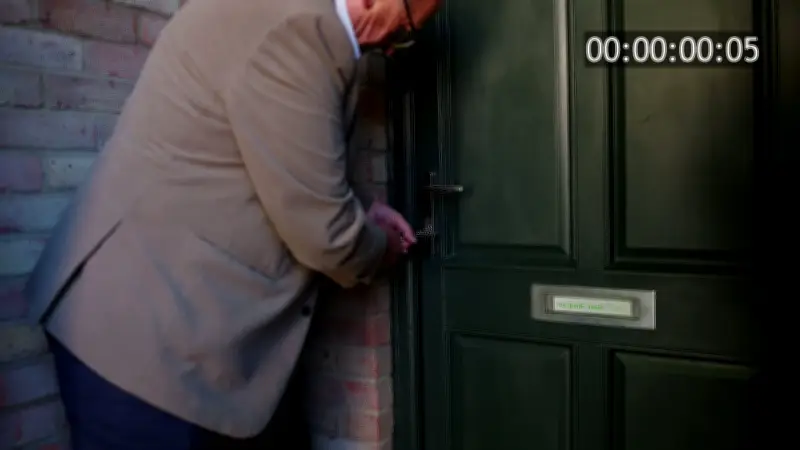
A former Scotland Yard detective has demonstrated how a burglar could get into a typical UK home in just 17 seconds, as research reveals widespread security weaknesses among homeowners.
Peter Bleksley, working with lock manufacturer Ultion, tested a series of typical UK homes to show how outdated locks, uncontrolled keys and everyday habits can leave properties vulnerable. The demonstration comes as research found that two in five people have no idea how many keys to their home exist, with some saying an ex-partner could still have one.
Key control gaps revealed
The research found that 41% of people cannot account for exactly how many copies of their house keys are currently in circulation. More than one in ten have given somebody a key to their current home which was never returned, while one in twenty believe a previous owner could still have a key to their property.
Despite these concerns, 15% still hide a spare key outside their property, including under plant pots and doormats. More than one in five leave their keys in the lock on the inside of the door. Yet 44% believe their home would be difficult for an experienced burglar to break into.
Common mistakes highlighted
Bleksley said: “Most people think of burglary as somebody smashing a window or kicking down a door. In reality, experienced criminals are looking for the easiest, quietest and quickest way into a property. One of the first questions every homeowner should be able to answer is incredibly simple: who has a key to my house?”
He added: “If you have moved into a property and never changed the locks, handed keys out over the years that haven't all come back, or have copies floating around that you cannot account for, you simply don't have complete control over who could potentially access your home. Burglars don't want noise, confrontation, or delay. They want the easiest target.”
Ultion’s Ryan Christian said: “We protect our bank accounts with passwords, our phones with facial recognition and our emails with two-factor authentication, yet millions of us cannot say with certainty who has a physical key to our front door. Moving house, losing a key, giving one to a tradesperson or having an old housemate move out are all moments when control over who can access your property can gradually disappear.”
Five rules to make your home harder to burgle
Bleksley set out five steps for homeowners to improve security. First, know who has a key to your home and account for every copy, including keys held by former partners, previous occupants, cleaners, tradespeople, dog walkers and neighbours. If you cannot account for them, consider changing the locks.
Second, never hide a spare key outside, especially under doormats or plant pots. Instead, give it to someone you trust or use a secure access solution. Third, know what lock is actually protecting you by checking the lock fitted to your front door and what security standard it meets; 79% of people do not know theirs.
Fourth, think like a burglar by standing outside and looking at your home as a stranger would, checking side gates, back doors, accessible windows, sheds and anything that could make entry easier. Fifth, make your home slower, noisier and riskier to enter, as burglars generally do not want confrontation, noise or delay. Bleksley's central advice is to remove the easy opportunities rather than trying to turn your home into a fortress.