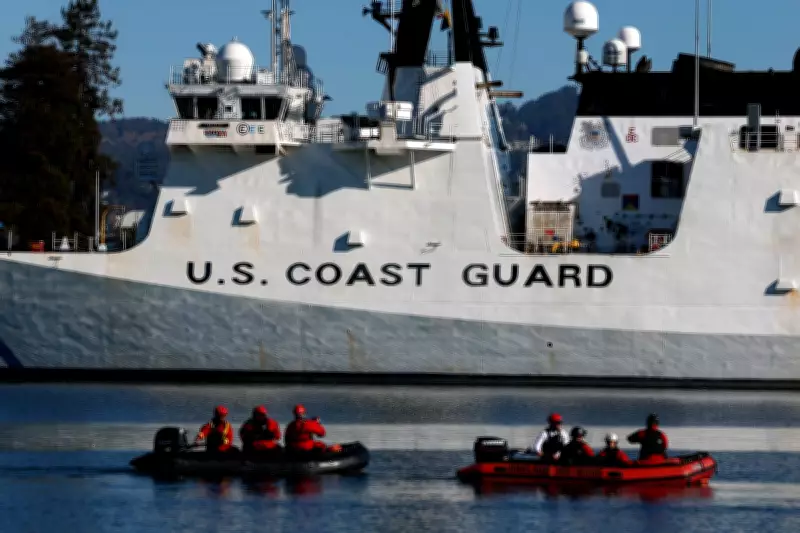
Coast Guard Launches Probe After Swastika Found at Training Facility
The United States Coast Guard has initiated a formal investigation following the discovery of a hand-drawn swastika at a recruit training centre in Cape May, New Jersey. The incident, which occurred last Thursday evening, was reported by multiple news outlets including The Washington Post and ABC News.
Discovery and Immediate Response
A Coast Guard instructor found the offensive symbol on the wall of a men's bathroom at the Training Center Cape May. While a Coast Guard spokesperson confirmed to The Independent that a "hate symbol" had been drawn on the bathroom wall, they declined to specifically identify it as a swastika. However, multiple sources familiar with the matter have confirmed the nature of the graffiti.
"Following discovery of a hate symbol drawn on a bathroom wall in a building at Training Center Cape May, the Coast Guard immediately referred the matter to the Coast Guard Investigative Service (CGIS) for investigation — consistent with longstanding Coast Guard policy," the spokesperson stated.

Leadership Addresses Recruits and Staff
In response to the incident, Coast Guard Commandant Admiral Kevin Lunday personally addressed nearly 900 recruits and staff members at the training centre. According to official statements, he spoke directly about the incident, reinforced the Coast Guard's standards and policies, and reaffirmed the service's commitment to accountability through its core values.
Lunday has been particularly vocal in condemning extremist ideology within the military service. "Anyone who adheres to or advances hate or extremist ideology — get out. Leave. You don't belong in the United States Coast Guard and we reject you," he declared in a statement shared with The Washington Post and ABC News.
Controversy Over Symbol Classification
The incident comes amid ongoing controversy regarding how the Coast Guard classifies certain symbols. The Washington Post reported in November that the Coast Guard would no longer classify swastikas and nooses as hate symbols, instead categorizing them as "potentially divisive."
Admiral Lunday has vehemently denied these reports, telling The Independent previously: "The claims that the U.S. Coast Guard will no longer classify swastikas, nooses or other extremist imagery as prohibited symbols are categorically false."
He further emphasized: "Any display, use or promotion of such symbols, as always, will be thoroughly investigated and severely punished."
Historical Context and Legal Status
The swastika remains one of the most potent symbols of hate and extremism globally. After Adolf Hitler adopted it as the emblem of the Nazi Party, which was responsible for the systematic murder of approximately six million Jewish people and millions of others during the Holocaust, many European countries including Germany banned its public display.
In the United States, however, the display of swastikas is not outright prohibited due to First Amendment free speech protections, as noted by the U.S. Holocaust Memorial Museum on its website. This legal context makes institutional responses to such displays particularly significant within government organizations like the Coast Guard.
Commitment to Core Values
Admiral Lunday has made clear that the Coast Guard will not tolerate hate within its ranks. "We will not allow anyone to put a stain of hate on our United States Coast Guard," he asserted. "We will not be defined by the cowardly acts, but instead be defined by our unwavering response and our resolve to defeat them."
The investigation by the Coast Guard Investigative Service continues as authorities work to identify who created the offensive graffiti and determine appropriate disciplinary measures. The incident highlights ongoing challenges military organizations face in maintaining inclusive environments while confronting expressions of extremism.