Christchurch Mosque Attack's Australian Connections Demand Greater Scrutiny
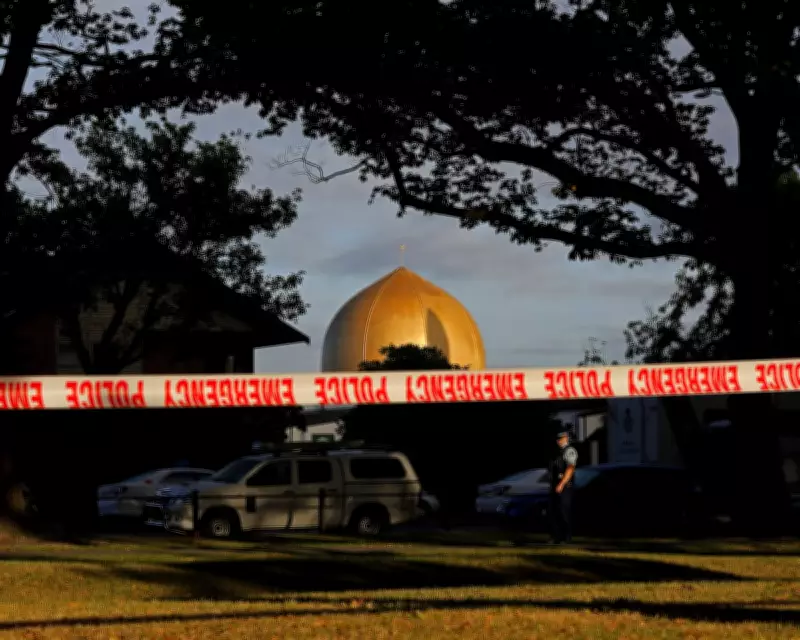
In Christchurch, New Zealand, a police officer stands guard at the Al Noor mosque, a solemn reminder of one of two mass shootings that occurred during Friday prayers on March 15, 2019. The attacks, perpetrated by an Australian terrorist, claimed 51 lives and left a lasting scar on the global community. As the years pass, the propaganda from this atrocity continues to resurface in legal systems, particularly in Australia, prompting calls for a more thorough reckoning with the hate that fueled it.
Legal Cases Highlight Ongoing Influence of Terrorist Propaganda
Recent court proceedings in Australia underscore the persistent reach of the Christchurch attack. In 2025, a 14-year-old boy in South Australia was sentenced for possessing documents related to terrorist acts, including the shooter's manifesto and videos of the mosque shootings. Similarly, in 2023, a 16-year-old in the same region faced terrorism charges for sharing extremist material on Discord, which included images from the Christchurch killings alongside content from Islamic State and neo-Nazi groups.
These cases reveal how the terrorist's propaganda, such as animated recreations of the shootings and digital copies of his livestream, continues to circulate, especially among young people. Journalists tracking these developments find it confronting to witness this material repeatedly emerge in the Australian legal framework, highlighting a disconnect between its ongoing impact and the limited public accountability in the terrorist's home country.

Contrasting Responses: New Zealand vs. Australia
While New Zealand has taken significant steps to confront the tragedy, including a royal commission and an ongoing coronial inquiry, Australia's response has been markedly subdued. The terrorist, who pleaded guilty to 51 murders and 40 attempted murders in 2020 and received a life sentence without parole, had known interactions with local far-right groups in Australia. Yet, there has been little public examination of what could have been done to identify or prevent the attack domestically.
Rita Jabri Markwell, legal advisor to the Australian Muslim Advocacy Network, emphasizes that Australians care deeply about Christchurch but lack collective remembrance efforts from leaders. She stresses the importance of shared grieving to validate humanity, noting that the terrorist's radicalization occurred over years in Australia, shaped by online activity and hateful attitudes fostered locally.
Global Spread and the 'Great Replacement' Conspiracy
The influence of the Christchurch attack extends beyond Australia. In the United States, court records show the terrorist's manifesto and livestream remain pervasive in extremist circles. For instance, in 2024, Dallas Humber, a leader of the white supremacist Terrorgram network, was sentenced to 30 years for hate crimes, with her indictment detailing publications that celebrated the Christchurch shooter as a hero. Terrorgram has since been listed as a terrorist organization in Australia.
Hank Teran, CEO of Open Measures, explains that the propaganda's longevity stems from its framing around the 'great replacement' conspiracy theory, which targets Muslims, Jews, and other minorities. He argues that countering this requires more than content moderation; it involves proactive education to disrupt the pipeline from passive exposure to active planning, engaging parents and community stakeholders.
Calls for Action Against Islamophobia in Australia
Muslim leaders in Australia assert that the significance of the terrorist's Australian roots is still not properly addressed. Alaa Elzokm OAM, imam of Elsedeaq Heidelberg mosque in Melbourne, who will attend a Christchurch commemoration, emphasizes that dealing with Islamophobia requires firm action, not just sympathy. He warns against letting the incident fade from memory, stating that words are no longer sufficient to ensure safety in worship.
Jabri Markwell adds that the Muslim community continues to be portrayed negatively by some politicians, fueling fear and hate. She calls for accountability for the role of official language in radicalization, urging a comprehensive approach to confront the underlying issues that led to the Christchurch tragedy.