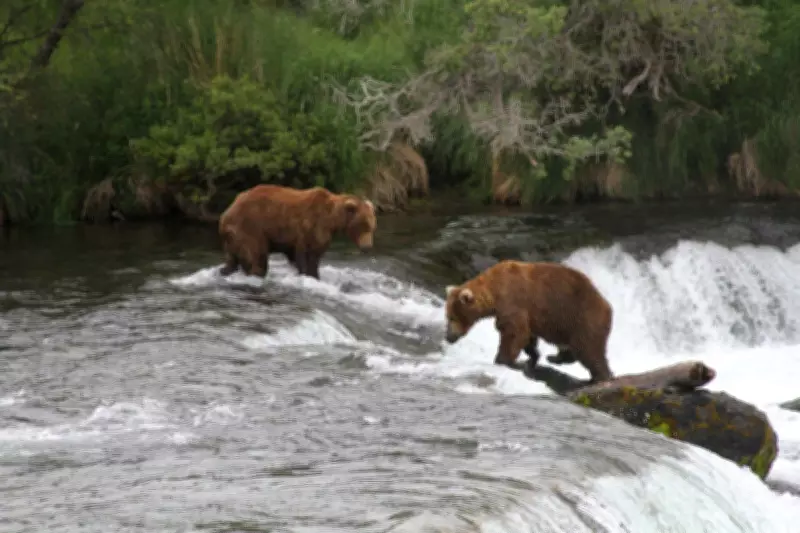
A judge has ruled that Alaska wildlife agents can resume shooting and killing black and brown bears, including from helicopters, as part of a plan to help recover the Mulchatna caribou herd. The herd once served as a vital food source for Alaska Native hunters.
Judge's Decision
Superior Court Judge Adolf Zeman denied a request by two conservation groups—the Alaska Wildlife Alliance and the Center for Biological Diversity—to halt the program while their lawsuit challenging its legality proceeds. Zeman stated that the groups failed to demonstrate that the state acted without a reasonable basis in approving the plan.
Timing and Importance
The ruling comes at a critical time as the caribou herd in southwest Alaska is expected to begin calving soon. Newborn calves are particularly vulnerable to predation by bears and wolves. State officials view the bear-killing program as essential for the herd's recovery.

Caribou Herd Decline
The Mulchatna caribou herd once numbered around 190,000 animals and provided up to 4,770 caribou annually for subsistence hunters from dozens of communities. However, the population began declining in the late 1990s and early 2000s, dropping to about 13,000 by 2019. Last year, the population was estimated at approximately 16,280, according to the Alaska Department of Fish and Game. Hunting has been prohibited since 2021.
Bear Removal Program
From 2023 to 2024, the state killed 180 bears, mostly brown bears, and an additional 11 last year, according to the conservation groups' lawsuit. The groups argue that the Alaska Board of Game authorized the program without key data on bear population numbers and sustainability.
Cooper Freeman, Alaska director at the Center for Biological Diversity, stated: "We want to see the caribou herd thrive, but the state simply hasn’t shown that the unrestrained killing of bears is going to help us get there. We need to stop this disgraceful waste of the state’s limited resources and work based on science to protect all our wildlife."
State's Position
State attorneys have argued that officials took a "hard look" at factors related to bear numbers when adopting the plan. In a court filing, they noted: "The herd has persisted at low numbers but started showing a positive response since 2023, when bear removal during calving seasons began."
The Alaska Department of Law, representing the board and Department of Fish and Game, did not immediately respond to a request for comment. Attorneys with Trustees for Alaska, representing the conservation groups, are reviewing the ruling and will consider all available options, according to spokesperson Madison Grosvenor.
Legal History
The program has been the subject of ongoing litigation. Last year, a judge in a separate case brought by the Alaska Wildlife Alliance found fault with the adoption process and concluded the state lacked data on bear sustainability. Emergency regulations were later struck down, leading to a new public process that resulted in the board reauthorizing the program in July.