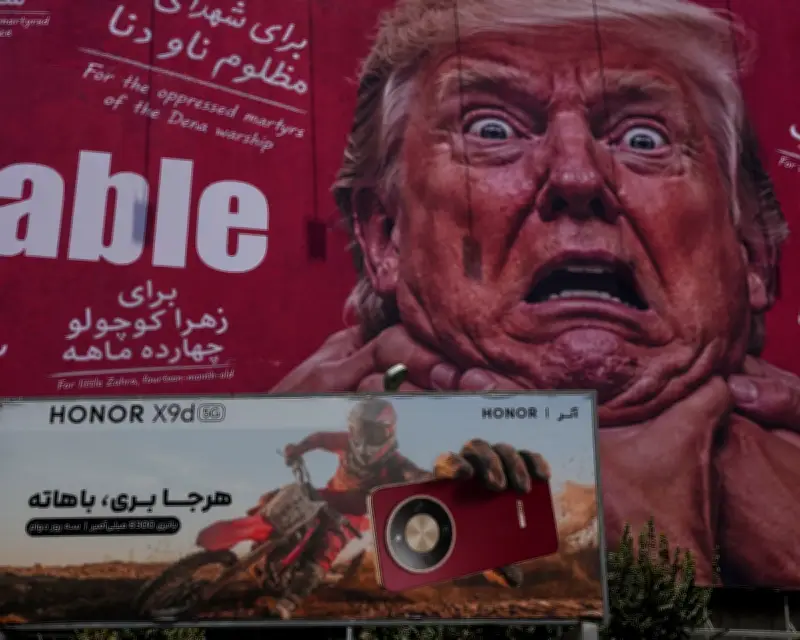
Donald Trump’s decision to pause, rather than intensify, the 13-night summer bombing campaign against Iran represents a degree of recognition that the US cannot achieve its stated goals by military power alone, analysts say.
Iran's resilience and asymmetric tactics
About 3,500 Iranians have been reported killed, and the US-led bombing has caused between $150bn and $270bn of damage. Yet Tehran has not been bombed into submission. “Iran’s initial standard for victory was simply to survive,” said HA Hellyer, a Middle East expert with the Royal United Services Institute. “If anything, that’s been raised. The regime has demonstrated it is not going anywhere, and Tehran has changed the calculus on the strait of Hormuz.”
All Iran, helped by its extensive and mountainous geography, has needed to do is maintain enough missile and drone capability to scare merchant shipping from using the Strait of Hormuz. Two tankers were attacked sailing north of Oman last week, one catching fire and having to be evacuated, part of a handful of serious attacks on merchant shipping during the July escalation.

US military expenditure and stockpile depletion
The US has spent at least $38bn and used more than 1,000 Tomahawk and 1,100 Jassm cruise missiles (each costing up to $3.6m), according to estimates by the CSIS thinktank. These represent a third and a quarter of total stockpiles, with Tomahawks possibly not replaced until 2031. Patriot missile interceptors were also heavily depleted by 1,000 or so, 50% of the total US stockpile, raising questions about defending Gulf bases.
Trump partially blamed Ukraine, arguing “so much was given” to Kyiv, though Ukraine never received long-range cruise missiles—only Patriot air defence systems. More Patriot interceptors were used during 38 days of heavy fighting in spring than the 600 Ukraine received in four years.
Escalation and shifting war aims
A fresh escalation by Houthi rebels in Yemen, Iran’s allies, complicates the picture. They attacked a refinery in Saudi Jizan on Saturday as Saudi Arabia seeks to redirect oil traffic through the Red Sea. The US’s stated central war aim has shifted repeatedly but remained maximalist—regime change, destroying Iran’s missile programme, or preventing nuclear weapons—yet the US has no means of enforcing demands without ground forces to occupy Tehran, an unlikely move.
“I don’t think the Iranians can be bombed into accepting US terms,” said Peter Ricketts, a former UK national security adviser. “Until the US accepts it can’t get its way by bombing, Iran has effective leverage. Tehran can absorb the pain, and they know they can close the strait with the economic impact it has on the US.”
Leverage and sustainability
Ricketts calls the situation “escalation dominance” favouring Iran, which can string out peace negotiations and restart closing Hormuz when the US resumes bombing. Just a third of all Americans support the war according to a Reuters/Ipsos survey (71% of Republicans), and midterm elections loom. Laurel Rapp from Chatham House said “a resumed ceasefire and promise of future talks is the least bad option for Washington,” though Israel’s own election adds uncertainty.
But any idea Iran has won is exaggerated. Hellyer argues: “Ultimately this isn’t sustainable for Iran, because its economy isn’t going to be able to survive” under Western sanctions without an agreement with the US.