Migrant smugglers are facing delays in getting boats and engines to safehouses because of the war in the Middle East, new intelligence has revealed. Analysts believe there is a growing pressure on the criminal gangs' supply chains, fuelled by crackdowns in France and Germany.
Donald Trump's war with Iran, which has led to major shipping routes through the region being choked, has impacted the smuggling gangs who are waiting longer for their shipments to arrive. Gangsters are trying to shift their tactics, the National Crime Agency believes.
Just-in-time model
They are increasingly using a “just-in-time” model which sees smugglers rushing boats and engines from warehouses in Germany to the French coast. This is also believed to be the case from Turkey to the warehouses in Germany, leading little margin for error if the criminal gangs want to successfully launch dinghies.

NCA director general of operations Rob Jones said: “The NCA is devoting more resources to tackling organised immigration crime than ever before, and that is bringing results.
“Alongside our partners on both sides of the Channel we are making it more difficult and costlier for people smuggling networks to source equipment, more difficult to get it to the beaches and in the water, more difficult to communicate with potential customers, and more likely smugglers will be confronted by law enforcement.
“However, we are not complacent, and the job is by no means done. We must continue to keep up the pressure on these criminal gangs, as they continue to put lives at risk in the Channel.”
German warehouses key
Germany is a key transit country for smugglers bringing dinghies and engines to the French coast, with networks known to use warehouses for their equipment. Thousands of migrants also pass through the country, with organised crime gangs using safehouses near Bonn, Cologne, Frankfurt, Essen, Dusseldorf, Bochum and Dortmund.
They are given key pieces of information for their journeys and structures are put in place to ensure the smuggling business continues to run smoothly between crossings. The equipment is being split across more cars, with “single units” assigned to each vehicle. This is to prevent police from seizing huge stashes of boats and engines in a single operation.
Crossings fall 41%
In the first six months of 2026, the number of people arriving in the UK by small boat fell 41% and the number of boats 47% compared to the previous year. The number of arrests linked to organised immigration crime in the year to the end of April 2026 rose by more than 55%, and since late 2023 more than 1,600 boats or engines have been seized.
Since 2021, around 40,000 posts, pages or accounts linked to people smuggling have also been removed from social media.
Minister for border security and asylum Anna Turley said: “New analysis shows that we are making it harder for the criminal gangs to operate.
“With crossings down significantly on last year, and the lowest arrivals over the summer for six years, our plan is bearing fruit.
“We have boosted officer numbers on French beaches, seized more than 1,100 small boats and engines and are reducing the pull factors drawing migrants across the Channel.
“This includes making refugee status temporary, cracking down on illegal working and returning more people without the right to be here.
“But we are not complacent. We will continue our relentless efforts to prevent these dangerous crossings and put those responsible behind bars.”
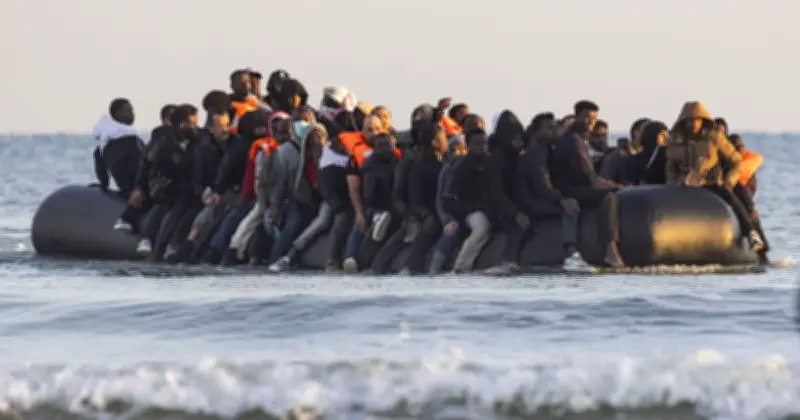
Around 140 migrants were brought into Portsmouth last Sunday after smugglers launched a dinghy from a beach in the Cherbourg area. This prompted fears the Channel crisis was entering a terrifying new phase, which could see arrivals brought into different towns along the south coast.
It prompted warnings of an “invasion” of other coastal towns, such as Brighton, Southampton or Weymouth as smugglers change their tactics to exploit weak points in the border. Rescue teams admitted they were blindsided as the smugglers used an “isolated, rocky spot” in the region, which is almost 285 miles away by road from Calais.
The boat was in “serious difficulty” within “an hour”, officials said. This led to five French rescue vessels and two helicopters helping the 120 asylum seekers on the nearly 70-mile journey.