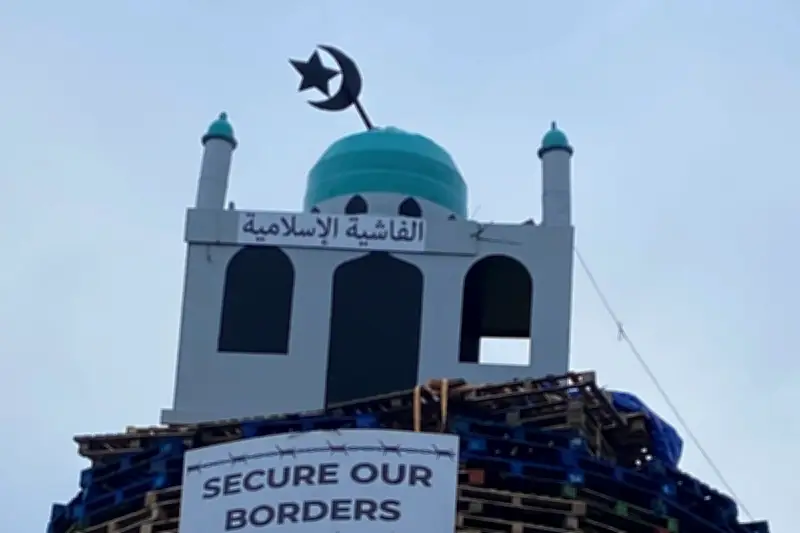
The Police Service of Northern Ireland (PSNI) launched a "significant and complex policing operation" to remove a hate display from a bonfire in Moygashel, Co Tyrone, but the bonfire was lit a day early, preventing removal of the offending material. A 56-year-old man has been charged with incitement to hatred and is due before Dungannon Magistrates' Court on Friday.
Police operation and charges
Chief Superintendent Norman Haslett stated: "Hate crime has no place in our society and will not be tolerated. That is why tonight we commenced a proactive policing operation to take action and remove the hate display from Moygashel Bonfire." He added that the bonfire was set alight a day in advance to prevent removal of the criminal material, and that robust action will be taken where evidence of offences exists. The PSNI earlier confirmed the display is being treated as a hate-motivated criminal offence.
Widespread condemnation
The replica mosque atop the bonfire has been condemned by political leaders, religious figures, and human rights groups. Northern Ireland Secretary Hilary Benn called it a "sickening and cowardly act of intimidation" on social media, stating: "This is not about tradition, and in no way does it represent the vast majority of people in Northern Ireland. We must stand united and completely reject such hatred."
Archbishop John McDowell and Archbishop Eamon Martin issued a joint statement describing the display as "grossly offensive" and urging compassion. They said: "The placement of a replica mosque atop a bonfire is grossly offensive and raises tensions so soon after the unrest that destroyed property and severely impacted the lives of individuals and families." They assured Muslim citizens of the goodwill and respect of the majority in Northern Ireland.
Amnesty International described it as a "vile display" and a "blatant attempt to stir up anti-Muslim hatred and intimidate local families."
Bonfire association's response
The Moygashel Bonfire Association described the bonfire as an act of "political protest" against "uncontrolled illegal mass immigration." Signs reading "Secure our borders" and "End the threat of radical Islam" were also placed on the pyre. In a statement, the association said: "Our display may well shock, offend or outrage others, but nonetheless it is an exercise in our rights under Article 10 of the ECHR." They added that their opposition is "not to people, but rather to ideology and Government policy."
Political reactions
The DUP stated that effigies should not be placed on bonfires, saying: "The placing of flags, effigies or other items on bonfires is not part of that tradition and should not take place." Ulster Unionist Party leader Jon Burrows called for "immediate removal of the offensive display," warning that images of the bonfire will damage Northern Ireland's reputation. Sinn Féin MLA Colm Gildernew described the display as "deplorable" and a "clear hate crime." Alliance Party councillor Eddie Roofe called it "hateful and deeply offensive."
Context and previous controversy
The bonfire site has attracted controversy before; last year, effigies of migrants in a boat were burned on the Moygashel fire. Eleventh night bonfires are traditionally lit across Northern Ireland on the evening of July 11, ahead of the Orange Order's July 12 parades. While most pass off peacefully, some have become contentious due to flags, effigies, and election posters placed on them.