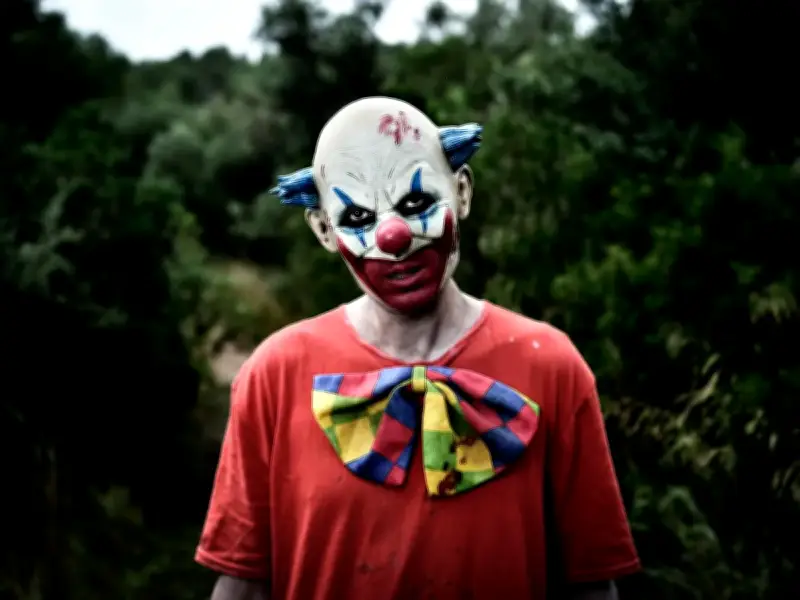
The “killer clown” craze that swept the UK a decade ago caused real-life terror, including stabbings and mass panic, after a viral US marketing stunt inspired copycats. The phenomenon peaked in late September and October 2016, when police forces across England, Scotland and Wales were flooded with hundreds of calls.
From Viral Stunt to Social Contagion
The craze began in August 2016 with grainy black-and-white CCTV images showing a tattered clown with white face paint and four balloons lurking in a dark car park under a bridge in Green Bay, Wisconsin, USA. Posted to Facebook, the pictures went viral. The figure was named “Gags”, but was not a murderer—he was an actor in a low-budget viral marketing stunt for an indie horror project called Gags The Clown.
The film later flopped when it finally emerged in 2018. Still, the images acted like a social contagion, inspiring copycats desperate for social media attention. By late September and October 2016, the trend had jumped the Atlantic and exploded across the UK, as reported by Metro.

Violent Incidents and Police Response
What started as teens trying to freak people out quickly became a policing nightmare. In Blackburn, 28-year-old dad Simon Chinery was reportedly slashed and seriously injured by a creepy clown allegedly wielding a 10-inch knife. In County Durham, a man in a clown suit carrying a plastic machete followed four terrified children on their way to school. In Gloucestershire, police dealt with six separate reports of clowns carrying knives.
In Bournemouth, a man walking home alone was grabbed and dragged down the street by an attacker in full circus gear. The Met Police even advised schoolchildren to dial 999 if they spotted a “killer clown”, while arrests mounted for weapons, public order offences and common assault, as per Metro.
Schools and Communities on Edge
Schools became ground zero. Some kept pupils inside after class until parents could collect them, officers were sent into assemblies to warn about criminal records, and councils urged bans on clown costumes, with calls for shops to pull rubber masks. Parents were terrified.
Charlene Paterson told the BBC at the time: “It’s general fear, not just in her [daughter] but in all of her friends and everybody else in the high school. Who’s behind the masks? You don’t know. Nobody knows. You don’t know if it’s a 15-year-old that’s looking for a giggle or a 30-year-old man who’s looking to do something far, far different.”
Impact on Clowns and Businesses
Professional clowns said their livelihoods were ruined and feared vigilantes, while McDonald’s even pulled Ronald McDonald from adverts until the hysteria died down after Halloween, according to Metro. Film expert Dr Cecilia Sayad said: “The main reason horror-film clowns are scary is, of course, because they perform evil acts. These contradictions make clowns hard to pin down, and that is something we usually find unsettling, sometimes horrifying.”
Even horror king Stephen King begged people to stop. Posting on the then-Twitter (now X) in October 2016, he wrote: “Hey, guys, time to cool the clown hysteria - most of em are good, cheer up the kiddies, make people laugh.”