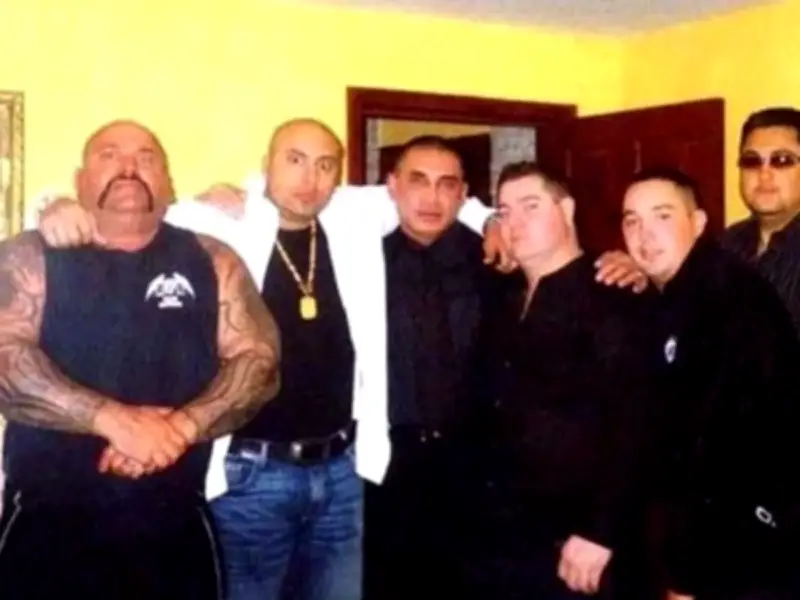
The United Nations gang in British Columbia, Canada, was established in direct opposition to the Hells Angels, with a membership that includes people of European, East Asian, First Nations, and Persian backgrounds.
Origins and Name
Founder Clayton Roueche, who is white, hosted a party in 1997, and a guest reportedly quipped about the racially diverse crowd, "What the f*** is this, a United Nations meeting?" The name stuck.
The gang's number one rule is no racism. Members are required to have the Japanese Samurai words "honour, loyalty, respect" tattooed on themselves in Chinese characters. They are also trained in Thai kickboxing and Japanese jujitsu.

Rivalry and Violence
The gang smuggled British Columbia marijuana, cocaine, and ecstasy into the States, selling them for less than the Hells Angels. In 2000, a bloody brawl erupted at Animals nightclub in Abbotsford after Hells Angels and their supporters confronted Asian patrons, who were UN members.
After police intervened, the Hells Angels vowed to return the following weekend, telling UN members they were "dead." The next weekend, 70 UN members fought back and expelled 30 Hells Angels from the club.
Insights from Crime Experts
Ex-UN member James Coulter recalled in a 2009 interview with crime reporter Kim Bolan at the Vancouver Sun: "I'll never forget. There was a big fight inside. There were fights everywhere. That was one of the biggest fights I'd ever been in."
Peter Edwards, crime author and creator of Netflix's Bad Blood, told the Daily Star: "There's a gang in Canada called the United Nations, it's because they have everybody. Its name can be interpreted as a dig at the Hells Angels, who for years were lily white. You can't be racist in it. I was talking to a guy who was from the United Nations and they do all sorts of bad things, but they don't call each other racist names. It's not just out of niceness. It's just practical. If you make a racist slur against the guy who's killed 10 people, then you're probably in trouble. You can't stay racist and stay competitive."
Modern Operations
Roueche is currently serving 30 years in prison. Members stay connected globally via encrypted internet messages. Edwards noted that the internet has reduced barriers to entry for criminals, saying: "If you're adept on the Internet and you can afford a couple flights to the Mayan Riviera, you can get your own drug supply. There's one criminal that I've been covering his bail hearing stuff. He's in a wheelchair and he can still do it."