The Costa del Sol has been described as “the Wall Street of organised crime,” with the ECHO spending time on the Spanish coast examining Merseyside's criminal links to the area. The luxurious east coast has long been a haven for major organised crime dating back decades.
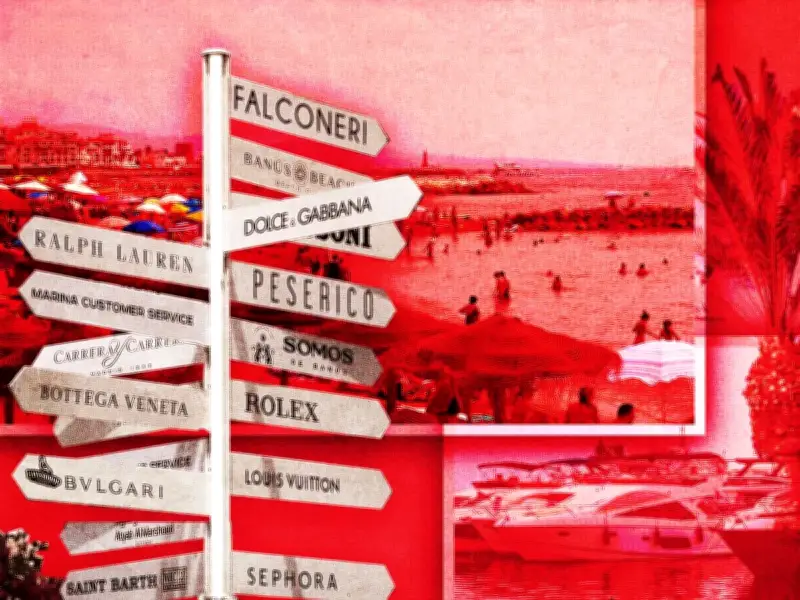
In the sun-drenched luxury harbour of Puerto Banus, the wealthy mix with serious organised criminals. Ferraris, Rolls Royces and Lamborghinis are a common sight, their exhausts rattling the ear drums of those who come and go from shops such as Louis Vuitton and Hermes. A hub of wealth on the edge of Marbella, the marina boasts luxury boats and their wealthy owners. Sun beams down, bouncing off the white shop fronts in the tightly-packed streets on the edge of the water.
Cars that would satisfy those with the most expensive of tastes slowly drive through the people filled streets, a mix of Spanish, Middle Eastern and British registered number plates. Belgian and Dutch are also popular here as many drive over from European countries.

From dust land to the Wall Street of organised crime
It doesn’t take a genius to understand the appeal for the key players in the global criminal underworld to set up shop in Marbella. A place that would take someone seconds to differentiate those with money from those who wish they had money. The coastal town is nestled in the Costa del Sol which saw money surge in the area in the 1960s when property was built at an extraordinary rate. It transformed the south of Spain into the tourist hotspot that it is today as hotels, luxury apartments and villas were built overnight.
The country’s plan to rejuvenate and transform the area worked. As property was built at a rapid pace, money came into Spain just as quickly, as foreign business owners and high-ranking criminals bought up much of the property, rubbing shoulders seamlessly. More people and more money, in turn, brings more criminality. Before Spain could curb the impact this had, the area was known as the Costa del Crime to many across the world.
“The Costa del Sol is the Wall Street of organised crime,” Juan José Gómez Millán told Spanish outlet Ara earlier this year. The retired national police officer explained the dynamic of Marbella having fought drug trafficking for three decades in Spain. It is believed Marbella is home to representatives of more than 100 organised crime groups from as many as 60 countries according to various reports in recent years.
Fugitives and the Costa Blanca shift
One notable fugitive who has chosen to reside in the Costa del Sol is former Brookside star Philip Foster. While conning people out of millions using a sham modelling network in the UK, Foster was living a life many could only dream of. Using his criminal proceeds, he bought himself a Bentley, paid for his daughter’s Porsche and flaunted his Rolex to his criminal associates. An investigation by the ECHO, which spanned months, found Foster had fled the area and had since moved to the Orihuela Costa in the Costa Blanca, around 500km from Marbella.
Speaking to the ECHO in a seaside restaurant as the waves crash against the rocks and catamarans sail past peacefully in the distance, David Pamies, from the Spanish outlet Información, explained: “It’s possible that there’s a bit more pressure on the Costa del Sol. There’s more pressure because, for example, from the point of view of public opinion, there’s a feeling that, for example, the Italian mafia, the Russian mafia, and other mafias have settled on the Costa del Sol. And so maybe the media spotlight is there, and maybe someone might feel more intimidated to do their things, and the Costa Blanca area is much easier. It’s an impression.
“But as a place to hide or to take shelter, it’s been a perfect place since the 80s. Jihadists have hidden here, terrorists, everything you can imagine. And there have been no problems. It’s an ideal place.”

Crime across the Costa del Sol
But crime is not contained to Marbella, as an influx of criminals has seen an overspill into other areas in the Costa del Sol where the A-7, Spain’s longest motorway, connects the various towns on the coast. Last year, Fuengirola, just a 40 minute drive from Puerto Banus, saw the brutal killing of Scottish gangsters Eddie Lyons Jr and Ross Monaghan inside the latter’s Irish bar on the coast of Spain. It is alleged that Michael Terrence Riley, from Huyton, was the man who pulled the trigger on the pair who were watching the Champions League final with their friends on May 31 when they were killed.
Between the two tourist traps sits Sitio de Calahonda, this is where, just weeks before the Fuengirola shooting, Steven Gray was shot dead as he left Finca Naundrup in the hillside town on Easter Monday after playing football with friends. The area, which is part of the only area in the Costa del Sol to have seen crime drop last year, is a magnet for those looking to live a quiet life yet this has not stopped some crime encroaching, albeit not in the same magnitude of the rest of the coast.
Daniela Wenk, who runs the largest local Facebook group in Sitio de Calahonda and is known by her friends as the “woman behind the curtain”, told the ECHO: “I think most people don't even think about [crime] anymore because there's so much going on here. Only three days ago, another one was stabbed to death [who had] already had been shot one or two years ago, [they] ended up in a wheelchair, and now they [have] stabbed him to death.
“You see CCTV images of shootings in Marbella and Fuengirola. It's hard to keep up with the stories because we have a lot of that going on here. But not only in Calahonda, on the whole Costa del Sol. Our geographic location, probably also that's very good for [drug] trafficking and that, and plus where a lot of the money is.”
Steven Gray’s killers are yet to be caught, with the 32-year-old, originally from Bootle, having lived in the area at the time of his death. His killers fled the scene before dumping their foreign-played Cupra on a winding road going down the hill towards the A-7 and setting it on fire. Inside the car were two guns believed to be the murder weapons.
High-rolling criminals to the lower levels
It is widely believed that lower level criminals have entered the area in recent years which has pushed violent crime into the spotlight. In the 80s and 90s it was believed high-rolling criminals would mix with the businessmen, unable to tell who was who. It was around this time Curtis Warren is believed to have used the south coast of Spain, in collaboration with other drug gangs, to bring in narcotics from Venezuela. And following Warren’s conviction, it was the Coggins brothers who filled his shoes, using the Costa del Sol to transport drugs.
Like "Cocky", Francis and Vincent Coggins were heads of an international drugs cartel with connections across mainland Europe and straight from the source in South America. During the drugs boom of the 90s, Francis moved to the Costa del Sol to establish the syndicate, smuggling cocaine from South America, through Europe and into the UK. The gang built up its standing in the criminal hierarchy to rival factions from Ireland, Russia and the Americas. They are believed to be the biggest drug dealers from Liverpool since Warren. The pair, along with several of their gang members, were jailed following a multi-year investigation by authorities.
Now, guns are on the streets of the Costa del Sol, with men from Liverpool linked to these serious and violent crimes. “The violence is gratuitous. In the past, criminal groups negotiated, they talked to each other,” said Antonio Rodríguez Puerta, chief of the Udyco Costa del Sol (the National police’s drug and organised crime unit), previously told The Guardian. “They’d lose some of their supply, or one of their shipments, and they’d come to an agreement. Now we’re seeing that if something like that happens, in the majority of cases, they just go straight to killing.”
The ECHO has since uncovered a slight pivot in traditional criminal behaviour as the Orihuela Costa has recently seen an influx of criminality. This is where Philip Foster lived until May of this year and where it was discovered that a surge in criminal wealth bought up homes during the area’s property boom since the turn of the decade.