Inside Cambodia's Bullet-Riddled Scam Compounds: A Global Fraud Epidemic
What began as small-time fraud operations run illegally from apartments has expanded into a massive, industrial-scale industry in Cambodia, with authorities now racing against time to crack down on sophisticated scam centres that have become a multi-billion dollar enterprise. These fortified compounds, some riddled with bullet holes from border conflicts, house elaborate operations designed to defraud victims worldwide through meticulously planned deception.
The Elaborate Deception Machinery
Inside rooms at Cambodia's notorious scam compounds, desks contain detailed scripts with in-depth character sketches of fictitious personas used to target Americans and other foreign nationals. One such script depicts a character named Mila who earned substantial money on gold options trading but lost her husband to leukemia when their daughter was just a baby. This tragic backstory, complete with childhood memories of being bullied and being sent to South Africa to live with an uncle, creates emotional hooks to trap unsuspecting victims.
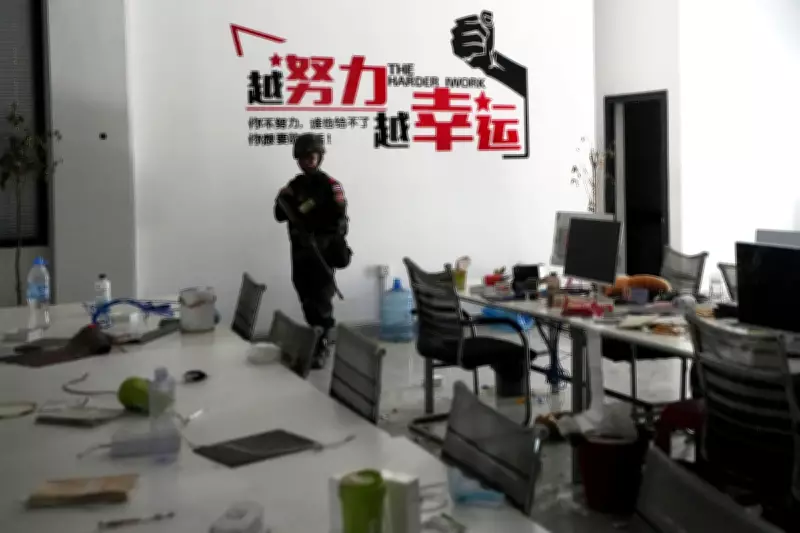
The compounds house rooms filled with desks for at least thirty people each, padded with noise-cancelling foam to maintain operational secrecy. Motivational messages written in Chinese adorn the walls, with phrases like "money coming from everywhere" encouraging workers, while documents found on premises offer detailed tips on luring people into fake investments. According to FBI data released last week, Americans alone lost nearly $21 billion to scams in 2025.

Industrial-Scale Operations and Human Trafficking
Police investigations reveal that foreign nationals are frequently kidnapped and tortured into working long hours within these fortified complexes to lure targets from countries across the globe. The industry is deeply intertwined with human trafficking, as workers are often recruited with false job offers and then forced to work in conditions approaching slavery, running romance and cryptocurrency scams under duress.
At a shuttered scam compound in O'Smach near the Thailand border, remnants of operations reveal meticulous planning. Buildings show bullet holes from border conflicts between Thailand and Cambodia last year, with floors strewn with collapsed ceiling panels, shattered glass, and debris. Workers and handlers fled when fighting escalated, though a ceasefire was reached in December after three weeks of conflict.
Sophisticated Deception Infrastructure
Inside these compounds, investigators found replicas of Vietnamese banks, Australian police stations, and Chinese police uniforms arranged in booths specifically designed to deceive victims. Desks in a four-story office building contained snacks eaten by previous users alongside scripts and notes in Chinese detailing every aspect of scams. American SIM cards were scattered on floors alongside what appeared to be counterfeit US dollar bills.
One massive compound, named "O'Smach Resort Complex," comprises 157 buildings, with 29 dedicated to scam companies and their offices. The remaining structures include extensive dormitory complexes, luxurious accommodations, and three-story villas, illustrating the scale and profitability of these operations.
Government Crackdown and Legislative Response
The Cambodian police have arrested over 121 foreign nationals during raids on online operations in the coastal province of Preah Sihanouk as part of an ongoing nationwide crackdown. This follows Cambodia's parliament passing the first law specifically targeting scam centres accused of bilking international victims out of billions of dollars.
Prime Minister Hun Manet, after months of international pressure, announced the industry would be completely shut down by the end of April, stating it was destroying Cambodia's economy and reputation. Since this declaration, police teams have raided dozens of suspected scam compounds and arrested hundreds of foreign nationals.

Regional Scale and International Implications
Scam compounds have proliferated across Southeast Asia since the pandemic, with industrial-scale organizations operating from border regions of Thailand and Cambodia. The United Nations Office on Human Rights estimates approximately 300,000 workers are caught in this industry regionally. These lucrative operations have emerged in other Southeast Asian countries including Laos, Myanmar, and the Philippines over the last decade.
In Cambodia alone, online fraud schemes generate an estimated $12.5 billion annually according to the United States Institute of Peace. The O'Smach area was flagged in the 2024 US Trafficking in Persons Report, which cited accounts of online scam compounds operating with forced labor.
Legal Framework and Penalties
Justice Minister Keut Rith described the new law as "strict like the fishing net, strict to ensure we don't have the online scams anymore in Cambodia, strict in order to serve the interest of the Cambodian nation and people." He stated the legislation will aid the "cleaning operation" ongoing across the country and ensure centres do not return after crackdowns.
Under the new legislation, convicted scammers face up to five years imprisonment and fines reaching $125,000. Sentences for those convicted of scams conducted by gangs or against multiple victims can extend to ten years imprisonment with fines as high as $250,000. The law also outlines penalties for money laundering, gathering victims' data, and recruiting scammers, creating a comprehensive legal framework to combat this transnational criminal enterprise.