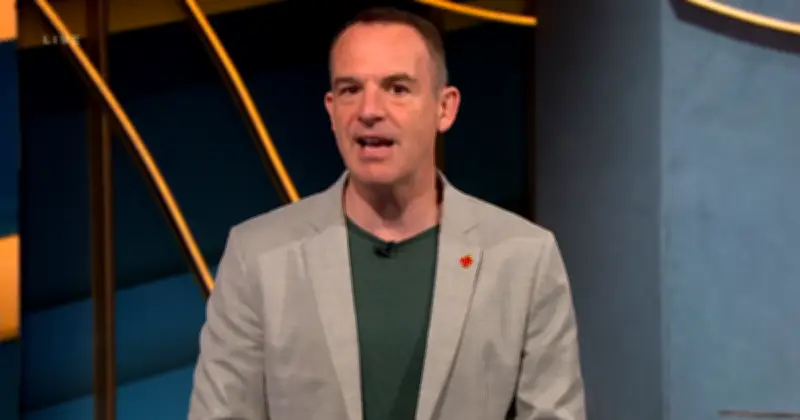
Money Saving Expert Martin Lewis has warned anyone with a mobile phone to dial a three-digit number to avoid being ripped off by phoney bank fraudsters. Martin took to his X account on Thursday to explain how a three-digit number can protect you from scammers attempting to catch you out by imitating your bank over the phone.
What is 159?
The special 159 hotline has been set up to both check if a call you received was legitimate and to give you a guaranteed safe way to find the real number for your bank and put you straight through.
Fraud losses from people being tricked into transferring money to scammers surged by nearly a fifth last year as more than half a billion pounds was stolen, with the use of AI to manipulate victims lowering the “barrier to entry” for criminals, according to UK Finance. AI (artificial intelligence) has made it easier for criminals to make their communications appear more sophisticated, send out messages at scale and mimic celebrities or people’s friends or family members, the banking and finance industry body said.

APP fraud losses rise
In some cases, authorised push payment (APP) scam victims will have lost their money for good, with the equivalent of 61% of losses recorded last year being reimbursed. The jump in APP fraud losses reported by members reflects the growing scale and sophistication of scams that manipulate people into transferring money for goods, services or opportunities that never materialise, UK Finance said. APP fraud losses rose sharply to £576.4 million – a 19% annual increase.
In October 2024, mandatory APP fraud reimbursement rules came into force. The rules mean banks must reimburse APP fraud victims, unless the customer has been grossly negligent. The protections apply when a transfer is made to and from a UK bank account and a reimbursement limit of £85,000 has been applied under the rules, although banks can choose to go further than this and repay higher amounts.
Martin Lewis explains how 159 works
Talking to his followers, Martin Lewis said: “Three digits can help protect you from scams. 159. If you dial 159 on your phone, you’ll be put through to a switchboard, it’ll ask you which bank you want to talk to. You tell it you want to be put through to your bank’s legitimate number.
“Do spread the word because there are two reasons this protects you. The first is, if you get a suspicious call from someone saying it’s your bank, you can politely say to them ‘you know what, I want to call through the official routes’ , put the phone down and dial 159. You don’t need to look anything up.
“The second reason, there are rare times when a scammer will spoof your line. So if you put the phone down and call back your bank, and it would say “Hello, it’s Martin’s bank here”, and you think, okay I’m through. No. If you dial 159 and it says “hello, it’s Martin’s bank”, you know it’s wrong, because you should have been put through to the switchboard. Protect yourself and remember, 159.”
Martin Lewis nearly scammed by fake Amazon call
Earlier this month, Martin revealed even he was almost caught out by a scammer pretending to be from Amazon. Caught on the hop between filming, Martin was targeted by a man asking him about his ‘new iPhone order’. The man told Martin he would need to send him a six-digit code to verify or he would need to cancel the order.
Martin said: “I said I wanted to first check that this call was legit. He got pushy and said if I didn't send the code he wouldn't stop the iPhone being sent. This felt wrong to me... why would he want to risk sending a high value item, if the customer says it wasn't ordered.
“So while talking & prepping the podcast, I managed to search the telephone number and yes, it was a recognised 'Amazon scam number.' Clearly, had I replied with the code he'd sent he would have then asked for further details and that would've started the data mine.”
Martin added: “The real lesson here is how sophisticated and plausible it was. And even though I'm obviously hyper-alert to scams as my face is in half of them, catch someone at the wrong time, when they're not paying attention, and anyone can be caught out!”