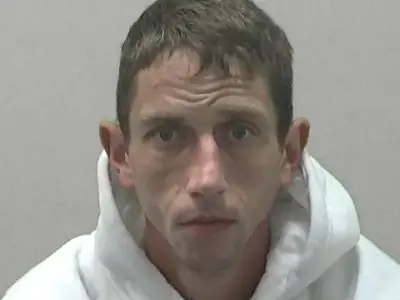
Alaska serial killer Israel Keyes confessed to murdering up to 11 people, and he was a dedicated true crime enthusiast who buried sickening 'kill kits' across the country. Keyes, 34, committed a string of murders after sexually assaulting his first victim, later stitching another corpse's eyes open, and raping her corpse.
True crime hobby and hidden 'kill kits'
Taking a holiday with his family was no break, and he carried out more vile acts abroad. Horrifyingly, Keyes was also a true crime fan, murdering at least 11 people in the US and perhaps more on his travels.
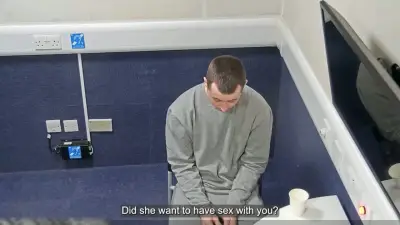
"I probably know every single serial killer that's ever been written about, it's kind of a hobby of mine," he told Alaska investigators after his arrest. However, Keyes showed no guilt for his crimes.

Keyes buried his nauseating 'kill kits' across the country, later digging them up and using them to inflict abject torture on his victims. In one of his worst acts of violence, Keyes kidnapped a young woman from her workplace and strangled her, then subjected her to sexual abuse both before and after her death.
Ransom demand and extortion attempt
Then, in an attempt to extort $30,000 from her grieving family, he stitched her eyes open to make her appear alive in a photograph that was sent with his ransom demand.
Brought up in a Christian white supremacist family, Keyes lived in a remote cabin without modern amenities. He learnt to hunt for his food but seemed to love killing animals.
A girl who knew Keyes during childhood said being in his presence "made my skin crawl". In his childhood, Keyes was obsessed with Satanism and wanted to perform a ritualistic murder. In the late 1990s, he brutally sexually attacked a teenage girl.
Army service and early crimes
Despite originally planning to kill his victim, he had a change of heart at the last second and let her go. "I was too timid. I wasn't violent enough," he said to detectives. "I made up my mind I was never going to let that happen again."
Shortly afterwards, in July 1998, Keyes enlisted in the US Army, serving as a Specialist in Alpha Company, 1st Battalion, 5th Infantry, 25th Infantry Division. "He was an extremely capable soldier," said content creator Kris Collins in a new podcast about Keyes and his crimes.
She said the man was exceptionally strong, had excellent self-control and good firearms knowledge as "all the horrifying traits of a devastating serial killer".
Keyes was a heavy drinker but was also a model soldier and earned an honourable discharge in July 2001. He later started a relationship with a woman living on the Neah Bay reservation in Washington state, where investigators believe his killing spree began.
Final victim and arrest
When later asked about whether he had killed during that period, Keyes cryptically replied: "Yeah, Neah Bay's a boring town." Keyes would rob banks to finance his obsession with killing, assembling 'kill kits' that he hid across the US. One uncovered by the FBI was fit with a 22-caliber Ruger pistol, empty magazines, ammunition, and a silencer.
During interrogation, Keyes said there are countless other stashes still hidden throughout the US, packed with weapons, money, and items used to dispose of victims. The precise number of people Keyes slaughtered will never be known. Unlike many other serial killers he had studied, Keyes did not crave notoriety and acknowledged he minimised the true scale of his crimes for fear of distressing his daughter.
He insisted he had never murdered a child but, unlike most other serial murderers, he did not target a particular type of victim and is known to have selected both male and female victims ranging in age from late teens to the elderly.
Keyes kept off the radar of law enforcement for over a decade as he primarily hunted in the Pacific Northwest, but also travelled as far as Mexico and Belize to stalk his victims. Keyes' final confirmed victim was 18-year-old Samantha Tessla Koenig, who worked at a coffee booth in Anchorage, Alaska.
Suicide and aftermath
Keyes abducted Samantha from her workplace on February 1, 2012. After sexually assaulting and savagely beating her, Keyes strangled Samantha with a rope, his favourite method of killing.

Following the murder, Keyes went on a two-week cruise holiday with his family, returning to Alaska on February 18 to rape the woman's dead body. Keyes applied makeup to the lifeless face and stitched her eyes open using fishing line. He then staged a photograph of Samantha holding a recent edition of the Anchorage Daily News, creating the illusion that she was still alive, and demanded a ransom of $30,000 (approximately £19,000 at the time) from her family.
After receiving the ransom, Keyes dismembered Samantha's body and disposed of the remains into Matanuska Lake, north of Anchorage. He had accessed Samantha's bank account to collect the ransom, and through tracking his cash withdrawals, authorities were able to trace the murderer's movements.
After his arrest, Keyes tried to copy the courtroom escape of notorious serial killer Ted Bundy but was swiftly tasered by an alert security guard. While behind bars, Keyes originally worked with authorities, disclosing information about the many killings he had committed.
After the case attracted press coverage, he stopped helping investigators, worrying the horrific details of his offences would distress his young daughter. He confided to an FBI interrogator: "The problem is that nowadays, the more stuff my name is attached to the more likely it is that somebody's gonna try to do some kind of stupid freaking TV special ... with all this true crime bulls**t that people are obsessed with."
Eventually, on December 1, 2012, Keyes found a razor blade, which he used to kill himself in his cell. A blood-drenched suicide note found beneath his body was described as an "ode to murder" but offered no clear clues about who his other victims were. He had also used his own blood to draw eleven skulls on a piece of paper hidden under his bed, believed to signify the true number of his murder victims.