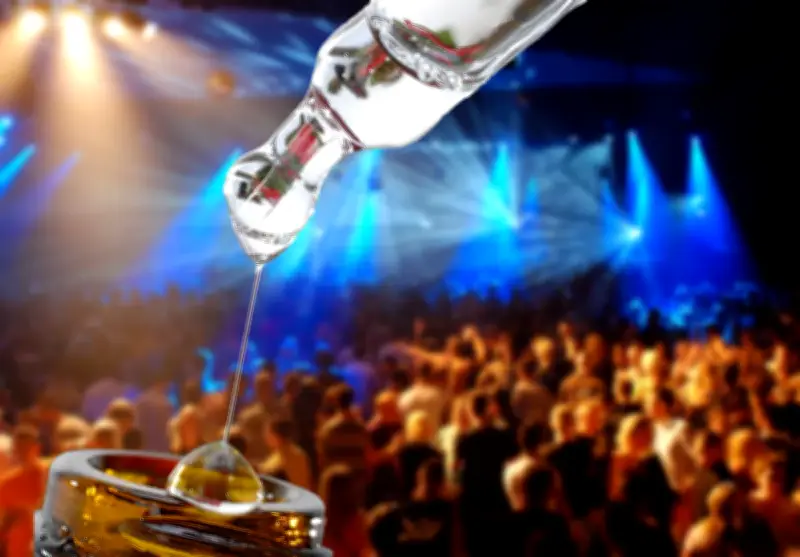
GHB, the salty-tasting drug sometimes known as “liquid ecstasy” or “G,” has for decades been largely associated with gay clubs and chemsex — sex under the influence of drugs. But the drug is now spilling into London’s wider nightlife, leaving a new generation reckoning with one of the least forgiving yet fastest-acting euphoria-inducing mind-alterants on the dancefloor.
An invitation to an illegal rave in a London forest came with the usual instructions: arrive after midnight, bring your own booze, plenty of water and, above all, keep quiet. “The police exist,” it warned. “We exist quietly alongside their existence.” Then came an order: “No GHB. None. Not in any form, concentration, or intention. This is absolute. We will not accept it, shelter it, or acknowledge its existence.”
Why GHB is having its moment
There are reasons GHB might be having its moment. It is cheap and short-lasting, and consumers describe a high somewhere between the joyous drunkenness of alcohol and the rapturousness of MDMA — but without, they claim, sacrificing the following day. They also prize it as a powerful aphrodisiac and sexual performance aid. Meanwhile, ketamine has acquired a grim reputation for bladder damage, and generally does not help one make love like an Adonis, nor rediscover their gift of the gab.

“Who wants to be incontinent?” says Professor Fiona Measham, chair in criminology at the University of Liverpool and chair of harm reduction charity The Loop. GHB, she suggests, may be filling the gap. “We’ve definitely seen it moving from gay to straight worlds.”
Ignacio Labayen de Inza, who runs the London chemsex support organisation Controlling Chemsex, agrees. “It’s not just a gay thing,” he says. “Now there are people who are using it in straight clubs. It’s much cheaper than drinking alcohol.”
A dangerously narrow margin for error
But there is a catch. A recreational dose of GHB can amount to just a few millilitres, or even less for its close chemical relative GBL, a more potent drug that the body converts into GHB. The margin for error is notoriously narrow. The “effective dose” and overdose dose “are so close together that it’s very easy to accidentally overdose,” says Measham. Or, as drugs expert Simon Doherty reports, “the optimum dose, which will give you the best threesome of your life, is not far away from the dose that will give you the last threesome of your life.”
It helps explain why parties have banned the drug, from the London forest rave to festivals and clubs in Europe like Draaimolen and Berghain, as just a small difference in dose can torpedo someone from ecstasy to blackout chaos. “Sometimes you become like an animal,” says Labayen de Inza. “You don’t even know your name.” The dark side to GHB, he warns, is just an errant sip away. Another sip of “the most dangerous club drug” can even be fatal. Yet for GHB’s devotees, the peril can seem almost inseparable from the appeal.
London has long been one of the world’s capitals of GHB use, even while overall use remains niche. Its pre-pandemic rise among straight people was attributed to how it has “no sugar, no calories and no hangover”. Today, those same qualities could perversely appeal to a health-optimisation-obsessed generation.
One indication of the scale of supply came in April, when a man was jailed after the Metropolitan police seized more than 2,000 litres of GBL — one of the force’s biggest confiscations on record. At festivals where The Loop tests drugs for contamination and purity, medics have increasingly handed Measham’s team the telltale little bottles found on people who have collapsed. “We’ve seen a bit of an uptick in terms of people coming and overdosing at festivals on G and in clubs,” she says.
A hard habit to break
Ketamine allegedly killed the dancefloor by dissociating ravers until they can barely move, even for statuesque London standards. Conversely, before someone is “G’ing out” and intoxicated to near collapse, they are charged with a boisterousness far removed from ketamine’s stupor. “People forget how much they’ve taken, or they take a swig of their mate’s drink without realising it contains G,” says Measham.

GHB also has a notorious history in drug-facilitated sexual assault, earning it the label “date rape drug”. In 2022 it was reclassified as a Class B drug from Class C following concern over its use in a slew of high-profile cases. But its history is more complicated. In the gay community, its use as a hyperpermissive love drug — often with the once again prevalent mephedrone, or crystal meth — has sustained marathon, consensual sex sessions.
The same properties that make GHB attractive for uninhibited sex or dancing can also make it habit-forming. Labayen de Inza knows this personally. “I was taking G day and night,” he says. Dependence can develop rapidly, with the drug’s short duration forcing some heavy users into round-the-clock dosing. For years, he could not sleep longer than three hours without waking up and needing GHB to get back to sleep. Eventually the purpose of the drug had completely changed: “You don’t use G to get high. You just take G just to function.”
GHB, which occurs naturally in tiny quantities in the brain, can dangerously interact with other drugs, and is particularly risky with other depressants like alcohol or benzodiazepines. It also appears to turn sex into a compulsive need for some heavy consumers. Model and actor Cara Delevingne recently told of how quitting GHB and cocaine preceded her going into seizures, and a Saudi prince died in London last year after mixing GHB with alcohol.
For one occasional consumer who did not want to be named for professional reasons, the danger became real in March when he passed out in the queue for an afterparty. He has not taken GHB since. “Just carrying a bottle of GHB and knowing that if you drink it all, you might die, carries a perilous and intense energy,” he says. “But for many it’s clearly worth it.”