Tasmania's Parole Board used a document citing legal authorities that do not exist to prevent Susan Neill-Fraser from proclaiming her innocence, a condition that was later removed after a court challenge.
Neill-Fraser was convicted of murdering her partner Bob Chappell, who was last seen alive on his yacht in January 2009. The Parole Board had added conditions banning her from communicating with media to claim her alleged innocence, citing previous court decisions that were later revealed to be AI hallucinations.
Background of the case
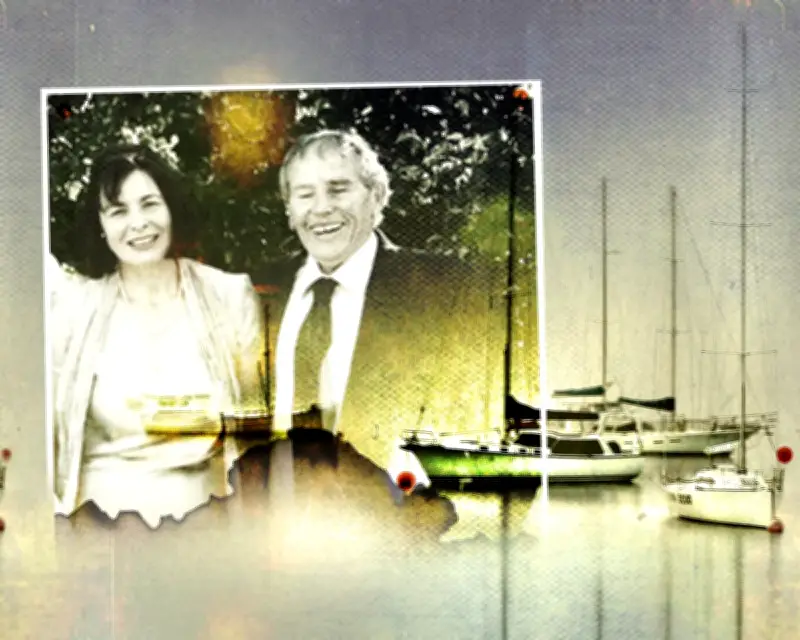
On 26 January 2009, a yacht called the Four Winds was moored on the Derwent River in Tasmania. Bob Chappell, a physicist at the Royal Hobart hospital, was on board the 53ft ketch. The 65-year-old was trying to fix an issue with the yacht he had bought for $200,000 less than four months earlier.
The next morning, a passerby noticed the Four Winds was sitting particularly low in the water, as if it were sinking. It was empty, and Chappell has not been seen since.
On board, police uncovered what may have been blood, and what looked like efforts to sabotage the boat. A dinghy used to travel between the yacht and the shore was found bobbing against rocks nearby.
Charges and conviction
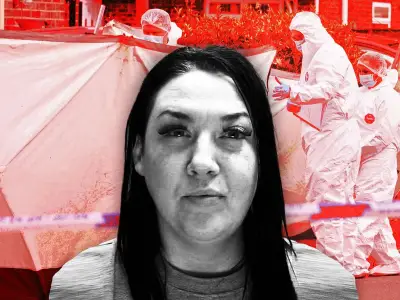
On 20 August 2009, detectives charged Susan Neill-Fraser, Chappell's partner of 18 years, with his murder. She maintained her innocence in the days after his disappearance, and has done so in the 17 years since – through her trial, conviction and appeals all the way to the high court.
Neill-Fraser's case has long been a topic of conversation in Tasmania, in part because of her loyal and vocal band of supporters, but it has infrequently made headlines on the Australian mainland. That changed this month when the Tasmanian government was forced to defend how AI is used within its justice system.
Parole conditions and AI hallucinations
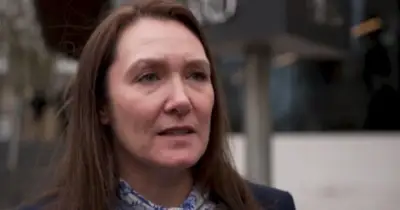
Neill-Fraser, who is serving a sentence of 23 years with a minimum term of 13 years, was released on parole in 2022. In late 2024, after a discussion about her case with Robyn Blewer, the director of Griffith University's Innocence Project, Neill-Fraser asked her parole officer to clarify whether such conversations were permitted under the conditions of her release.
The Parole Board decided it should act. That December, it added a condition that she could “not communicate directly or indirectly with any media outlet to claim your alleged innocence and/or wrongful conviction”. Neill-Fraser sought clarification from the board and, when none was forthcoming, started legal action.
In May last year, the board added another condition: “to protect your victim and their family from further trauma or distress, you must not communicate directly or indirectly – including through third parties, written statements, electronic communications, social media platforms, television, radio, podcasts, streaming services, online video-sharing platforms, or any other public or broadcast media – to assert claims regarding your alleged innocence, wrongful conviction, or dispute the legitimacy of your conviction or sentencing.”
Any breach of parole could result in the remainder of the sentence having to be served, meaning Neill-Fraser faced a further seven years in prison.
Court challenge and outcome
She continued her legal challenge. On 15 September, the Tasmanian supreme court heard that the Parole Board had uncovered AI use in a document from its secretary, Ben Hancock, which was seen as forcibly supporting the state's position to harden the conditions of Neill-Fraser's parole. The condition preventing her from talking to the media was removed.
In a statement after the court hearing, Neill-Fraser said she was “very pleased and relieved”. “I would like to emphasise that in challenging the parole order it has never been my intention to cause anguish or distress to others. I have always maintained my innocence. I am continuing in the quest to clear my name and to advocate for the broader issue of wrongful convictions in Australia. I cannot walk away from this.”
The Tasmanian attorney general, Guy Barnett, said he would be writing to the chair of the Parole Board seeking an explanation of what had happened, calling it “not acceptable”.
Concerns about AI in parole decisions
Sarah Schwartz, the Human Rights Law Centre's legal director, said it was deeply troubling that an AI-generated document citing legal authorities that did not exist had been used by a public authority to restrict a person's fundamental freedoms. “When you look at parole decisions, there's very little in the way of accountability, transparency or fairness, and because of that, there's a higher risk of AI use,” Schwartz said.
“In Tasmania at least, parole decisions are very rarely if ever challenged in court; it's incredibly difficult to bring judicial review proceedings, and costly. Those types of decision making processes lend themselves to improper AI use, but also poor decision making.”
She said the case of Kathleen Folbigg – who was jailed for 20 years in New South Wales after being wrongfully convicted of killing four of her children – was relevant to Neill-Fraser's parole appeal, as it demonstrated that silencing people who maintained their innocence damaged their prospects. “We know that media engagement in [Folbigg's] matter, and political engagement … was part of how she was able to advocate for the commission of inquiry, which led to her acquittal,” Schwartz said. “People need to be able to continue to advocate for lawful means to challenge wrongful convictions.”
Details of the case
The case was circumstantial – and there was no body and no murder weapon. The prosecution said Neill-Fraser had violently killed Chappell below deck, perhaps by striking him on the head with a large wrench, before winching his body on to the deck and into the dinghy, weighing it down, and disposing of it in the Derwent. She then allegedly tried to sink the yacht.
Police said Neill-Fraser had been home between 9.17pm and 10.34pm, during which time she had spoken by telephone on the landline to three different people. But she had used the dinghy to return to the Four Winds about midnight, they said, when the yacht was sabotaged. She had returned home again by 3.08am the following day, when a call was made on her landline.
The alleged motive was that the couple had relationship problems and Neill-Fraser knew that, should the couple separate, she would not be entitled to as much of Chappell's multimillion-dollar estate as she would if he died. Chappell had three adult children from a previous relationship, and Neill-Fraser had two of her own.
To many, the key witness was a man who claimed that Neill-Fraser had asked him about a decade earlier to help take her brother out to sea and throw him overboard, weighing him down with a toolbox. He said that she had also told him how she planned to sink the yacht and use a dinghy to make her way to shore. Not long after this, the witness claimed Neill-Fraser had told her she wanted to do the same to Chappell, except she planned to wrap him in chicken wire.
“Before killing Mr Chappell, Ms Neill-Fraser had come to the conclusion that her relationship with him was at an end … [she] was well aware that she would be substantially better off with the relationship ending in death rather than separating [and] she killed Mr Chappell with material gain in mind,” Justice Alan Blow said in sentencing Neill-Fraser. “She deliberately killed Mr Chappell for a reason, and that reason had to do with her financial betterment. I am satisfied beyond reasonable doubt that Ms Neill-Fraser attempted to sink Four Winds in order to destroy evidence relating to the killing and to divert suspicion away from herself.”
Innocence Project's involvement
Lawyers for Neill-Fraser, and her supporters, say the version presented by police and accepted by a jury is so full of holes that even the Four Winds could sail through it. In the first public comments confirming the Griffith University Innocence Project was taking on the case, Blewer said there were real questions about how Neill-Fraser was convicted.
Blewer, who is also a lawyer, said the case had been studied extensively by her students, many of whom were baffled by the verdict. “There are just so many of the contributing factors featuring in her case that all the research in the world tells us leads to wrongful convictions,” she said. “When you think of all those factors, if there was even one of those it would raise the prospect of a wrongful conviction. She has almost all of them.”
Those factors include concerns about the conduct of lawyers involved in the trial on both sides, and a reconstruction in court about how Neill-Fraser was said to have winched the body. There was also a reliance on eyewitnesses, incentivised witnesses and a long history of police investigations that demonstrated tunnel vision, particularly involving a female accused, Blewer said.
Perhaps most concerning was the use of forensic evidence, including the handling of a DNA sample found on the Four Winds which matched a homeless teenage girl known to associate with older youths involved in crime. The girl has changed her story several times but told an appeal of Neill-Fraser's in 2021 that she had been on the Four Winds the night Chappell died, along with three others.
Blewer said the next steps would be working to access material in the case, and finding a criminal law team to push for change – either in the form of a new appeal against the conviction prompted by uncovering fresh evidence, or in the establishment of an inquiry. As in the cases of Folbigg and Lindy Chamberlain-Creighton, Blewer said that in time it could be found Neill-Fraser was wrongfully convicted in part because she did not act how a woman was expected to after a tragedy. Chamberlain-Creighton was wrongly convicted in 1982 of murdering her child, having always maintained a dingo took the baby. “It's a case that unfortunately shows the limitations of our justice system,” Blewer said. “It was never a slam-dunk conviction … Sue always said she was innocent, and she's maintained her innocence for years now.”