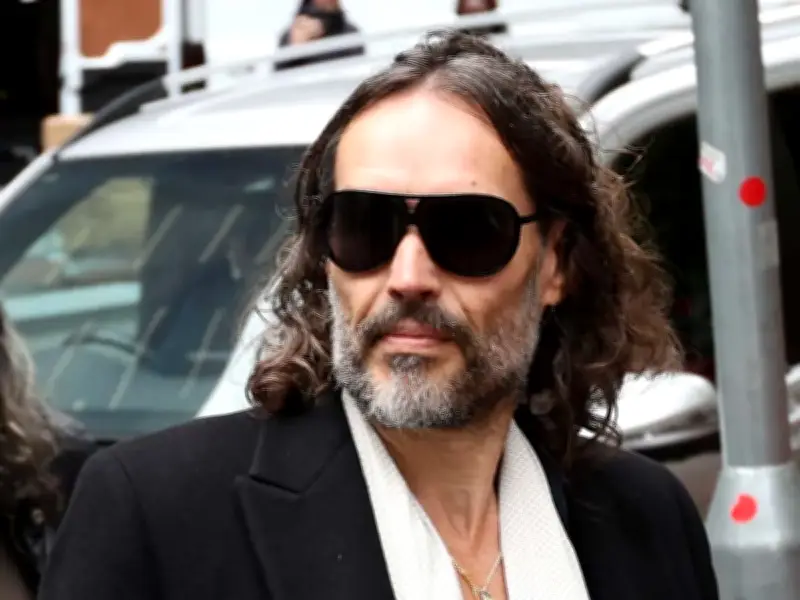
A YouTuber who published the name of one of Russell Brand's victims during the comedian's rape trial was arrested and spent 12 hours in police custody.
Blogger Caleb Israel, who goes by Dr Heinz and also calls himself Ketchup Man, posted the first name of the woman on his website, The Ketchup Report, during the seventh day of evidence at Brand's trial. Brand was convicted of one count of rape and three sexual assaults.
Israel, who was reporting from Southwark Crown Court, also named the woman's ex-boyfriend and her work colleague in his coverage.
Court intervention and arrest
Trial judge Mr Justice Bennathan stopped the case when he was alerted to the breaches and told Metropolitan Police officers to arrest the blogger in the court overspill, where he had been following the evidence.
Police told Israel to delete the posts and ejected him from the courthouse, banning him from returning for the rest of the trial. However, the blogger, who has more than 2,500 followers on YouTube, had included the offending posts on a livestream about the trial and then linked to the livestream on social media site X.
The Met said Israel “wasn’t particularly compliant” when first confronted about the breaches. After officers saw the X post, he was arrested and held in police custody in Wembley for 12 hours.
Police response and caution
Detective Superintendent Andy Furphy, who led the criminal investigation into Brand, said the blogger “didn’t get it” when it was pointed out that he had risked identifying a complainant in a rape case.
“Imagine the lifelong impact of naming a victim, as well as the impact on the trial,” he said, adding: “In my mind, I’m thinking I’ve got to do something here to minimise his behaviour, which was absolutely unacceptable.”
Israel was ultimately given a police caution, and the offending blog posts were amended to remove the details identifying Brand's accuser.
Mr Furphy said: “It was always someone like him [Israel] that has been my worry from the outset of this case around victim anonymity.” He said police have gone to “extraordinary lengths” to protect the anonymity of complainants in the Brand case and have been monitoring social media in case of breaches.
Legal context and aftermath
Members of the British press first alerted the court to the Ketchup Report blog and the ongoing breaches. Mr Furphy said police had to take action when it became clear Israel was not fully complying with requests to remove material from the internet by Friday evening.
The Attorney General's office was also alerted to the incident but has not brought a case against Israel in light of the police caution and court ban.
The Sexual Offences (Amendment) Act 1992 grants automatic lifetime anonymity to all complainants of sexual offences, starting from the moment an allegation is first made. Complainants are routinely named in court in front of the jury during trial evidence, but members of the media and public watching are banned under law from publishing anything that could lead to their identification.
Anyone who breaches the anonymity provisions can face criminal prosecution, and if convicted, the maximum sentence is six months in prison.
Israel, who says on social media site X he is from Luton, has said he is “not a lawyer” and adds on his blog: “I am self-taught in the law, always learning in my spare time with aspirations of becoming a criminal defence lawyer one day.” He continues: “I bring curiosity, consistency, and a sharp eye for storytelling to every recap, so you don’t just hear the facts, you see the case as a whole picture.”
He has previously covered a series of high-profile criminal cases in the United States, as well as the evidence presented in the US libel battle between Johnny Depp and Amber Heard.
The blogger's coverage of the Brand trial stopped after he had been ejected from court. In a final post on X, he offered some commentary on the evidence, writing “I think Russell Brand is royally cooked” and suggesting one of the witnesses had been “very convincing”.