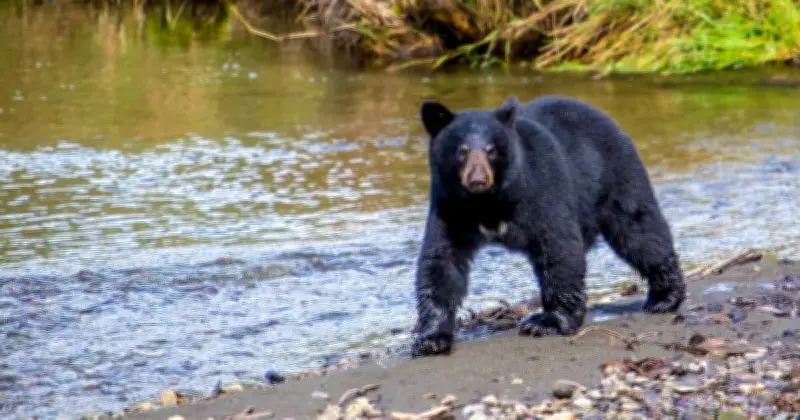
A 64-year-old man was mauled to death and partially eaten by a black bear at a remote cabin in Alaska while his terrified wife sought refuge in a neighboring cabin. The fatal encounter occurred on June 6, 2013, at George Lake, approximately 110 miles southeast of Fairbanks.
Attack and Immediate Aftermath
Robert and Roberta Weaver were staying at a cabin when a black bear attacked. Mrs. Weaver fled to a nearby cabin to raise the alarm. According to a Sky News report, she grabbed a gun to fend off the bear, but the weapon jammed. A family member also claimed she threw objects at the bear in a desperate attempt to stop the attack, but her efforts were futile.
Airmen from Eielson Air Force Base were first to arrive but found no trace of the bear. Later, Alaska State Troopers took over the investigation and recovered the remainder of Mr. Weaver's body outside the cabin, while his traumatized wife remained inside.
Bear Located and Killed
Lieutenant Lantz Dahlke told the Anchorage Daily News: "The bear obviously was not scared of her at all. Unfortunately, she wasn't able to help her husband any more than she could." Eventually, officials tracked down the bear after it approached a trooper, displaying "an unusual lack of fear of humans." Fearing an imminent attack, a trooper shot and killed the bear. Wildlife troopers concluded it was the same animal, as no other bears were spotted in the vicinity.
Human Remains Found in Bear's Stomach
A post-mortem examination at the Alaska Department of Fish and Game office in Fairbanks revealed human remains in the bear's stomach. Police spokeswoman Beth Ipsen confirmed: "Mr. Weaver's remains were found in the bear's stomach." Wildlife biologist Cathie Harms noted the bear appeared to be an older adult male in good health, with no signs of disease or starvation, though it could have been experiencing hunger.
Rarity of Black Bear Attacks
Black bear attacks on humans are very rare. Ipsen added: "We don't have any kind of determination of what led up to the attack." The Anchorage Daily News cited findings from Canadian scientist Stephen Herrero, "possibly the continent's foremost authority on bear attacks," who noted that food stress has been suggested as a contributing factor in previous attacks, but the relationship is complex. "There have been many years of major food stress for black bears without human injury resulting," he said.