A man found dead on Saddleworth Moor in December 2015 was finally identified 13 months later as 67-year-old David Lytton, a London-born former croupier and Tube driver who had been living in Pakistan. The breakthrough came after detectives traced a titanium plate in his leg to a type used in just 12 hospitals in Pakistan, and a toxicology report found strychnine in his system, a poison banned in the UK since 2006 but available in Pakistan.
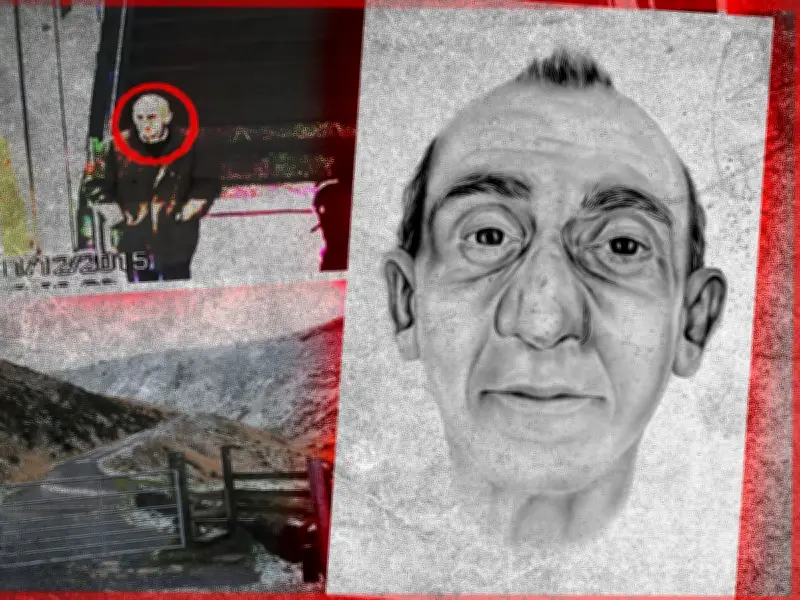
The body was discovered by cyclist Stuart Crowther at around 10.50am on Saturday, December 12, 2015, lying on a patch of grass off the steep Chew Track, about 400m above Chew reservoir. It was a bitterly cold and wet day. The man, who appeared to be in his mid 60s to mid 70s, was about 6ft 1in, white, with a slim build, receding grey hair, blue eyes and a large nose which might have been broken. His clothing – a jacket, shirt, sweater, corduroy trousers, all from M&S, and slip-on shoes – was inappropriate for the weather. He had no ID, wallet, keys, phone or watch. In his right trouser pocket was £130 in £10 notes, and in his left coat pocket were three train tickets and an empty medicine container.
The search for his identity
With no ID or personal possessions, police cross-referenced the man's DNA against national criminal intelligence and missing persons databases. When neither provided a match, they moved on to the two concrete pieces of evidence they had: the three train tickets, which were from the previous morning – a single for the 9.04am Ealing Broadway to London Euston and a return from Euston to Manchester Piccadilly, all paid for in cash. CCTV showed him arriving at Piccadilly at 12.07pm, having caught the 10am train from Euston. He was seen visiting an amusement arcade, Boots and WHSmith before buying a sandwich from M&S, then disappeared into the Friday lunchtime crowds outside the station.
Around an hour later he walked into the Clarence pub in Greenfield, where he asked the landlord Mel Robinson for directions 'to the top of the mountain'. Mr Robinson pointed him in the direction of local landmark Indian Head, but warned he wouldn't make it back before dark. "The last thing he said to me was 'thank you for giving me the directions' and then he just left," Mr Robinson, the last man to see him alive, later told the Manchester Evening News.
Dead ends and theories
Detectives travelled south and, working with the Met, began to ask around in West London. But enquiries at doctors' surgeries, dentists, bookies, barbers and anywhere else an elderly man was likely to frequent all drew a blank. They then wondered if the site of the man's death was significant, as it was very close to where a British European Airways DC-3 came down in 1949, killing 24 people. Detectives speculated if either of the two young boys among the eight survivors had returned to make a pilgrimage to the crash site. But when the theory was publicised it emerged one of the boys had been killed 10 years later in a train crash, while the other, now a 72-year-old professor of pharmacology, got in touch to say he had never returned to Saddleworth.
Then someone from Camden in North London contacted Oldham CID to say their elderly neighbour matched the description and hadn't been seen since December 10. But when police made enquiries it turned out the man was alive and well and had just moved out without telling anyone. Later that month a man from Northern Ireland contacted police. His dad, who bore a resemblance to the man in the CCTV images, had gone missing from hospital in 1994 and not been seen since. But DNA samples didn't match. Meanwhile the case was making headlines around the world. One Australian newspaper even speculated the man might be an international spy.
The clue that cracked the case
On January 29, the post-mortem found the man had had a 10cm titanium plate inserted in his left femur, probably after a serious fracture. The plate was manufactured by a company called Treu-Dynamic and was of a type used in just 12 hospitals in Pakistan. A toxicology report found he had strychnine in his system, and GlaxoSmithKline confirmed Pakistan was the only country where the medicine container found in his pocket had been distributed. Guessing he may have started his journey on the Piccadilly Line at Heathrow Airport, detectives began to search flight records for older men who had flown into the country from Pakistan in the days before his death.
After checking through thousands of passenger details plus hours of airport and train station CCTV they found someone who matched the man's age and description. Then they looked at his passport picture, which was 10 years old, and got an image from Lahore Airport from the previous day's CCTV. Some 13 months after his body was found, DNA tests confirmed 'Neil Dovestones' was in fact 67-year-old David Lytton.
His life and death
At an inquest in Rochdale in March 2017, more details about London-born Mr Lytton's life and death emerged. His brother Jeremy Lawton described him as a 'genius' who had wanted to study psychiatry at Oxbridge, but didn't get the grades. He later dropped out of Leeds University and became increasingly 'insular' and distant from his family. Mr Lytton, who had changed his name from David Lautenberg, went on to become a croupier and a driver on the London Underground, because it was said he enjoyed the solitary nature of the job. The inquest heard he had been in a relationship with a woman for more than 30 years, but in late 2006 sold his house in Streatham, south London, and left for Pakistan without telling anyone.
Nine years later, in early December 2015 he walked into a travel agents in Lahore and bought a one-way ticket to the UK. His visa was due to run out in just over a week and he wanted to travel urgently. The inquest heard Mr Lytton had had a number of run-ins with Pakistan authorities about his visa and had been detained at least twice due to overstaying. He flew to Heathrow on December 10, 2015 and booked a five night stay at a Travelodge in Ealing, paying £307 in cash. But after spending just one night there he caught the train to Manchester. There he travelled to Dovestones where he took the strychnine he had likely brought with him from Pakistan. Coroner Simon Nelson said he was satisfied Mr Lytton had taken the poison 'by his own hand'. But, as he recorded an open verdict, he said a series of 'fundamental questions remain unanswered'. Chief among them was why a man with no known links to Saddleworth had travelled thousands of miles across the world to die alone on a bleak, windswept moor. The answer will likely never be known.