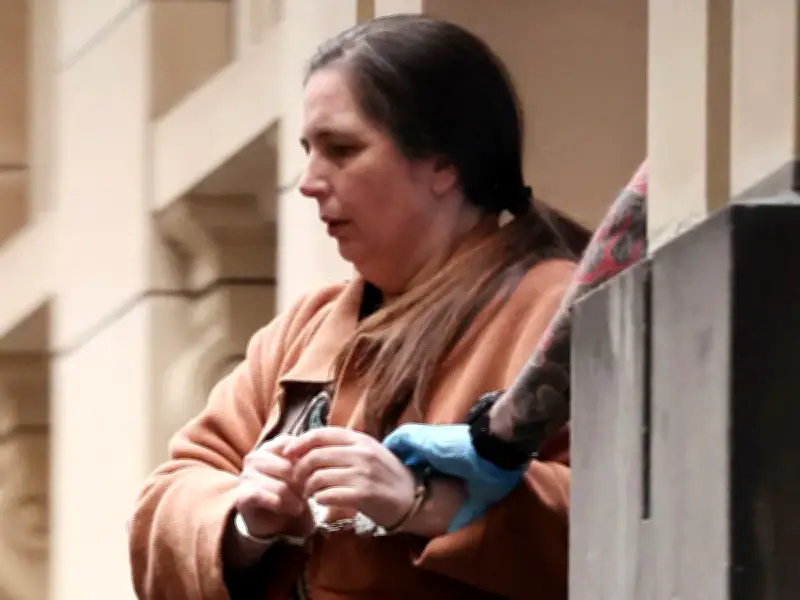
Convicted mushroom killer Erin Patterson, 51, is back in court, facing a three-judge panel at the Victorian Court of Appeal in Melbourne as she attempts to have her murder conviction quashed over a series of claims put forward by her defence.
Patterson's defence team will argue that the judge allowed evidence he should not have last September, that the prosecution behaved improperly, and that the jury was tainted by a "catastrophic" accommodation bungle in which the jury accidentally stayed in the same Traralgon hotel as some prosecutors, a key witness, and some journalists covering the case, which was held at the Morwell Supreme Court in country Victoria.
Accommodation blunder and jury integrity
Richard Edney, the barrister acting for Patterson, has argued that the accommodation arrangements for the sequestered jury "undermined" the integrity of his client's conviction. He claims the jury was at risk of being tainted because jurors are supposed to remain isolated, but accommodation shortages in rural Victoria meant they shared a hotel with others involved in the case. However, there is no evidence any jurors interacted with anyone off-limits.

Patterson was found guilty last September on three counts of murder and one of attempted murder following a lunch she prepared for guests at her home in country Victoria in 2023. The seemingly ordinary mother from Leongatha, 85 miles from Melbourne, was sentenced to life in prison after being found guilty of lacing a meal with deathcap mushrooms.
Fatal lunch and trial details
Three of the four guests died in hospital after eating the meal: her ex-husband's parents Don Patterson, 70, and Gail Patterson, 70, and Gail's sister Heather Wilkinson, 66. Ian Wilkinson, a local church minister, survived after an emergency liver transplant.
During the 11-week trial, it was heard that Patterson's relationship with her estranged husband, Simon, had broken down in the months before the lunch on July 29, 2023. The life sentence with a 33-year non-parole period was handed down in September.
Despite the guilty verdict, Patterson maintains the deaths were accidental and she did not know the mushrooms were poisonous. Her lawyers claim the prosecution's five-day cross-examination was "unfair and oppressive" and have questioned several pieces of evidence, including mobile phone tower data and social media posts about deathcap mushroom sightings, which they say should never have been presented to the jury.
Appeal grounds and prosecution counter-appeal
Patterson's team claims the evidence was irrelevant and prejudicial, causing a miscarriage of justice. They also argue that other evidence, including photos related to her mushroom foraging hobby that support her argument the deaths were accidental, was wrongly excluded. The appeal document also cites jury deliberations.
The case drew worldwide attention, and steps were taken during the trial to ensure the jury was not influenced by family, friends, or media. When deliberations began, jurors had to stay in supervised accommodation with limited contact with the outside world until a decision was reached. Patterson's lawyers argue a "fundamental irregularity" occurred that "fatally undermined" the integrity of the verdicts, claiming room shortages meant jurors ended up in a hotel also housing prosecution members, a key police witness, and journalists.
The judge at the time said the jury had a whole floor to themselves and there was no evidence of contact with anyone linked to the case. Patterson's team, which did not raise concerns during the trial, said in their appeal filing: "[This] requires the quashing of the convictions and an order for a re-trial so that justice cannot only be done but be seen to be done."
Meanwhile, the Department of Public Prosecutions (DPP) has filed a separate appeal, arguing Patterson's sentence is "manifestly inadequate" given three people were killed and another left seriously ill. Prosecutors also claim the judge allowed the expectation that Patterson would spend extended periods in solitary confinement to protect her from fellow prisoners to influence his sentence.

If the prosecution's appeal succeeds, Patterson's parole period could be extended beyond 33 years, or she could receive a life sentence without parole, the Australian equivalent of a whole-life order. The appeal will be heard by a three-judge panel at the Victorian Court of Appeal in Melbourne and is set to last two days.
Under Australian law, appeals are heard and decided by a bench of three senior judges, not a new jury. Defence teams must prove specific flaws in the original trial, such as improper evidence admission or procedural irregularities. If the appeal succeeds, the case could go to a retrial or an acquittal.