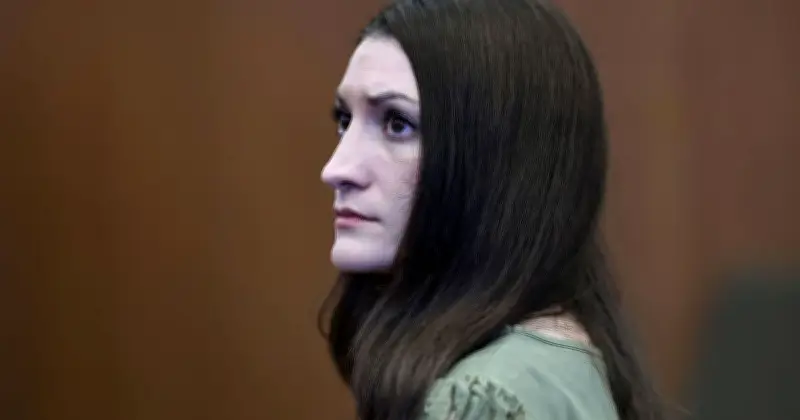
The Lindsay Clancy murder trial has ended in a mistrial after a hung jury failed to agree on whether the Massachusetts mother murdered her three children. The case, which has gripped global attention, has reignited debate about the line between justice and entertainment in courtrooms.
Mistrial in Massachusetts
After seven days of deliberations, the jury could not reach a verdict, prompting Judge William Sullivan to declare a mistrial. Clancy, a maternity nurse, is accused of strangling her children Cora, Dawson and Callan. Her defence argued she was psychotic at the time, while prosecutors pursued murder charges.
Clancy, who appeared in court in a wheelchair, wept during proceedings. Her paralysed lower body and gaunt expression have drawn widespread sympathy and outrage in equal measure. The case has become a global spectacle, with millions following every development.

True crime as entertainment
The trial has sparked comparisons to past courtroom dramas, including the O.J. Simpson trial in 1995, which drew 100 million viewers for the verdict. Simpson was acquitted of murdering his ex-wife Nicole Brown Simpson and her friend Ron Goldman, and died in 2024 with the case unsolved.
Similarly, the 2014 conviction of double-amputee paralympian Oscar Pistorius for killing girlfriend Reeva Steenkamp turned the courtroom into live theatre. In such cases, televised court action becomes daily fodder for news shows and social media, reducing real human tragedy to popular culture spectacle.
UK courtroom rules
The UK bans filming, photography and recording in criminal courtrooms for good reason, according to the argument. These are not courts of public opinion, and judicial arenas with legal protocols exist to uphold the law. The Clancy case, with its mix of tragedy and public fascination, illustrates why such protections matter.
While some may argue that defenceless children evoke morbid curiosity, true crime is always bound by real-world consequences. The UK's strict rules ensure that justice is not overshadowed by entertainment, protecting the accused, victims and their families from the spectacle of popular culture.