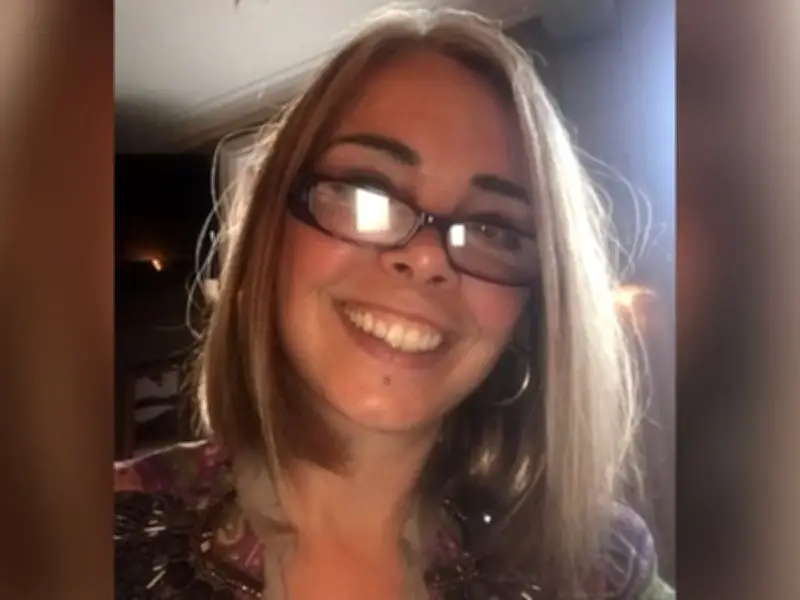
George Gordon, 65, is standing trial at Liverpool Crown Court accused of murdering artist Delia McInerney, whose dismembered remains were discovered inside a chest freezer at his flat in Gerards Court, St Helens, on January 8 this year. The prosecution opened its case on Wednesday, November 4, alleging that the 62-year-old, from Anfield, died in April 2023, shortly before she was due to begin a new life abroad in Portugal.
Gordon admits killing her but claims he acted in self-defence, the court was told. He denies murder and causing unnecessary suffering to a protected animal. Jurors heard a series of disturbing allegations about the events leading up to her death, what happened afterwards and how police eventually discovered her remains.
Discovery of the body and alleged purchases
Prosecutor Martin Reid KC told the jury that police attended Gordon's flat on January 8 after concerns were raised about Ms McInerney's whereabouts and wellbeing. Officers discovered her dismembered remains inside a chest freezer, alongside the remains of five guinea pigs. The court heard that Gordon allegedly told officers: "She's in there", before adding: "She's in the freezer." He then clarified that Ms McInerney's body was in two pieces, stored together. The freezer was still switched on when officers opened it, and police could see human legs and feet, with what appeared to be an organ also found among black plastic bags.
The prosecution outlined a series of purchases and internet searches allegedly made by Gordon in the months before Ms McInerney died. Jurors heard he had bought an electric handsaw, a sledgehammer and heavy-duty scissors advertised as being capable of cutting through small bones. His internet history allegedly showed searches for butchers' tools, meat saws, cleavers and choppers. He had also supposedly purchased a copy of Gray's Anatomy, described in court as a leading textbook on human anatomy. Mr Reid told the jury: "Over the space of just over a week, the defendant had purchased items consistent with those that would later be used, or required, to kill and dismember Ms McInerney."
Alleged killing and financial motives
The court heard Ms McInerney owned property abroad and had been planning to move to Portugal just days before her death. She was said to have been due to travel to Porto on a Ryanair flight on April 13, 2023, but never boarded. The prosecution believes she died on the night of April 11 or in the early hours of April 12. Ms McInerney had reportedly spent much of her time at Gordon's flat, partly because of concerns about 5G masts near her own home in Anfield. The pair were described as "soul mates and very close", although the court heard they were not in a romantic relationship.
The prosecution outlined different accounts Gordon had given about how Ms McInerney died. During a police interview, he allegedly claimed he returned home to find her on the floor, writhing in pain after taking an overdose. He said he initially offered to call an ambulance but she refused, and that he eventually struck her once on the head with a hammer to end her suffering. He later claimed in a letter to his cousin that Ms McInerney had attacked him with a hammer and a knife, forcing him to defend himself. Mr Reid said the prosecution rejected both accounts, arguing that neither a mercy killing nor self-defence explains what happened, and that Gordon deliberately attacked Ms McInerney.
Jurors heard Gordon was facing credit card debts totalling more than £26,000 around the time of Ms McInerney's death. The prosecution alleges he subsequently transferred thousands of pounds from her bank accounts into his own through hundreds of transactions. In August 2023, he allegedly took out a £10,000 loan in her name with Tesco Bank. Mr Reid said the alleged financial activity formed part of the prosecution's argument that Gordon's actions were motivated, at least partly, by financial gain.
Deception and discovery
The prosecution said Gordon deceived Ms McInerney's friends for more than 18 months by pretending she was still alive. Jurors heard he sometimes communicated with them by phone messages and emails while posing as Ms McInerney. One email sent from her account at 8.44pm on the night she is believed to have died raised suspicions, Mr Reid said, highlighting differences in the writing style, including the use of a lower-case "I" and the absence of her usual sign-off, "Dee". The prosecution also said Gordon sent an email in the early hours of April 15, writing: "Missing you already dear. I wish you were here."
While posing as Ms McInerney, Gordon allegedly told friends she had suffered a stroke and was in an induced coma. The court heard he travelled to Portugal on April 24, 2023, and visited a property belonging to Ms McInerney. He allegedly told one friend that he was looking for a new home and that the Liverpool and Spain properties had been sold. In another message, he made an apparent reference to the King's Coronation, claiming he had received an invitation and would be attending with Ms McInerney. He also allegedly invented a story about meeting actress Joanna Lumley and comedian Stephen Fry at Westminster Abbey. Mr Reid told jurors the account would almost be amusing were it not for the fact that Ms McInerney's body was lying in a freezer at Gordon's flat. Gordon also allegedly used her phone to take a photograph of himself at the Eurovision Song Contest in Liverpool.
The court heard Gordon's alleged deception began to unravel in December 2025 after a request was made to the Department for Work and Pensions to transfer Ms McInerney's Personal Independence Payment into a different bank account. The request was allegedly made by someone using the name Chris Cavendish-Gordon, claiming to be a social worker. Concerns led officers to attend Gordon's flat in St Helens, where the property was cluttered and in disrepair, with bodily fluids on several surfaces. When officers asked whether Ms McInerney was safe and well, Gordon allegedly failed to provide a clear answer. He eventually told them she was not alive anymore and directed them towards the freezer.
Accounts and ongoing trial
Following his arrest, Gordon was taken to Copy Lane Police Station, where he initially made no comment during questioning. The court heard he later made a series of statements while in hospital, where he had been taken after refusing food, water and medication. He allegedly said: "I finished her life myself. She was in agony and held onto me, and I finished it." He also claimed Ms McInerney had died in his arms and that he had not told anybody what had happened for three-and-a-half years. During a later police interview, Gordon allegedly described how he had kept her body for around a day and a half before deciding to put it in a freezer, and said he had dismembered her because that was the only way to fit her inside. Mr Reid said Gordon described the dismemberment as the "most horrendous thing" he had ever had to do.
The jury heard Gordon's account of events changed over time. In his initial explanation, he allegedly described finding Ms McInerney suffering after an overdose and striking her with a hammer to end her pain. However, in a letter to his cousin John Lawler in February 2026, he allegedly claimed she had attacked him with a hammer and then held a knife to his throat, and that he struck her because he feared she was about to stab him. Mr Reid told jurors this version was inconsistent with the earlier account and with evidence about Ms McInerney's final afternoon and evening. The prosecution also said there was no telephone data suggesting Gordon had travelled to Blackpool on April 11 or 12, as he had claimed, and no photographs documenting any injuries to him around that time.
Mr Reid said: "The crown's case is that this was neither a mercy killing, as he had originally claimed, nor was the defendant acting in self-defence." He added that Gordon's actions after Ms McInerney's death, including allegedly hiding her body and continuing to deceive her friends, demonstrated that he was concerned with covering up his wrongdoing. The prosecution alleges the killing was motivated, at least in part, by financial gain and Gordon's fear that Ms McInerney was about to leave the UK permanently. Gordon, who did not appear in the dock on Wednesday, admits killing Ms McInerney, described by a relative as his "soulmate", but initially told police he had hit her with a hammer to "end her suffering" after she had taken an overdose. Mr Reid said Gordon now claims he acted in self-defence. Gordon is represented by Gordon Cole KC and Philip Tully. The trial, before Mr Justice Goose, continues, and is expected to last for up to six weeks.