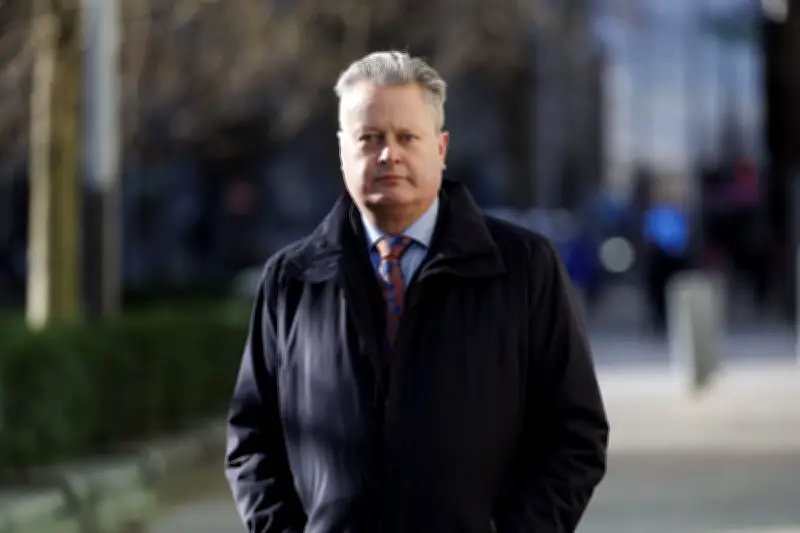
Former BBC journalist Vincent Kearney, now the northern editor at RTÉ, has been awarded £20,000 in damages by the Investigatory Powers Tribunal (IPT) after MI5 unlawfully obtained his communications data.
The Security Service admitted it breached Kearney's rights when obtaining the data. The Police Service of Northern Ireland (PSNI) and Metropolitan Police also made concessions during the proceedings.
Tribunal ruling
In a judgment on Thursday, three judges at the IPT awarded Kearney £10,000 in damages from the PSNI and the same amount from MI5, finding there was no reason to distinguish between the conduct of the two organisations.
Lady Carmichael, Mr Justice Chamberlain and Stephen Shaw KC said that the interferences in this case were numerous and took place over a period of years. They added that the heightened protection provided to journalists is for the public interest in the ability of readers or audience to receive information from him.
In the 16-page decision, the tribunal said MI5's bids for Kearney's data in 2006 did not identify him as a journalist or that the data sought would reveal his sources. The authorisations do not explain why the data sought cannot be obtained by other means, nor why the public interest requires interference with journalistic sources.
Kearney's response
Kearney, who worked as BBC Northern Ireland's Home Affairs Correspondent between 2006 and 2019, welcomed the judgment, describing it as a tremendous victory for journalism. He said the ruling is unequivocal: agencies tasked with upholding the law acted in ways that were not in accordance with the law and disproportionate.
He noted that the IPT does not normally award damages, and that was never the purpose of this case. The aim was always to bring into the public domain the extent of the law breaking over a period of many years and the impact that had on his ability to perform his lawful duties as a journalist.
Kearney said the ruling was the first time MI5 had been ordered to pay damages to a journalist. He concluded that it is important that agencies charged with upholding the law know that they are not above the law and will be held to account.
Background
Kearney brought legal action after reports that documents in the case of documentary makers Barry McCaffrey and Trevor Birney had suggested that public bodies, including police forces, had spied on him.
At a hearing in February, Jude Bunting KC, for Kearney and the BBC, said there were seven separate police or MI5 operations where the intelligence services or forces unlawfully obtained the journalist's or broadcaster's confidential communications data between 2006 and 2018.
The tribunal in London was told that the PSNI had made a detailed profile of the journalist, including his date of birth, addresses, car details, phone numbers and the names of his wife and mother-in-law, as well as an extensive review of his published work. Bunting said Kearney should receive substantial damages.
PSNI and BBC statements
Cathryn McGahey KC, for the PSNI, said the force had made a number of clear and extensive concessions. In written submissions, she said the interferences were directed at the acquisition of communications data associated with an individual journalist, rather than at the BBC's editorial autonomy, premises, systems, or journalistic archives. While the force did not object to the tribunal ruling that the PSNI breached Kearney and the BBC's rights, it opposed the journalist being awarded damages as it would be unnecessary to award just satisfaction.
A BBC spokesperson said the issues raised by this case were a matter of grave concern, not just to the BBC but to wider society, which is why they pursued them to the fullest extent possible. They added that journalistic freedoms are a basic part of how democracies work, and what happened in this instance was wrong and must never be repeated. The spokesperson said today's findings are welcome, necessary and significant, and they hope their effect will be to protect journalists and their freedom to report and investigate stories into the future.