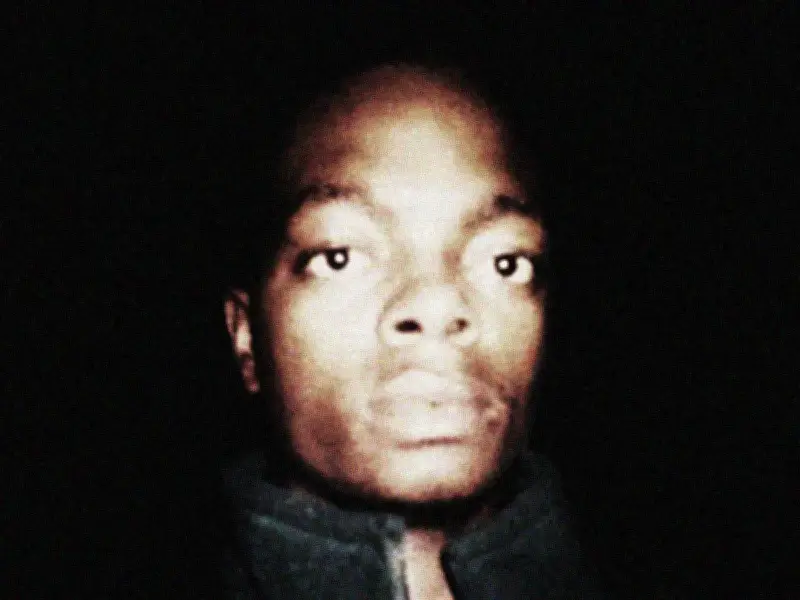
Nearly two months after her friend Tanyaradzwa Julius Matera disappeared, Dorothy Wood attended a gathering at 99 Greater Cheetham Street West, Salford. What she heard there would prompt a police search, which would spark a murder investigation.
Known as Julius by those closest to him, the 43-year-old was reported missing on October 24, 2023. By that time he had already been dead a week, and it would be 56 days before his body was found. In that same Higher Broughton house, on the night of October 13 or early on October 14, police believe he was stabbed in the left side of his neck in a row over a bottle of cider.
Confession at a gathering
The incident could have occurred in the communal kitchen, or a brick patio at its rear - just metres from where Dorothy would quiz Bennett Benjamin Nkonjera about Julius' disappearance at the gathering on December 2. This week, an inquest into his death heard how Nkonjera fell to his knees and asked for forgiveness. He then told her he wanted to "wash away his sins" with salt water he had brought back from a beach in Blackpool.

After three days of extraordinary evidence at Bolton Coroner's Court, Coroner for Greater Manchester West Tim Brennand has now called on GMP to reinvestigate Julius' death, and a wall of silence surrounding it.
On December 7, 2023, Julius' body was found in dense vegetation at the rear of Greater Cheetham Street West. It had lay undetected for weeks in dense undergrowth on the other side of a garden wall, at the edge of playing fields belonging to Broughton Cricket and Rugby Club.
Evidence in court
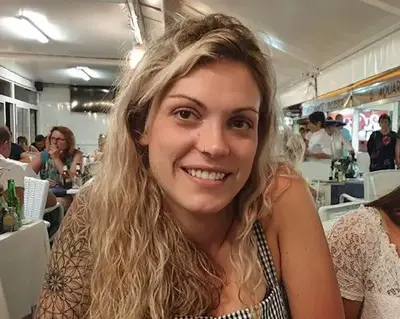
Dorothy Wood told an inquest into his death she had known Julius for several years. His disappearance had caused widespread concern among the Zimbabwean community in Salford, and in November 2023 she received a message that he was still missing. Bolton Coroners Court heard she attended a gathering at 99 Greater Cheetham Street West on December 2, 2023, where she had a conversation in the kitchen with Mr Nkonjera, who lived at the property.
She was cooking when she talked to him about Julius. The line of questioning, she told the inquest, prompted a dramatic reaction from Mr Nkonjera - who 'dropped to his knees'. Mrs Wood told the court: "He said do I want to know the truth? Julius was chopped up." She said Mr Nkonjera was re-enacting a scene, holding his neck area, and that he picked up a knife indicating that a knife had been used.
The court heard how he suggested there had been an argument about alcohol and mentioned the names of two other people. She said that Mr Nkonjera said he wanted to "wash away his sins". On December 4, Mrs Wood called Greater Manchester Police about her conversation. She gave a statement on December 6. A day later, officers searched 99 Great Cheetham Street West and found Julius' body lying within Japanese knotweed.
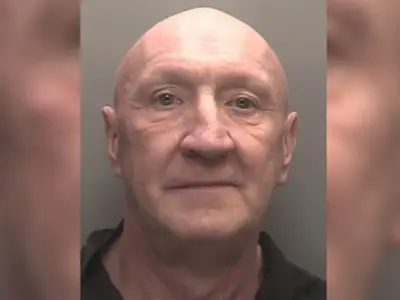
They later arrested three men on suspicion of murder - Mr Nkonjera, Josphat Mkonowatsauwg, and Louis Chirimumvura. Each replied no comment to questions put to them by police. They all attended last week's inquest but each one said they did not know anything about Julius' death.
Denials and cell phone data
At the hearing, Mr Nkonjera questioned Mrs Wood about her evidence. He told her: "I put it to you I never discussed anything about Julius." But she replied: "I did question you. You did go down on your knees. You apologised to me. I said why are you apologising to me, I am not God. I was in disbelief the way you went on your knees. You said it was all because of alcohol. All of you in that house knew something was wrong, and knew something about Julius."
Mr Nkonjera dismissed her recollection and her claim he re-enacted a would to the neck. He said: "I never knelt down to you. To say I asked for forgiveness is very inconsistent." Mrs Wood added he also went upstairs at 99 Greater Cheetham Street West to retrieve salt water he had brought from Blackpool to drink.

Asked by the Coroner to respond to Mr Nkonjera's suggestion she was lying Mrs Wood said: "There is no way in the world that I would make any of that up. A body was found in the back of that address." She added: "In the beginning he [Mr Nkonjera] was friendly. When I asked the questions he was agitated. I was holding a knife to cut kale. He took the knife off me three times and threw it in the sink. I had no idea what was going on. I had to piece it together."
Mr Nkonjera suggested that on the night of October 13 and 14 he would have been away from his flat as he was training in Blackpool or Manchester for his Security Industry Authority licence. But Detective Inspector Rachel Smith told the court that examination of cell phone data put his phone in the area of Great Cheetham Street West that night. Following Mr Nkonjera's denials, Mrs Wood commented: "To see that he can sit there and deny everything I have mentioned is beyond words."
Threats and descriptions
Andrew Hill lived at 97 Great Cheetham Street West. He said he became aware of men coming and going at number 99 next door. Shouting from the premises, he says, became frequent and he had concluded they were intoxicated. In October 2023, he was watching TV and heard raised African accents and a commotion. He told Bolton Coroner's Court he heard and African voice say: "I will kill you, I will kill you."
At the time, he just took it as one of those things people say in the heat of the moment. But several other witnesses from the Zimbabwean community and residents at Number 99 gave evidence about Mr Nkonjera. They told the inquest he had bullied Julius, with whom he would sometimes beg. It was alleged on one occasion Julius was found crying after Mr Nkonjera had stolen his food vouchers.
Residents at the property variously described Mr Nkonjera as a "psycho" and "demonic" when intoxicated. After drinking alcohol, they said, he would often bang on doors and make threats. Witness Rutendo Patience Kawara said that when she asked about Julius being missing Mr Nkonjera became angry and said: "I'm one of the most dangerous people. Don't ask me."
Pathology findings
According to Home Office pathologist Dr Jamie Robinson, the cause of Julius' death was unascertained. His body showed signs of decomposition and skeletisation which made the post mortem challenging. However, there was a seven millimetre injury to cartilage to the voice box. Asked by the Coroner if this was more likely than not inflicted by a sharp instrument, Dr Robinson said: "Yes, that is more likely." He said: "There was no other injury like it on the body. It is a vey clean edged injury. I've never seen one like that from animal scavenging."
There were no injuries to suggest Julius had died from a fall, and it was unlikely his death was the result of natural disease. But the pathologist added that it would be difficult to rule that out. If a blade had been used, it would have been applied with moderate force to break through skin to the voice box. Had this been the case, the proximity to major blood vessels mean Julius would have bled profusely.
Family tribute
June Matera, Julius' cousin, described him as a rainbow child who brought joy after his parents lost another sibling. He was his father's "blue-eyed boy", and wanted to join the air force in his native Zimbabwe. Instead, he moved to the UK in 2001. His plan was to work in and study nursing but his application was unsuccessful.
He lived initially with family and friends in Leicester, but by 2004 was drinking more - to the point he had become a functioning alcoholic. In 2012 he moved to Manchester. He was living in Eccles while waiting for his request to stay in the UK was assessed by immigration authorities. Due to his status he was not allowed to work but was given food vouchers and a small amount of money.
June said: "He was a kind person and a free spirit. He knew a lot about politics and current affairs. He was a happy soul. I can still hear that laugh in my head. He was very intelligent. He kept himself clean and presentable. He had a lot of friends and made meaningful bonds with them. He also had friends he would see to drink with. People that were around Julius valued him despite his drinking. He was a gentleman, humble, and kind. Julius was never a violent person. He was not aggressive. I never saw him angry. He was someone who was quick to say sorry even if it was appropriate or not. He would run away from an argument. We feel devastated and heartbroken. I don't think my life will ever be the same."
Investigation and inquest conclusion
In the years since Julius' death, several appeals have been launched in a bid to bring his killers to justice. This includes a £50,000 reward to anyone whose information leads to a conviction. Despite his popularity in the Zimbabwean community, Greater Manchester Police have been unable to secure the evidence they need to charge anyone with Julius' murder. DI Rachel Smith told the hearing GMP had consulted with the Crown Prosecution Service but the legal threshold had not been met.
The criminal investigation has remained open for several years. She told the court how there had been extensive coverage in the Manchester Evening News and an appeal on Crimewatch. All three arrested following Julius' death - Mr Nkonjera, Josphat Mkonowatsauwg, and Louis Chirimumvura - have been released without charge, and have been told they will face no further action.
Concluding the inquest into Tanyaradzwa Julius Matera's death on Friday (August 28), Coroner for Greater Manchester West Tim Brennand said that although the events leading up to his death were unclear, it was likely he was subject of an "unwarranted and unlawful attack". He told the court: "Tissue dissection of the deceased's neck revealed the presence of an incised wound likely to have been caused by a bladed instrument that caused a shallow stab type injury to cartilage of the thorax." This, he said, was could be evaluated as having been sustained shortly before his death in an area that would have caused significant bleeding.
The coroner added: "Evidence established that it was likely that the wound was was delivered in the garden area of 99 Great Cheetham Street, an address occupied by three known associates of the deceased and visited on a frequent basis... The precise circumstances and causative consequence of the recently inflicted knife wound remains unclear." The most likely explanation, Mr Brennand said, involves the deceased being the subject of "an unwarranted and unlawful attack by a heavily intoxicated assailant, delivering a single blow having taken hold of a kitchen knife in a dispute with the deceased over a bottle of cider".
He said: "Thereafter, the deceased fled the scene, failing to appreciate the two metre drop at the rear of the property, falling to the ground beneath, and becoming collapsed and unresponsive having crawled a short distance and becoming entangled in vegetation, with death arising as a consequence of possible exsanguination, hypovolemic shock, hypothermia, or injury caused by the fall or a combination of such factors."
He said he found evidence given by Mr Nkonjera to be "unsatisfactory", "fundamentally flawed" and "vague and inconsistent". He added the quality of his evidence was "risible", describing Mr Nkonjera as a "fundamentally dishonest witness." Mr Brennand added: "He knew when to become vague and when to descend into detail."
Touching on other witnesses, the coroner said he was not prepared to accept that Mr Mkonowatsauwg knew nothing of what happened to Julius, adding that there was a possibility he might have witnessed some of the events. But Mr Brennand could not conclude he was directly involved in Julius' death. He said Mr Chirimumvura was "something of an unsatisfactory witness" who was "Inaccurate and unreliable" but not dishonest. He added: "All three claim to know nothing. That is an exercise in wishful thinking." Mr Brennand said he believed Julius was living his life as a vulnerable individual where there were elements of possible coercion and control.
After delivering a narrative verdict, Mr Brennand said that the cause of death was unascertained due to the decomposition of the body. But he added it happened in the context of Julius suffering a wound to the neck delivered by an assailant causing him to flee where he became entangled in dense undergrowth. He said: "It is harrowing conclusion... it must have been a terrifying ordeal for Julius to deal with. You can only hope that he did not suffer too much. It is hoped he was unconscious as his life ebbed away."
The coroner commended Julius' family for their integrity and tenacity in asking questions. But he said he was concerned that evidence given at the inquest had not revealed the whole truth. "I would invite the Head of Crime at GMP to work with DI Smith on a review of the case," he said, raising concerns about a conspiracy of silence around the case; that offenders may have been assisted; and that there may have been a conspiracy to pervert the cause of justice.
After the inquest June Matera told the Manchester Evening News: "I am pleased that this case is going to be looked at again. It is true that there was a conspiracy of silence whether it was due to people threatening other people or not it should be looked at again." Referring to the inquest proceedings she said: "We are not letting anyone get away with this. I will be happy if this can be looked at again... Someone should go to jail. I hope that someone will come forward, someone who knows what happened. I know there have been talks in the [Zimbabwean] community. There have been talks behind closed doors. It is time for people to come out into the open , be brave enough, be courageous. [Julius was] stripped Julius of all dignity.... His life [was taken away from him]. Now all we need is justice."
Anyone with information can call 0161 856 3635, or visit the Major Incident Portal, quoting log number 219 of 07/12/2023 or Crimestoppers anonymously on 0800 555 111.