The horrific terrorist attacks on September 11, 2001, affected millions of people in many ways. Nearly 3,000 victims died in the atrocity. But most people don't know that the victims of the horrific attacks weren't the only ones killed in New York City on that dark day.
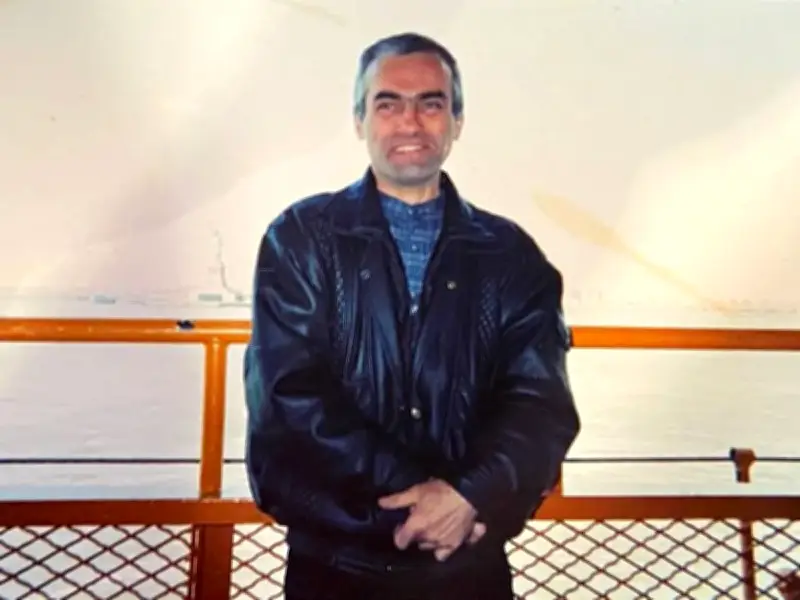
Just a few miles away from the World Trade Center, Henryk Siwiak was shot dead while walking. And, to this day, his case still hasn't been solved. The Polish national was living in New York at the time of the fateful attacks, which saw 19 terrorists hijack and fly four commercial planes from the East Coast of the US to California.
The Attacks and Siwiak's Background
The first two planes hit the Twin Towers in New York City, while the third crashed into the Pentagon in Washington, D.C. The fourth came down in rural Pennsylvania after the crew took it back.

Despite not having a work permit, Mr Siwiak picked up several odd jobs and was able to send money back to his wife and two children in Kraków, Poland, each month. He hoped to return to his home country one day and rebuild their life together.
But he wasn't completely alone in America as his sister, Lucyna, lived in Far Rockaway, Queens. She harboured a sense of fear and caution when it came to living in the city. And she said that she and other family members warned Siwiak multiple times that "New York could be a dangerous place." She said he didn't believe it.
The Night of the Murder
Mr Siwiak picked up a stable job at a construction site in Lower Manhattan that year. However, the area was evacuated on the morning of the terrorist attacks, and the project was postponed indefinitely.
That marked a huge setback for him as he was in desperate need of the cash. So, unable to bear the wait, he found a cleaning position in a supermarket in Brooklyn, with a start date that night.
Before he headed to the new job, he called his wife and let her know that he was okay after the terrorist attacks. But she had watched the events unfolding from Poland. According to Crime and Investigation, she warned him: "I told him just in case, don't leave tonight because it can be dangerous in New York."
But he was undeterred and asked his landlady to help him plan his route. She directed him to Albany Avenue - which is in the middle of Crown Heights and East Flatbush - neighbourhoods that were much more dangerous in 2001 than they are nowadays.
The Shooting and Its Aftermath
The authorities said Mr Siwiak dressed in his favourite outfit, which was, "a camouflage surplus jacket with matching pants that he had bought at a local Salvation Army store". After a short journey, he left the train at roughly 11 pm and walked to the location.
At around 11:40 pm, residents said they heard shouting and gunshots. Nobody saw what happened, but they later found out Mr Siwiak had been fatally shot in the lung.
He staggered toward a house, frantically searching for help and leaving a trail of blood behind him. A local woman recalled: "I heard the bell ringing, but I wasn't answering it after I heard those shots."
At 11:42 pm, someone called the emergency services on 911, and minutes later, an ambulance responded. But it was too late for Mr Siwiak, who was pronounced dead at the scene. This meant that he became the only murder victim in the city on 9/11.
Because of the terrorist attacks, the New York Police Department could only spare three officers to canvass the neighborhood and collect evidence that could have helped solve the murder.
Michael Prate, the cold case detective who picked up the case, said: "The Police Department gave that investigation what it could do that day."
The only leads that exist are shell casings from a .40-caliber handgun and testimonies from terrified residents. Mr Siwiak still had money in his wallet, which suggests that the shooting may have been a botched robbery.
Theories and Family's Hope
His sister, Lucyna, thinks the attacker or attackers may have mistaken him for a terrorist, since his clothes looked military in style. She believed that his dark complexion may have caused him to be mistaken for someone of Arab descent. His relative said: "I think it maybe was a mistake. There were many angry people."

But the police don't have any evidence that points to the incident being a hate crime. Mr Prate thinks it's more likely that Mr Siwiak was the victim of an opportunistic assault. He said: "He likely would not have understood what was happening if someone attempted to rob him."
The murder remains unsolved, although police remains hopeful of a resolution. But the family is less optimistic. Lucyna said: "Everybody cares about [the] World Trade Center. This is only one simple death of a very, very simple man."