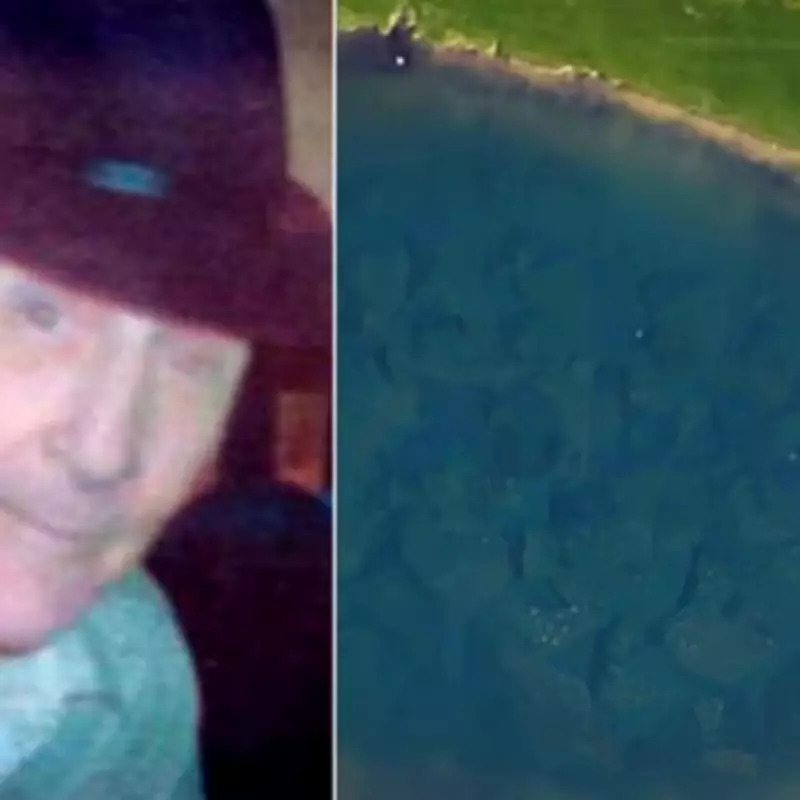
Google Earth Image Cracks Nine-Year-Old Missing Person Mystery
In a remarkable twist of modern technology, a simple Google Earth photograph has provided the crucial breakthrough in a chilling nine-year cold case, finally offering answers to a grieving family. The disappearance of David Lee Niles, a 72-year-old man from Wyoming, had remained an unsolved mystery since 2006, leaving his loved ones in agonising limbo.
The Mysterious Vanishing Act
David Lee Niles was last seen alive in November 2006 at Jake's Bar in Byron Township, Michigan. The father and grandfather, who was battling both depression and cancer at the time, had arranged to meet a friend for a drink. According to witness accounts, Niles abruptly left the establishment after complaining of feeling unwell, never to be seen again. His vehicle, which he had driven to the bar, also vanished without a trace, deepening the mystery surrounding his fate.
With no leads or evidence, Niles' devastated family eventually published an obituary that sombrely stated: "David Lee Niles, age 72, of Wyoming, passed away and only God knows the time and place." For nearly a decade, investigators and relatives held out little hope of ever discovering what had happened to the missing man.

The Christmas Decoration Discovery
The extraordinary breakthrough came in November 2015, when Brian Houseman, an employee at the Cook Funeral Home located near the area where Niles disappeared, noticed something peculiar. While decorating a Christmas tree, Houseman glanced at a nearby pond and spotted an unusual shape lurking beneath the water's surface. He immediately suspected it might be a submerged vehicle.
"All of a sudden," Houseman later told WOOD-TV, a local news channel, "it's like, 'Whoa, there's a car out there.'" The unsettling observation prompted him to contact the Kent County Sheriff's Department, setting in motion the investigation that would finally unravel the mystery.
Satellite Technology Provides the Key
Upon receiving Houseman's tip, authorities turned to Google Earth to obtain an overhead satellite view of the pond. The high-resolution imagery clearly revealed the outline of a car resting at the bottom of the water body. A dive team was promptly dispatched to the location, where they discovered skeletal remains inside the vehicle alongside a wallet containing identification belonging to David Lee Niles.
Subsequent DNA analysis confirmed the remains were indeed those of the missing man, providing definitive proof after nine years of uncertainty. The car was found to be heavily covered in mud and algae, with no visible tracks on the surrounding grass, leading investigators to conclude it had been submerged for "more than a day" – and likely for the entire duration of Niles' disappearance.
Disturbing Revelation and Family Closure
In a particularly unsettling detail, the satellite image that ultimately cracked the case had been publicly available on Google Earth for several years prior to its discovery. Houseman noted that the murky water and shifting debris had previously obscured the vehicle from view, explaining why it remained undetected for so long.
For Niles' family, the discovery brought a painful but necessary sense of closure. Scott Hathaway, Niles' son-in-law, reflected on the emotional resolution: "For us today, it's a closure of a long search. Why God waited nine years, I have no idea. But we're happy. It's good to have him home."
Although authorities were unable to establish an official cause of death, police ruled out foul play and suggested the tragedy likely resulted from either an accident or suicide. Investigators believe that a fountain installed in the pond, which would have been operational during certain periods, may have further obscured the submerged car from detection.
A Lasting Memorial
Today, the park containing the pond where David Lee Niles was finally discovered has been renamed in his honour as the David Lee Niles Memorial Park. The case stands as a poignant example of how modern technology can intersect with human tragedy, providing answers where traditional investigation methods had failed for nearly a decade.

The resolution underscores both the power of digital tools in criminal investigations and the enduring hope families maintain for missing loved ones, even when years have passed without answers.