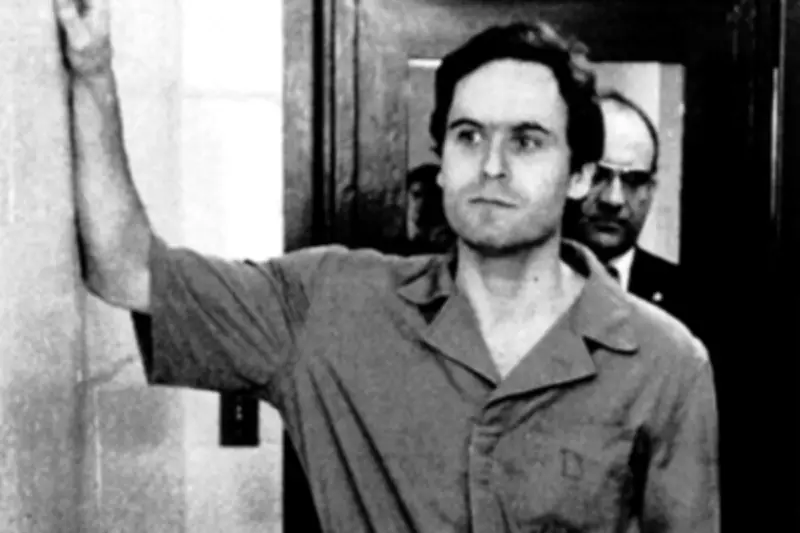
Nearly four decades after his execution, the grim legacy of Ted Bundy continues to unfold as advanced DNA testing has definitively linked the notorious serial killer to a previously unsolved 1974 murder. Utah County authorities confirmed this week that Bundy's full DNA profile matches evidence from the death of a Utah teenager, bringing another cold case close to closure and expanding the confirmed tally of his victims.
The DNA Breakthrough in a Decades-Old Case
Utah County sheriff's Sgt. Mike Reynolds announced that new forensic technology has allowed investigators to extract a complete DNA profile from preserved evidence, conclusively connecting Bundy to the 1974 killing of 17-year-old Laura Ann Aime. The teenager vanished on Halloween night in 1974, with her body discovered a month later beside a Utah highway. Authorities believe she was held alive for several days following her abduction.
Bundy had long been considered a suspect in Aime's death, but insufficient evidence prevented charges during his lifetime. The careful preservation of case evidence, combined with modern DNA advancements, has now provided the definitive link that eluded investigators for half a century.

Bundy's Trail of Violence Across Multiple States
Bundy's killing spree spanned at least four years from 1974 to 1978, leaving a devastating trail across Washington, Utah, Colorado, Idaho, and Florida. His confirmed victims number at least 30 women and girls, with numerous others surviving brutal attacks with permanent injuries.
Patterns of Predation
The serial killer typically targeted young women, often breaking into their homes to bludgeon and sexually assault them before either leaving them to die or disposing of their bodies elsewhere. His earliest known violent crime occurred in January 1974 when he attacked an 18-year-old University of Washington student in her Seattle home, fracturing her skull and causing permanent injuries.
Over subsequent months, multiple women disappeared from Washington and Oregon, with witnesses sometimes reporting a man wearing an arm sling. By October 1974, teenage girls in Utah began vanishing, including 17-year-old Melissa Anne Smith, whose beaten body was found on a Summit Park hillside.
Survivors and Escapes
Not all encounters ended in death. Eighteen-year-old Carol DaRonch survived by jumping from Bundy's car after he posed as a police officer investigating car break-ins and attempted to handcuff her. Her testimony later proved instrumental in securing his initial conviction.
Dramatic Escapes and Final Killing Spree
Bundy's criminal career included two dramatic escapes from custody. After his August 1975 arrest revealed incriminating items in his vehicle, he was convicted of kidnapping DaRonch and sentenced to 15 years. While imprisoned, he faced charges for a nursing student's death and escaped during a 1977 Colorado hearing by climbing through a second-story courthouse window.
Recaptured within a week, he escaped again six months later by breaking through a jail ceiling. This time he fled to Florida, where on January 15, 1978, he entered the Chi Omega sorority house at Florida State University, bludgeoning two women to death and severely injuring two others before attacking another sleeping woman nearby.
Less than a month later, he abducted, sexually assaulted, and killed 12-year-old Kimberly Leach in Lake City, Florida—believed to be his final victim before his arrest in Pensacola while driving a stolen vehicle.
The Charming Killer in Court
Bundy's 1979 trial for the Chi Omega murders captivated public attention, partly due to his perceived charm and handsome appearance. Spectators described him as "fascinating" and "impressive" with a peculiar magnetism, while the presiding judge noted he was a "bright young man" who could have made an excellent lawyer.
Despite this characterization, Judge Edward Cowart recognized Bundy as a horrifically violent killer, sentencing him to death for "extremely wicked, shocking evil and vile" crimes. Bundy was executed by electric chair in Florida on January 24, 1989, after giving a series of confessions in his final days that included previously unknown crimes.

Historical Context and Ongoing Investigations
While Bundy ranks among America's most notorious serial killers, others like Gary Ridgway, Samuel Little, and Donald Harvey are believed to have claimed even more lives. The recent DNA breakthrough demonstrates how advancing forensic technology continues to provide answers in cold cases, offering closure to families and expanding our understanding of historical crimes.
As investigators continue to examine Bundy's confessions and preserved evidence, more connections may yet emerge, ensuring that the full scope of his violence continues to be documented decades after his death.